Biocracked
←

#fatty-liver

1 article
Visual approach: Macro science. Palette: Warm.

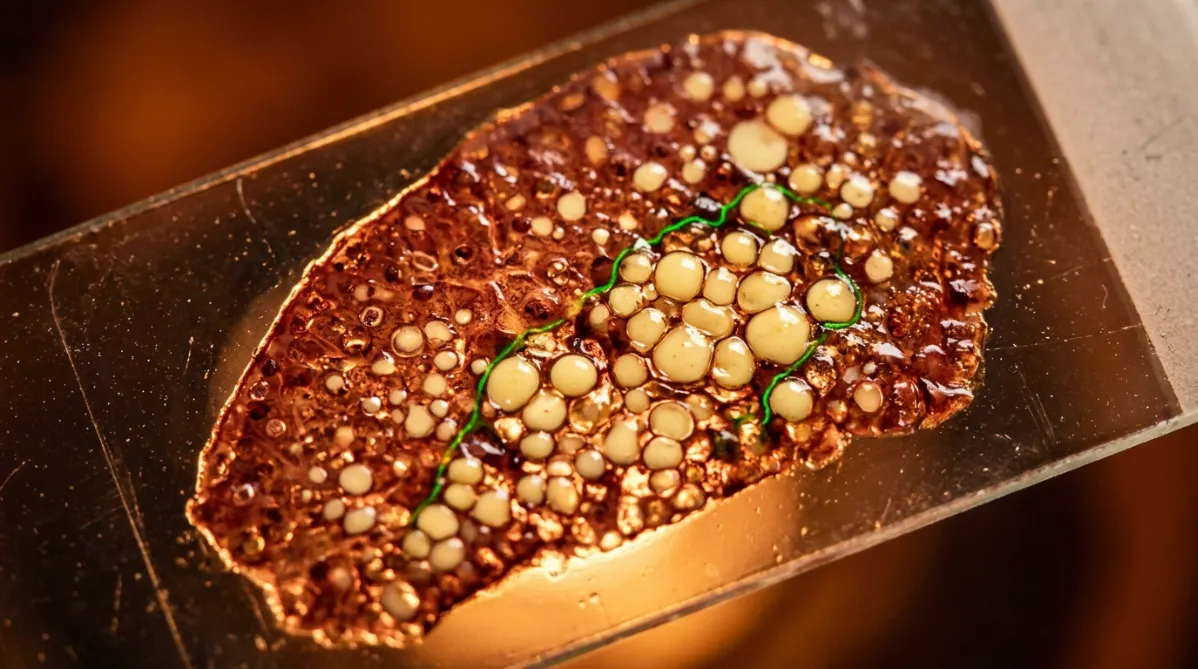
Extreme close-up of a sliced mouse liver tissue sample on a glass microscope slide, shot from a shallow overhead angle with a macro lens. The pale, creamy-yellow fat droplets mottle the deep reddish-brown tissue, so the fatty infiltration looks like glistening honey-colored bubbles of varying size. Warm amber backlight shines through the translucent edges, producing copper highlights and soft golden glows on the glass. The background falls into a blurred, burnt-orange haze. A thin, sharp line of electric green fluorescent stain traces one cluster of droplets as a subtle accent. The mood is tense and investigative, and the textures look wet, real and microscopic, with no text or labels.
longevity

Popular Longevity Supplement AKG Caused Fatty Liver in Mice

BY DR. SYNAPSE ·

Alpha-ketoglutarate (AKG) is one of the most popular longevity supplements, praised for its healthspan benefits in aging mice. A new study in Research found that long-term AKG in food or drinking water raised liver triglycerides and caused fatty liver in healthy mice. The cause was a chain of events: AKG lowered H3K4me3 at Pck1, which boosted lactate and lactylated Cidec, shielding it from TRIM21 and suppressing the fat-burning enzyme ATGL. Knocking down Cidec or Pck1 in the liver prevented the effect. This is mouse-only data, but it raises real questions for healthy people taking AKG chronically.

This page is available in