Biocracked
←

#older adults

1 article
**Approach:** Lab in action. **Palette:** Bold color field, mustard yellow.

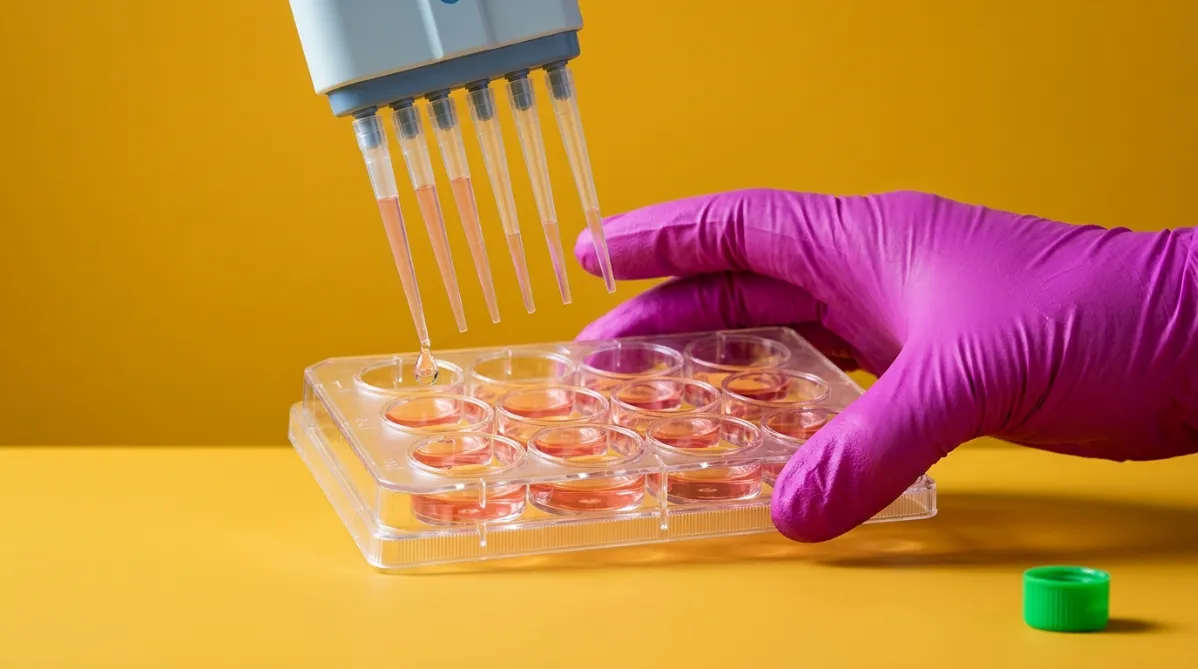
A close, slightly high three-quarter view of a hand in a magenta-purple nitrile glove holding a clear 12-well cell culture plate. Each well is filled with salmon-pink culture medium. A multichannel pipette hovers over one well, with a single droplet caught just before it falls. The background is a seamless, saturated mustard-yellow surface and wall, with a soft shadow under the plate. Bright, even studio light comes from the upper left, giving crisp highlights on the plastic rims and a soft glow through the liquid. The depth of field is shallow, so the far wells blur gently. A tiny electric-green cap on a tube sits in the corner of the frame. The mood is calm, precise and curious, with a clean, graphic, editorial feel. No text or labels.
peptides

Semaglutida não encolheu as células musculares humanas. Então, por que a perda de massa muscular?

BY DR. SYNAPSE ·

A semaglutida realmente consome o seu músculo? Um estudo recente publicado na *GeroScience* aplicou o fármaco diretamente em células musculares humanas de adultos mais velhos com obesidade, e as células não apresentaram sinais de atrofia. Não houve ativação de genes atróficos, nem alterações no secretoma, e o GIP ainda aumentou a espessura dos miotúbulos após oito dias. A semaglutida reduziu modestamente a produção de ATP glicolítico, e os receptores GLP‑1 eram quase indetectáveis. Os resultados apontam para causas indiretas da perda de massa magra, como déficit calórico e menor carga mecânica, embora o peso corporal não seja o único fator.

This page is available in