Biocracked
←

#nature study

1 article
Approach: macro science, a lithium-themed image built around the actual metal and tissue. Palette: bold color field in saturated teal.

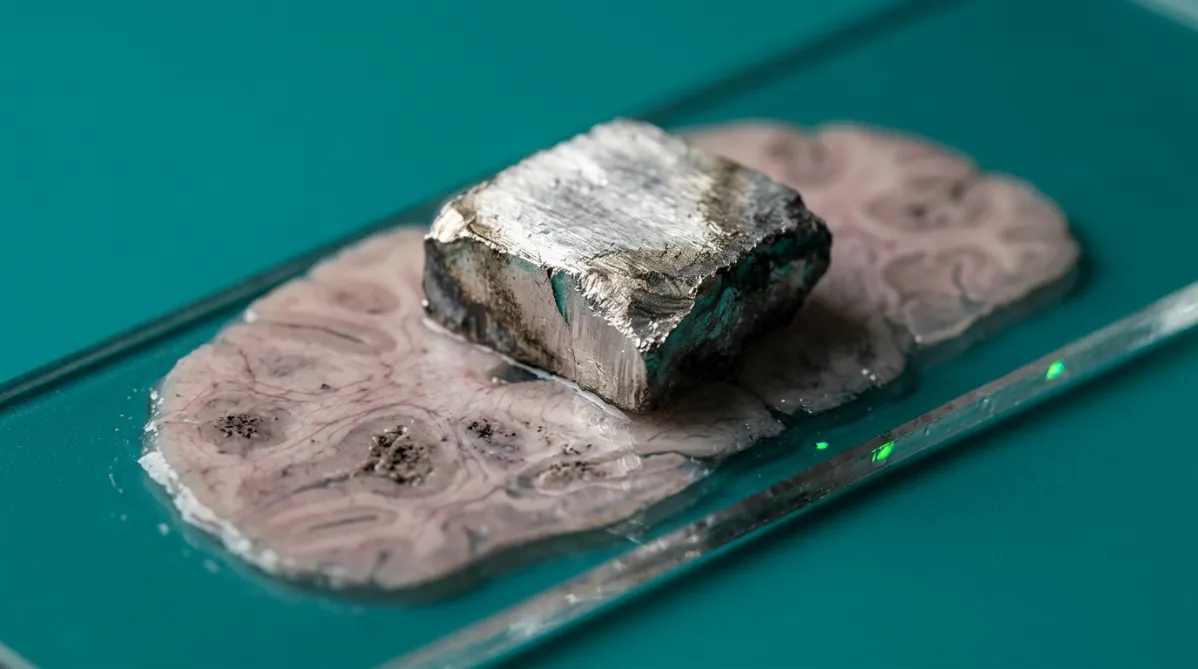
Extreme close-up photograph of a single freshly cut piece of silvery lithium metal, its surface partly tarnishing to grey and matte black at the edges, resting on a thin slice of translucent brain tissue on a glass microscope slide. The slice shows fine pink-grey folds and a few dark clumped plaque-like specks. The backdrop is a smooth saturated teal field, with the slide placed diagonally. Shallow depth of field keeps the metal edge razor sharp while the tissue softens toward the corners. Lighting is a crisp, slightly warm side light from the left, with a small specular highlight on the metal and a soft shadow on the teal. A tiny electric green reflection glints in the glass edge. The mood is quiet, investigative and precise. Shot from a low 30-degree angle, with no text or labels.
research

O mineral traço que desaparece do cérebro antes do Alzheimer

BY DR. SYNAPSE ·

Um estudo marcante publicado na *Nature* pela Harvard revelou que o lítio era o único metal significativamente reduzido nos cérebros de pessoas com comprometimento cognitivo leve. Em ratos, cortar o lítio pela metade provocou acúmulo de amilóide, patologia tau, inflamação e perda de memória, enquanto a reposição com lítio orotato em baixa dose evitou esses danos. O composto parece escapar das placas amilóides que retêm outros sais de lítio. Contudo, os resultados são exclusivos de experimentos em ratos, ainda sem ensaios clínicos em humanos, e o lítio traz riscos reais para rins, tireoide e interações medicamentosas. Veja o que o estudo comprova, o que não comprova e o que observar em seguida.

This page is available in