CBL-514 (sometimes mistyped as "CL-514") is being discussed online as a fat-dissolving shot. The description is partly right, but "fat burner" is the wrong frame. CBL-514 is an investigational small-molecule injection lipolysis drug from Caliway Biopharmaceuticals of New Taipei City, Taiwan. It is designed to trigger fat-cell death in the area where it is injected. It is not a metabolic fat burner, not a GLP-1, and not a supplement.
Here is what the published human data actually show.
What CBL-514 is, and what it is not
The correct name is CBL-514. "CL-514" is a typo that shows up in searches, and it is the only time it appears in this article.
CBL-514 is:
- An investigational small-molecule injectable.
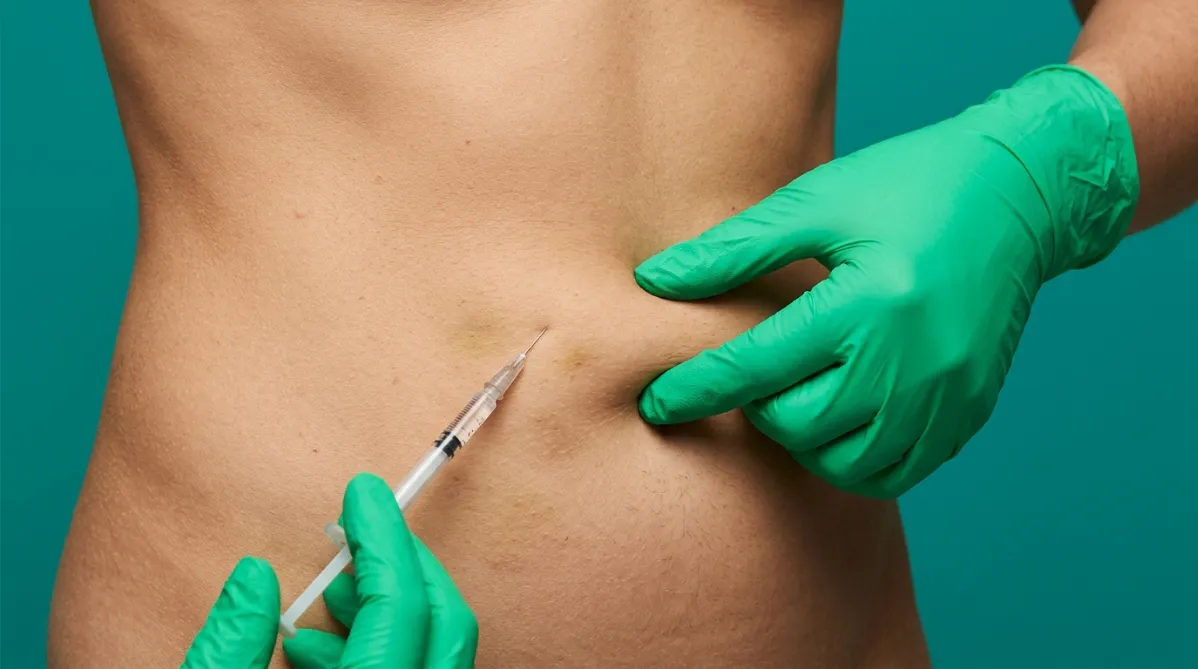
- Given as subcutaneous injections into a treated area. In the Phase 2 trial, that area was abdominal fat.
- Administered by investigators in a clinical trial.
CBL-514 is not:
- A supplement or an oral pill.
- An approved consumer product.
- FDA-approved, as of the Phase 2 paper.
The only FDA-approved injectable for fat reduction mentioned in the paper is ATX-101 (deoxycholic acid, sold as Kybella). It is approved only for submental fat, the fat under the chin. CBL-514 is being studied for a much larger area, the abdomen, but it remains an experimental compound.
The proposed mechanism
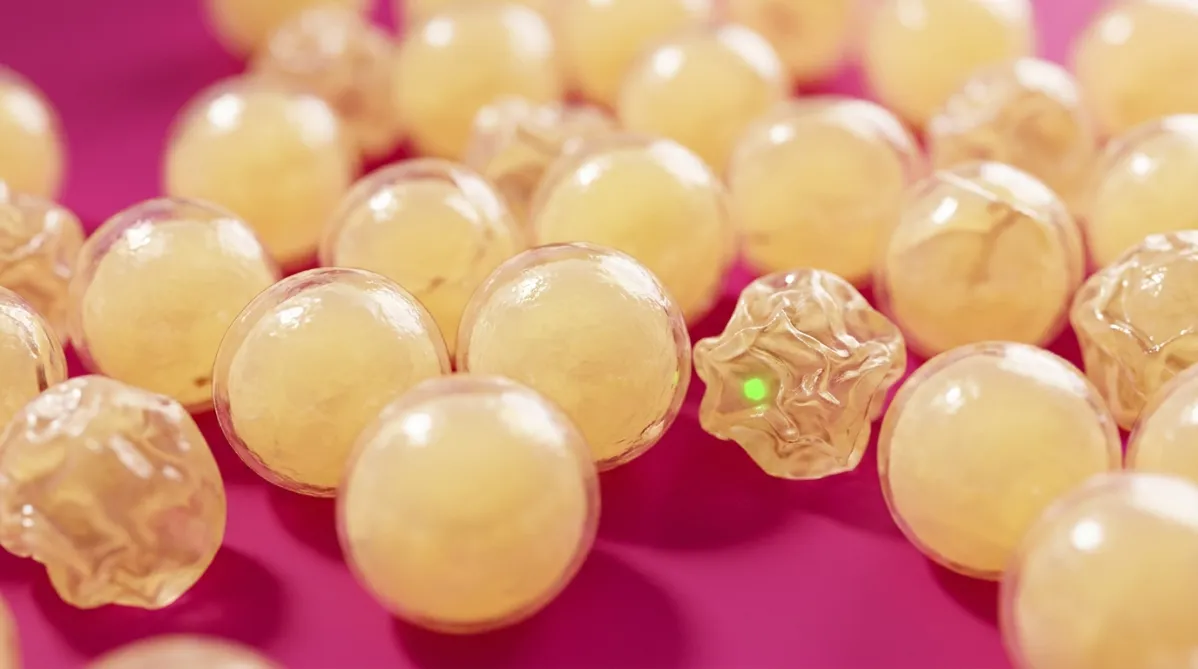
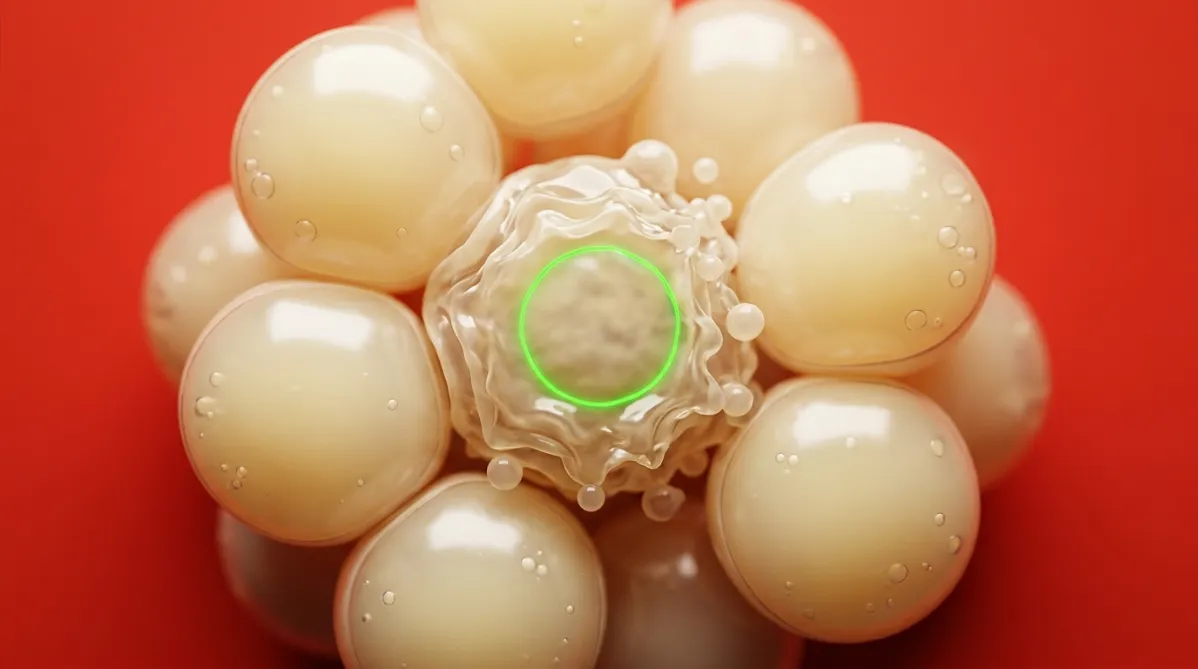
The Phase 2 paper describes CBL-514 as "a small-molecule injection lipolysis agent that promotes adipocyte apoptosis and targeted subcutaneous fat reduction in nonclinical studies." Those nonclinical claims rest partly on unpublished, confidential Caliway reports and on the earlier, smaller, open-label Phase 2a paper (Goodman et al., 2022). According to that earlier work, CBL-514 inhibits the cell-survival kinase DYRK1b and upregulates the apoptosis mediators caspase 3 and Bax/Bcl-2. This is reported to produce dose-dependent adipocyte apoptosis in vitro and in vivo. In plain terms, the idea is to push fat cells in the injected zone toward programmed cell death, not to raise your metabolic rate or burn calories across the body. The chemical structure of the molecule has not been disclosed in these papers, so any claim about its exact identity, receptor, or ingredients is speculation.
The human evidence: a 2025 Phase 2 trial
The main human data come from a randomized, single-blind, placebo-controlled Phase 2 trial. It was run at five centers in the US and Australia between February 2022 and March 2023 and published in Aesthetic Surgery Journal in 2025 (level of evidence 2).
- Size: 130 screened, 81 enrolled, 76 randomized (50 CBL-514, 26 placebo), 75 treated.
- Participants: adults aged 18 to 64 with a BMI above 18.5 and below 35 kg/m². In the CBL-514 group, 94% were women.
- Dosing: up to four treatments at 4-week intervals. Each treatment used 25 to 50 injections of 2.4 mL at 2 mg/cm², up to 600 mg per treatment. The placebo was normal saline.
- Measurement: ultrasound fat thickness at four points, converted to volume across a 300 cm² treatment area.
Blinding is a limitation. Only participants were blinded. Investigators, site staff, and the sponsor stayed unblinded. Caliway was also involved in study design, data analysis and interpretation, writing the manuscript, and the decision to publish.
So, does it burn fat?
It reduced local fat volume compared with placebo. It did not cause systemic fat burning or weight loss.
On local fat, the study met its primary endpoint of at least 150 mL of fat-volume loss. In the intention-to-treat (ITT) analysis:
- 4 weeks after the last treatment: 63.9% of CBL-514 participants (23/36) reached at least 150 mL, versus 17.4% of placebo (4/23), P < .001.
- 8 weeks: 69.6% (16/23) versus 0.0% (0/16), P < .001.
- Average loss: the least-squares mean difference versus placebo was −206.62 mL at 4 weeks and −216.28 mL at 8 weeks.
- Largest single loss: more than 750 mL in one participant.
On body weight, the CBL-514 group's mean change was +0.45 kg at the 4-week follow-up and +0.02 kg at 8 weeks. The placebo group changed by −0.76 kg and −0.26 kg. The paper reports no significant changes in mean weight or BMI. It also says some participants who gained more than 1 kg still showed localized fat loss, though that data was not shown. This pattern is what you would expect from a local fat-cell-clearing approach. It is the opposite of a metabolic fat burner.
Caveats to read before getting excited
These numbers are encouraging for an early trial, but the paper has real limitations.
- High dropout. Of 75 treated participants, 38 completed the study and 37 did not, a non-completion rate of 49.3%. Reasons included loss to follow-up, withdrawal, weight instability, schedule problems, and adverse events (4 participants).
- Shrinking denominators. The ITT percentages above rest on 36 and then 23 CBL-514 participants because of missing follow-up.
- Small per-protocol group. The PP population was only 30 people. Its larger effects (a mean of about −314.70 mL at 4 weeks in the CBL-514 group) come from the people who stayed the course and kept a stable weight, so they flatter the drug.
- Exploratory design. The sample size was not based on a formal power calculation, and the analysis did not adjust for multiple testing.
- Narrow population. Participants were mostly women and mostly white.
- Ultrasound-derived volumes. Volume was calculated with a cuboid formula from ultrasound thickness, not measured directly.
The authors also compare the results with cryolipolysis studies and say the trend "appears to be larger," and they describe results as comparable to liposuction. These are the authors' interpretations. Measurement methods differed, and there was no head-to-head trial against CoolSculpting or liposuction. The authors' impression of little or no skin laxity comes from posttreatment images, not a formal laxity endpoint.
Safety was assessed through adverse events, labs, vitals, ECGs, physical exams, and injection-site reactions. Readers who care about tolerability should go through the safety section of the full paper rather than rely on a summary.
The bottom line for biohackers
CBL-514 is an interesting piece of biotech: a small molecule meant to make fat cells in a treated area undergo apoptosis. The Phase 2 data suggest it can reduce abdominal fat volume more than saline, with essentially no change in body weight. That is the signature of a targeted body-contouring drug, not a fat burner.
It is also investigational. It is not approved, and it is not a supplement. It is not something to source or self-inject. Anything sold online under this name outside a clinical trial is an unknown, and the compound's structure has not even been disclosed. Larger, better-blinded, longer-term trials will have to show whether the early results hold up.
Source: Gold M, Schlessinger J, Goodman GJ, et al. Efficacy and Safety of CBL-514 Injection in Reducing Abdominal Subcutaneous Fat: A Randomized, Single-Blind, Placebo-Controlled Phase II Study. Aesthet Surg J. 2025;45(6):611-620. PMC12080885 | PMID 40037659 | doi.org/10.1093/asj/sjaf032
More from this CBL-514 series
This article is part of our CBL-514 series. For the full Phase 2 trial overview, start here: CBL-514 Injection Lipolysis: A Phase 2 Map of the Evidence.