The twist: it may not be the walnuts, it's what your gut does with them
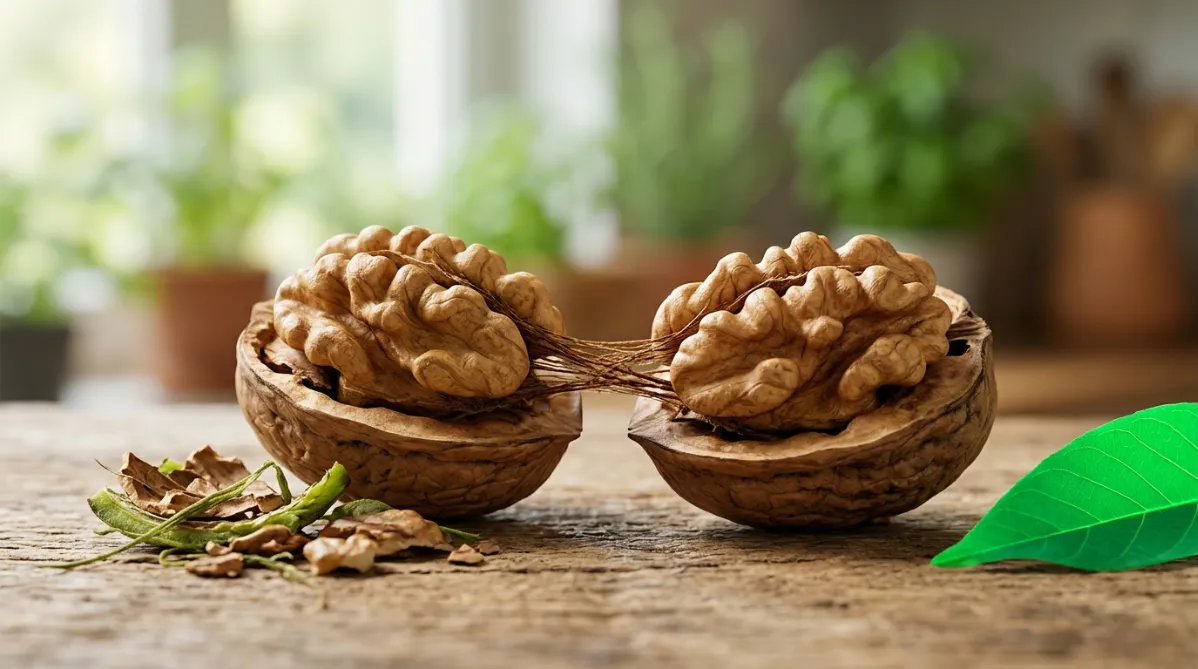
Eat a walnut and your body doesn't absorb most of its ellagitannins directly. Your gut bacteria convert them into compounds called urolithins, and a new MRI analysis suggests that how much of these compounds your body produces over time may track with how well your brain's cortex holds up.
The study, led by Galkina and published in Food & Function, is a longitudinal MRI sub-study of the Walnuts and Healthy Aging (WAHA) randomized controlled trial (PubMed 42841852; DOI; NCT01634841). Here is what it found, and what it doesn't prove.
What the researchers actually did
WAHA is a two-center trial (Barcelona, Spain and Loma Linda, California) testing 2 years of daily walnut consumption against a control diet in older adults. This analysis used a subset of Barcelona participants who had structural MRI at baseline and again after 2 years.
- Participants: 104 cognitively healthy older adults, 55 of them in the walnut group
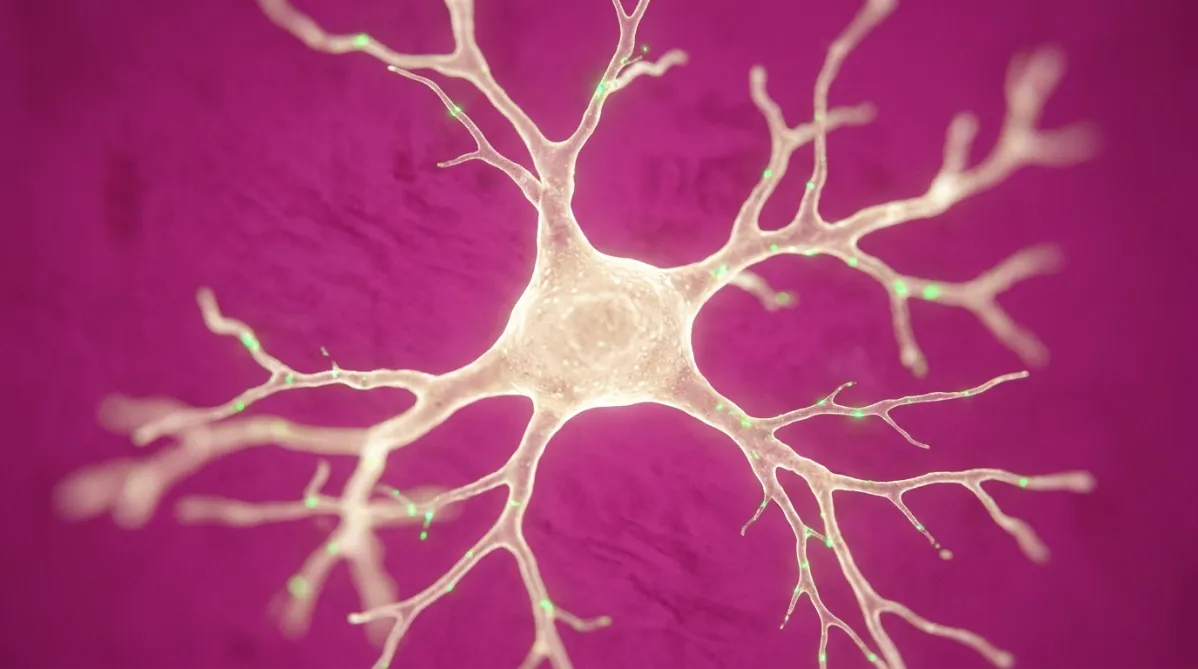
- Brain measure: cortical thickness, a biomarker of age-related neurodegeneration
- Gut-metabolite measure: urinary urolithins, quantified by liquid chromatography-high-resolution mass spectrometry
- Question: do changes in urolithins over 2 years go along with changes in cortical thickness over the same period?
- Method: multivariable-adjusted linear regression, stratified by urolithin metabotype
The headline finding
Among people on the walnut diet, bigger increases in three urinary compounds were associated with better preservation of cortical thickness:
| Compound | β per 1-SD increase (95% CI) |
|---|---|
| Urolithin A | 0.023 (0.003–0.043) |
| Urolithin C | 0.015 (<0.001–0.029) |
| Urolithin C glucuronide | 0.017 (0.002–0.031) |
The associations were seen predominantly in right-hemisphere regions and were more pronounced in people with metabotype B.
The confidence intervals are fairly close to zero, especially for urolithin C. These are modest, hypothesis-generating signals, not dramatic effects.
Wait, what's a metabotype?
People differ in which urolithins their microbiomes produce. Researchers sort them into groups called metabotypes. As general background (not from this abstract), metabotype A people mainly make urolithin A, while metabotype B people also make additional urolithins such as urolithin B. The authors stratified by metabotype to account for this inter-individual variability. They say the results support a precision nutrition framework: the same food may do different things depending on the gut ecosystem that processes it.
The fine print you shouldn't skip
The headline is catchy, but the evidence has limits.
- It's an association, not proof of cause. This is an observational analysis nested inside a randomized trial. The randomization was to walnuts versus control, not to urolithin levels. Rising urolithins may be a marker of something else, such as better adherence, a healthier microbiome, or other metabolic differences.
- The signal appeared in the walnut group. The abstract reports the associations among those allocated to walnuts, so it doesn't show the same pattern in the control group.
- It's a subset. Only 104 people from one center had MRI data, and they were cognitively healthy, so the results may not extend to people with cognitive impairment.
- The supplement link is indirect. The study measured urolithins produced from food. It did not test urolithin A supplements, and it can't say that taking them would thicken your cortex.
- No cognitive payoff is shown in the abstract. Cortical thickness is a biomarker, and the abstract doesn't report that it translates into better memory or lower dementia risk.
Practical takeaways
Dose
The abstract doesn't specify the walnut quantity, and it provides no urolithin A supplement dose, because none was tested. Published descriptions of the WAHA design have described roughly 30–60 g of walnuts daily, but check the full paper before quoting a number. Don't extrapolate a supplement dose from this study.
Timing
The observed changes accrued over 2 years of daily consumption. The study offers no evidence about the time of day, only that consistency over a long period is what was studied.
Who it may be relevant for
- Older adults interested in dietary patterns for brain aging, with walnuts as a reasonable whole-food option
- People curious about personalized nutrition, since metabotype appeared to matter and the associations were stronger in metabotype B
Who should skip or be cautious
- Anyone with a tree-nut allergy should avoid walnuts entirely.
- Anyone expecting a proven brain-protection shortcut. A supplement isn't validated by this paper.
- People managing calorie intake or specific medical diets should discuss adding daily nuts with a clinician or dietitian.
- People with cognitive concerns should seek medical evaluation instead of relying on diet findings from cognitively healthy cohorts.
Why this matters for longevity research
The study adds a mechanistic thread to a familiar story. Walnuts have long been linked to healthy aging, and here the gut microbiome appears to be the intermediary. If the pathway holds up, the key variable may be not just what you eat but whether your microbes can turn it into bioactive metabolites. That could explain why the same diet yields uneven results across people.
The authors describe the work as novel clinical evidence linking microbiota-derived (poly)phenol metabolites to brain aging. The next steps are larger samples, replication at the second trial site, and trials that test urolithin interventions directly, with cognitive outcomes alongside imaging.
Bottom line
In 104 cognitively healthy older adults, greater 2-year rises in urolithin A, urolithin C, and urolithin C glucuronide were associated with preserved cortical thickness among those eating walnuts, especially in metabotype B individuals. It's a promising biomarker-level link between food, microbes, and the aging brain, but it is not proof that walnuts or urolithin A supplements protect the brain.
Source: Galkina et al., Food & Function; PubMed 42841852; DOI 10.1039/d6fo02116f. This article is for information only and is not medical advice.