The Hook: A Gut-Derived "Longevity" Molecule Is Now Being Tested as a Face Cream
Urolithin A (UA) is best known as a supplement, sold as Mitopure by Timeline and marketed for cellular energy and healthy aging. A new paper in iScience asks whether it can work from the outside in. In placebo-controlled clinical studies, a topical UA product reduced periorbital wrinkle depth after 8 weeks and blunted redness after UVB exposure.
There is a significant caveat up front. The work was run and sponsored by the company that sells the molecule, with L'Oréal employees as co-authors. The results are interesting, but they are early and industry-sponsored.
Why Mitophagy Matters for Skin
Mitochondria power cells, and they wear out. Mitophagy is the cell's quality-control process for clearing damaged mitochondria so healthier ones can replace them. When it falters, dysfunctional mitochondria can accumulate, which is linked to inflammation and cellular senescence, a state in which aged cells stop dividing and release inflammatory signals.
Skin is a plausible target for this idea. It is constantly exposed to UV light and environmental stress, and its structure depends on cells that make and maintain the extracellular matrix, the scaffold of proteins that keeps skin firm. The hypothesis behind the paper is that supporting mitochondrial renewal in skin cells could improve their resilience.
UA is described in the paper as a postbiotic, a compound produced by gut microbes from dietary precursors. According to the abstract, it promotes mitophagy and mitochondrial function after oral administration. This study tests it as a topical product.
The Lab Results
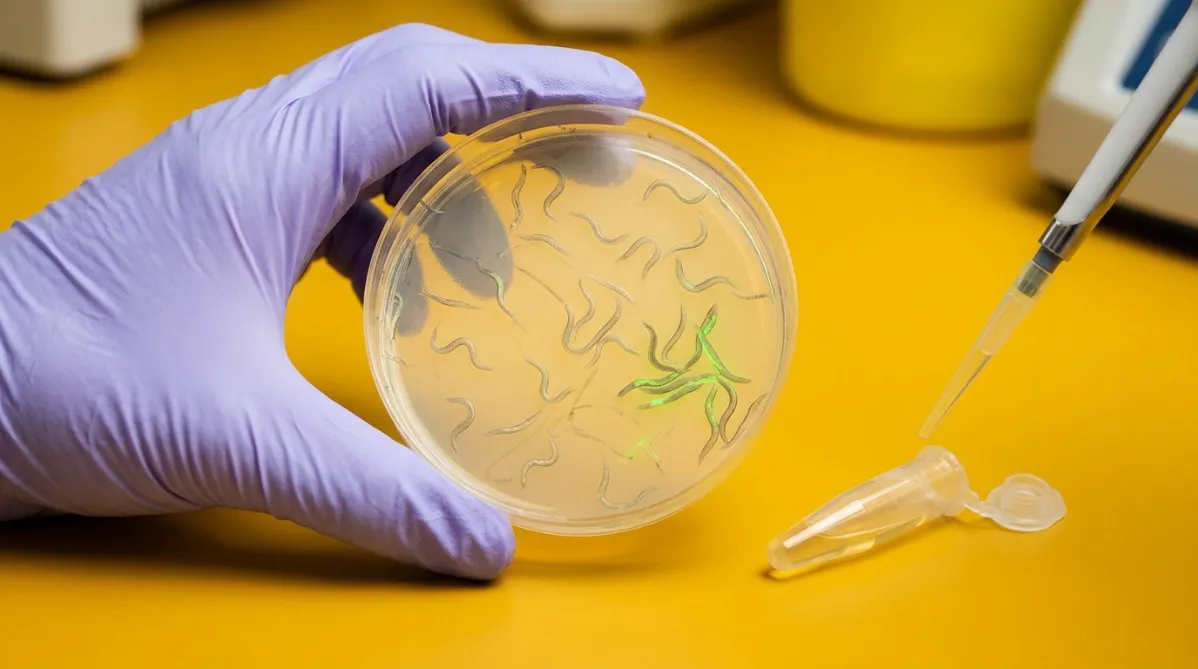
The researchers first used human skin models:
- 2D cultured skin cells
- 3D reconstructed human skin
- ex vivo human skin explants
Across these systems, UA:
- Enhanced mitochondrial respiration
- Activated mitophagy markers
- Reduced inflammatory mediators and senescence-associated markers
- Increased proteins involved in extracellular matrix structure and epidermal differentiation
Together, these point to a plausible biological story: better mitochondrial housekeeping, less inflammatory and senescent signaling, and more of the proteins that build skin structure. But these are lab and tissue-model findings. Changes in markers in a dish do not guarantee visible changes on a person's face.
The Clinical Results
The paper reports a human repeat-insult patch test, a standard dermatology safety assessment, which confirmed safety. Then came randomized, placebo-controlled clinical studies in healthy subjects with two headline outcomes:
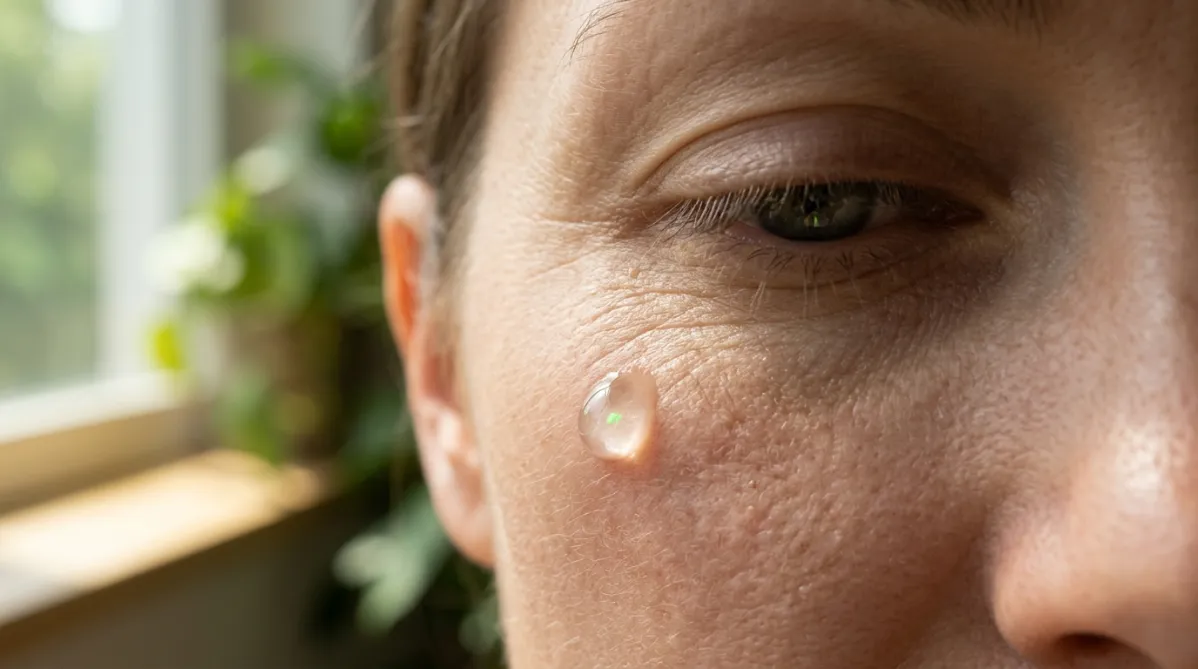
- Wrinkle depth: periorbital wrinkle depth (the area around the eyes) was reduced after 8 weeks of use.
- UVB response: UA attenuated UVB-induced erythema, the redness that follows UV exposure.
The abstract does not give effect sizes, participant numbers, concentrations, or application schedules. Those details are in the full paper and matter a great deal for judging how meaningful the results are. "Reduced wrinkle depth" could mean anything from a subtle statistical shift to a noticeable cosmetic change. Readers should check the full text before drawing conclusions.
The UVB result is also not the same as sunscreen. Reduced redness in a controlled test suggests a modulated inflammatory response, but nothing in the abstract suggests UA replaces broad-spectrum sun protection.
What the Skin Transcriptomics Showed
The team also analyzed gene expression in skin. The transcriptomic data supported the lab findings, with increased extracellular matrix and epidermal development programs alongside decreased inflammatory and senescence-associated signaling.
This matters because it links the visible outcomes to a molecular signature in treated human skin. It strengthens the mechanistic narrative, though gene expression patterns are still associations. They show that pathways moved in a favorable direction, not that mitophagy alone caused the wrinkle improvement.
Conflict of Interest
This needs to be stated plainly:
- Several authors are employees and shareholders of Amazentis SA, which sponsored the clinical studies and sells UA products under the Timeline brand.
- Three Amazentis authors are listed as inventors on patents or patent applications related to this work.
- Multiple authors are L'Oréal employees, and some are Lancôme employees.
- Other contributors came from SGS Proderm and Genevia Technologies.
Industry-run studies are common in cosmetic science, and they are not automatically wrong. But they warrant caution until independent groups replicate the findings. The paper's own conclusion, that topical UA "engages cellular pathways associated with skin resilience to promote skin health and longevity," is the sponsor's framing.
Takeaways
Topical versus oral UA. The abstract describes mitophagy effects after oral dosing, and separately describes topical effects on skin. It does not report a head-to-head comparison. Nothing here shows that a cream delivers the same systemic effects as a supplement, or that a supplement improves wrinkles. These are different routes with different questions.
Dose and timing. The abstract does not specify concentration or application frequency. The clinical effect was measured at 8 weeks, so any realistic expectation involves consistent use for about two months rather than overnight change. Anyone considering a product should look for the formulation details in the full paper rather than guess.
Who might try it. The studies enrolled healthy subjects, so the evidence is relevant to people with typical, otherwise healthy skin who are interested in addressing fine lines around the eyes. It does not speak to people with skin disease, sensitive skin conditions, or those seeking medical treatment. People with such concerns should talk to a dermatologist.
- How large the wrinkle improvement is, and whether it is visible to users
- How long benefits last after stopping
- Whether results hold in diverse skin types, ages, and larger groups
- How UA compares against established ingredients like retinoids
- Whether independent teams, not tied to the sponsor, can reproduce the findings
- Long-term safety beyond the patch test and study duration
Bottom Line
Topical urolithin A is a mechanistically appealing idea with a coherent data package: tissue-model changes in mitochondrial and aging markers, a clean patch test, an 8-week wrinkle improvement, reduced UVB redness, and supportive gene expression. But the work comes from the molecule's commercial developers, the abstract leaves key quantitative details out, and independent replication is still needed. It is a promising early signal rather than a proven anti-aging breakthrough.