Skin thins as we age, and a new mouse study suggests a popular supplement compound may slow that process. The catch is that nobody has shown it works in humans.
Researchers at Sapporo Medical University in Japan fed aging mice resveratrol for 32 weeks. The treated mice largely avoided the loss of epidermal and dermal thickness seen in untreated aged animals. Here is what the study found, what it didn't, and what it means if you're eyeing a resveratrol bottle.
The Headline Finding: Thinner Skin Didn't Happen (In Mice)
The study, led by Tamura and Kuno, was published in the Journal of Dermatology (2026;53(11):1650-1659). It tested whether resveratrol, a known activator of the enzyme SIRT1, could blunt age-related skin thinning.
Aging brings thinner epidermis and dermis, which contribute to wrinkles, dryness, and a weaker skin barrier. In the experiment:
- Mice at 60 weeks old had significantly thinner epidermis and dermis than mice at 20 weeks old.
- Resveratrol was given in the diet at 0.4 g per kg of feed, starting at 28 weeks of age and continuing for 32 weeks.
- That treatment attenuated the thinning in both skin layers.
The word is attenuated, not erased. The authors report that resveratrol lessened the age-related decline.
How It Seemed to Work: Three Clues
1. Skin cells kept dividing
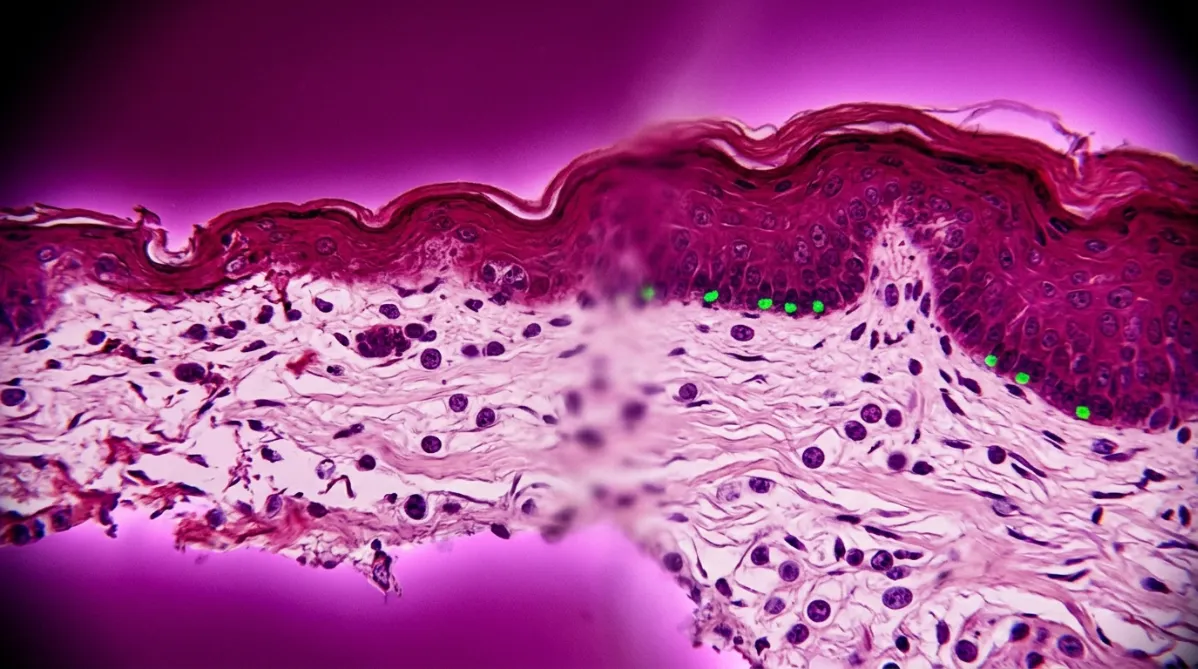
In the epidermis, the number of Ki67-positive cells (a marker of proliferating cells) fell in aged mice. Resveratrol restored it.
2. SIRT1 activity went up, not SIRT1 amount
Resveratrol did not change the number of SIRT1-positive cells. It did reduce the number of acetyl-lysine-positive cells, which the authors interpret as higher SIRT1 activity. SIRT1 is an NAD+-dependent deacetylase, so it strips acetyl groups from proteins. Fewer acetylated targets points to more of that work being done.
3. Collagen-chewing enzymes stayed quiet
In the dermis, MMP-9 and MMP-13 are matrix metalloproteinases that break down the extracellular matrix, including collagen. Their immunopositive areas increased in aged mice. That increase was not seen in aged mice that received resveratrol.
A Detail That Cuts Against the Hype
Phosphorylated SMAD2 levels, a marker tied to TGF-β signaling, dropped with age. Resveratrol did not change that. So the compound did not fix everything about aging skin. The protective effect appears to run through reduced senescence in the epidermis and less collagen degradation in the dermis, not a full restoration of youthful signaling.
The Cell Work: Why SIRT1 Matters
The team also ran a cell experiment. When they knocked down SIRT1 in human HaCaT keratinocytes, p21 expression rose, as did senescence-associated β-galactosidase activity. Both are markers of cellular senescence. This supports the idea that SIRT1 helps keep skin cells from entering a senescent state, but it is a cell-culture result, not a human one.
NAD+ and Sirtuin Context
SIRT1 depends on NAD+ to function. That is why resveratrol, NAD+ precursors, and "sirtuin activator" products are often discussed together. This study tested only resveratrol. It did not test NAD+ boosters, so it cannot say whether they would produce the same skin effect.
Practical Takeaways
Mouse study, not a human trial
This is an animal study with supporting keratinocyte cell work. It measured tissue thickness and molecular markers. It did not test wrinkles, hydration, or barrier function directly in people.
The dose does not translate directly
The mouse dose was 0.4 g of resveratrol per kg of diet. That is a feed concentration, not a per-body-weight human dose, and mouse metabolism differs from ours. The paper does not establish an effective human dose. Resveratrol supplements on the market commonly come in capsules of roughly 100 to 500 mg, but those figures are not validated by this study for skin.
Bioavailability is a known problem
Oral resveratrol is poorly bioavailable. It is absorbed but rapidly metabolized, so blood levels of the active compound can be low. Whether skin tissue in humans would receive enough of it is an open question. Some people take it with a meal containing fat, but no timing protocol has been established for skin outcomes.
Oral vs. topical
This study used oral, dietary administration. It did not test creams or serums, so it offers no evidence that topical resveratrol would work the same way.
Who Might Consider It, and Who Should Skip
Possibly worth discussing with a clinician: healthy adults interested in long-term skin aging strategies who understand the evidence is preclinical and are comfortable with an experimental approach.
Should be cautious or skip:
- Anyone pregnant or breastfeeding
- People taking blood thinners or other medications with narrow safety margins, since supplements can interact with drug metabolism
- People with hormone-sensitive conditions
- Anyone expecting a proven wrinkle treatment
Proven basics for skin aging, such as daily sunscreen and not smoking, have far stronger human evidence than any sirtuin activator.
The Bottom Line
In aged mice, long-term dietary resveratrol attenuated skin thinning, restored epidermal cell proliferation, increased a marker of SIRT1 activity, and blocked the age-related rise of MMP-9 and MMP-13. Cell work supports SIRT1's role in restraining keratinocyte senescence. But human dose, delivery, and benefit remain unproven.
Source: Tamura F, Nojima I, Kunimoto R, et al. SIRT1 Activator Resveratrol Attenuates Age-Related Skin Thinning in Mice. J Dermatol. 2026;53(11):1650-1659. DOI: 10.1111/1346-8138.70471. PubMed: 42638272.