Biocracked
Approach 1, macro science, in palette D, bold color field.

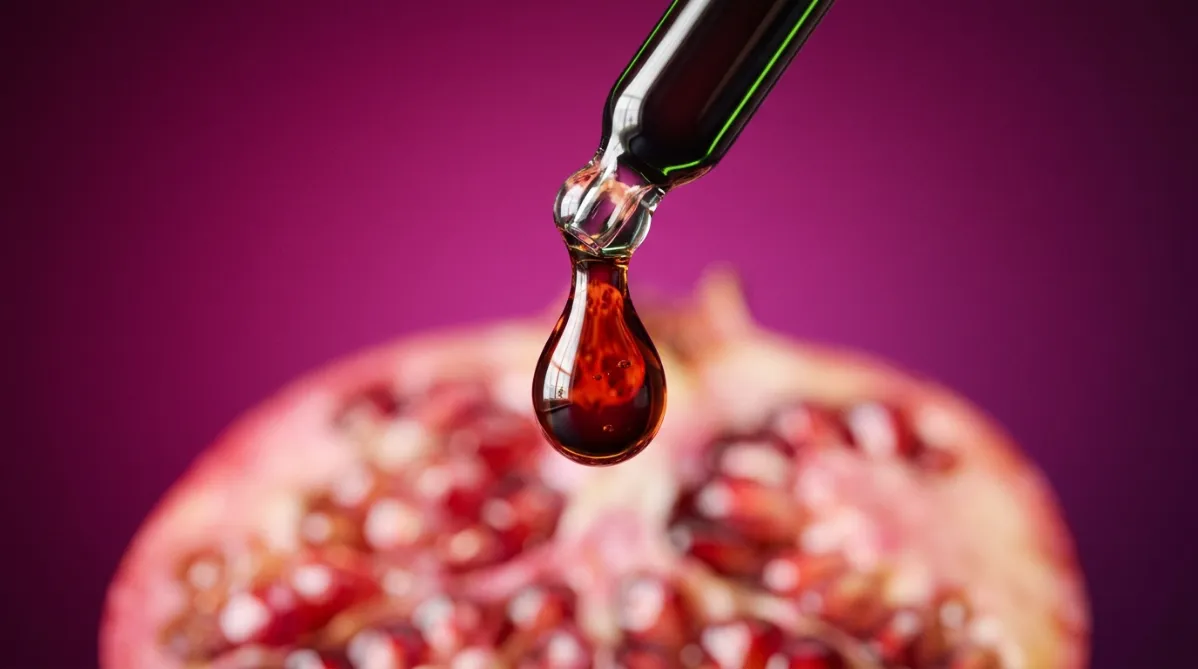
Extreme close-up of a single glass dropper releasing a plump droplet of deep ruby-amber pomegranate seed oil, shot at a slight low angle so the drop hangs at the pipette tip. Inside the droplet, a tiny inverted reflection of the room and a few suspended micro-bubbles are visible. Below it, a halved pomegranate is out of focus, its glossy translucent arils catching the light. The backdrop is a saturated, flat magenta-violet field with a clean, seamless gradient. Lighting is soft, directional studio light from the upper left, with a crisp specular highlight on the drop and a warm translucent glow through the oil. A hairline accent of electric green appears in the dropper's rubber bulb. Shallow depth of field, razor-sharp on the drop. Mood is precise, vivid, curious and cautiously optimistic.
Supplements

Five Drops of This Seed Oil Beat Diet Alone on Memory in MCI Trial

Nova Chen · · 4 min read

Five drops a day. That is the dose behind one of the more eye-catching supplement results in recent cognitive research. In a one-year randomized trial of people with mild cognitive impairment (MCI), those who added pomegranate seed oil (PSO) to a Mediterranean diet scored significantly better on memory and thinking tests than those who followed the diet alone.

The result is promising. It also comes with a big asterisk, covered below.

The study at a glance

The paper, published in the Journal of Alzheimer's Disease in 2024 by a team at the Greek Association of Alzheimer's Disease and Related Disorders and Aristotle University of Thessaloniki, is one of the first clinical trials of PSO in people with cognitive problems. The authors say they ran it because clinical data were lacking.

  • Design: Randomized, two-arm trial
  • Participants: 80 people diagnosed with MCI
  • Intervention group (n=40): 5 drops of PSO per day plus the Mediterranean diet (MeDi)
  • Control group (n=40): Mediterranean diet only, with no placebo oil
  • Duration: One year
  • Assessment: Extensive neuropsychological testing before and after the year
  • Conflicts of interest: None declared by the authors

The headline numbers

After 12 months, the PSO group performed significantly better than the control group in three areas:

  • Global cognition: p = 0.004
  • Verbal episodic memory: p = 0.009
  • Processing and executive functions: p < 0.001

Verbal episodic memory is the kind of recall you use to remember a conversation, a word list or a story. Processing and executive function covers mental speed, planning and attention control. These are the abilities that often start to slip in MCI.

One point of precision: the abstract reports that the PSO group did better than the control group. It does not give a detailed effect size, and it doesn't describe the oil as reversing MCI or preventing dementia. "Slowed decline" is a fair shorthand for the comparison between groups, but the paper's own claim is more modest. PSO was associated with better scores on these domains than diet alone.

Wait, what is PSO?

Pomegranate seed oil is not pomegranate juice, and it is not urolithin A.

  • Pomegranate juice is water-based and rich in polyphenols such as ellagitannins and sugars.
  • Urolithin A is a compound gut bacteria make from those polyphenols. It is sold as a separate supplement, often discussed in the context of mitochondrial health.
  • Pomegranate seed oil is the fat extracted from the seeds. It is notable for a high content of unusual fatty acids, particularly punicic acid, a conjugated omega-5 fatty acid. The authors point to these fatty acids' antioxidant and anti-inflammatory properties as the rationale for testing the oil in neurodegeneration.

So the trial says nothing about juice or urolithin A. Swapping in a different pomegranate product is not the same intervention.

The big caveat: no placebo

The control group followed the Mediterranean diet and received no placebo oil. Everyone knew which group they were in. That makes this an open-label comparison, and it matters for three reasons:

  1. Expectation effects. People who know they are taking something may try harder, or feel more confident, on cognitive tests.
  2. Behavior differences. Taking a daily supplement can go along with other healthy habits that were not measured.
  3. Confidence in the size of the effect. Without blinding, we cannot be sure how much of the gap is the oil itself.

The results are statistically significant, but a placebo-controlled, double-blind trial would be needed to be confident in them. The study is also small, at 80 people, and was run at one center over one year.

What about biomarkers?

The same research group later published a follow-up (Biology, 2025) reporting blood biomarker improvements, including amyloid-beta and phosphorylated tau, in a subset of participants. That is intriguing because it suggests a possible biological signal. But it is a subset analysis from a small, open-label study, so treat it as hypothesis-generating rather than proof of a disease-modifying effect.

What this means for you

What was studied: 5 drops of PSO per day, taken alongside a Mediterranean diet, for one year. The abstract does not specify the product's volume per drop, the timing relative to meals or the brand beyond it being Greek PSO, so there is no evidence-based basis for fine-tuning timing. Anyone trying a product should follow its label and their clinician's advice rather than assuming equivalence with the trial material.

Who it may be relevant for:

  • Adults with a diagnosis of MCI who are already working on lifestyle strategies and want to discuss adding a supplement with their doctor
  • People interested in dietary approaches to dementia prevention, especially those already following a Mediterranean-style diet

Who should be cautious or skip it:

  • Anyone without a clinical evaluation who is experiencing memory problems. Get assessed first; cognitive symptoms can have treatable causes.
  • People who are pregnant or breastfeeding, have allergies, or take prescription medications, until they have spoken with a healthcare professional. The abstract describes PSO as a natural product that does not burden the body, but a trial of this size is not a comprehensive safety study.
  • Anyone hoping to replace medical care or other proven measures. The authors describe PSO as a possible part of holistic approaches, not a standalone treatment.

Practical bottom line:

  • The diet came first. Both groups followed the Mediterranean diet, so the oil is best seen as an add-on to the diet, not a substitute for it.
  • Expect no miracles. The data show better test performance versus diet alone, not a cure.
  • Wait for confirmation. A blinded, placebo-controlled trial with more participants would be the real test.

The takeaway

Five drops of pomegranate seed oil daily, on top of a Mediterranean diet, was associated with better global cognition, verbal episodic memory and executive function after a year in 80 people with MCI. It is an encouraging, low-effort signal from a research group with no declared conflicts, and it deserves a rigorous follow-up. But with no placebo and a small sample, it is a promising lead, not settled science.


Original study

Read the original research on pubmed.ncbi.nlm.nih.gov →

This article summarizes published research for general information. It is not medical advice.

NC

Written by

Nova Chen

Nova Chen writes for Biocracked: biohacking science, longevity & human performance.

Related Articles

Approach: macro science. Palette: warm (amber and honey).

Extreme macro photograph of a single golden droplet of DHA-rich fish oil suspended at the tip of a glass pipette, shot at eye level with a shallow depth of field. Inside the droplet, a tiny inverted reflection of a window shows through like a lens. Behind it, a softly blurred second droplet rests on a curved glass surface, catching a thin rim of light. Backlit by low golden-hour sunlight from camera left, producing glowing honey and copper tones, warm brown shadows, and delicate caustic patterns on the surface below. The oil shows fine texture, with microscopic bubbles and a slight viscous sheen. A faint electric green reflection glints along the pipette's edge. The mood is quiet, precise and hopeful, with a clean, uncluttered composition and generous empty space on the right. Photorealistic, no text.
supplements

DHA for the Brain: 12 Months Slowed Hippocampus Shrinkage in MCI

BY NOVA CHEN ·

A year of DHA slowed shrinkage of the hippocampus, the brain's memory center, in older adults with mild cognitive impairment. In a 240-person randomized trial from China (219 completers), the DHA group also outperformed placebo on Full-Scale IQ, Information and Digit Span. The dose was a 2 g/day supplement, about 0.9 g of actual DHA. The findings may help explain why omega-3 trials in healthy people have been mixed, since the benefit may be concentrated in those already showing cognitive decline. This article covers the numbers, the likely mechanisms, practical tips on dose and sourcing, and the limits of a single trial.

Approach: Macro science. Palette: B, warm.

Extreme close-up macro photograph of a thin slice of raw chicken breast muscle, shot at a slight 30-degree angle with a shallow depth of field. The pale pink-gold fibers run diagonally across the frame, with glistening moisture and fine striations visible. In the foreground, a few tiny translucent anserine crystals sit on the surface, catching light like small shards of amber glass. A single small point of electric green light reflects off one crystal as a subtle accent. Warm, low golden-hour side light from the left casts honey and copper highlights and soft brown shadows. The background melts into creamy amber bokeh. The mood is quiet, curious and scientific, with a tactile, organic feel and no blue cast.
supplements

Chicken Breast Dipeptide Anserine Lifted Memory Scores in MCI

BY NOVA CHEN ·

A chicken-breast dipeptide called anserine just posted a surprisingly clean result in people with mild cognitive impairment. In a 12-week randomized trial, 500 mg a day lifted MMSE scores by about 1.9 points while placebo stayed flat (p=0.036). The proposed mechanism involves scavenging hypochlorous acid, a reactive molecule tied to neuroinflammation. It fits with earlier carnosine blend studies and a 2024 meta-analysis showing better delayed recall. But with just 30 people analyzed and one cognitive test, here is what the data does and does not tell you.

Approach: Conceptual metaphor, palette D (bold color field).

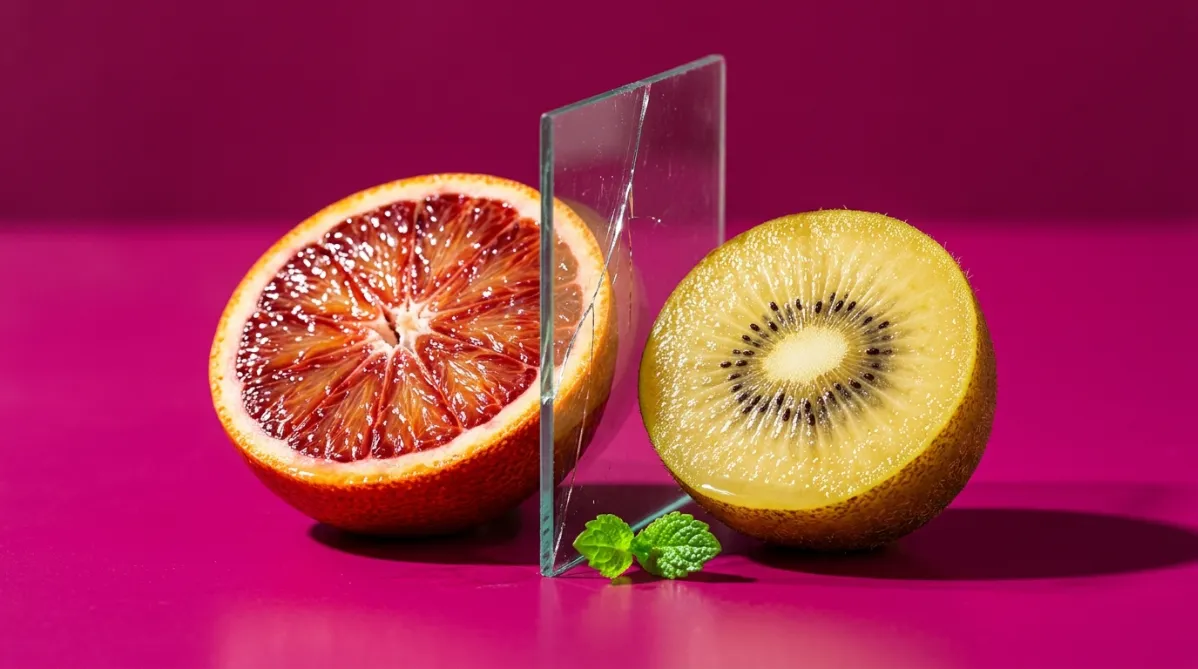
A single halved blood orange and a single halved yellow kiwi-style golden kiwi sit side by side on a saturated magenta seamless backdrop, shot from a low three-quarter angle with shallow depth of field. Between them, a thin, slightly cracked glass pane stands upright, partly dividing the two fruits to suggest "association, not cause." Glistening juice vesicles in the orange flesh catch crisp, directional studio light from the upper left, throwing a sharp, short shadow across the glossy magenta surface. A tiny electric green sprig of a fresh leaf rests at the base of the glass as the only green accent. Colors are juicy, vivid and contrasting: magenta, orange, gold. Mood is curious, clean and quietly skeptical, with a food-as-evidence feel. Photorealistic, tactile textures, no text or labels.
research

Vitamin C and E Linked to 18% Lower Alzheimer Risk, With a Catch

BY NOVA CHEN ·

In the Rotterdam Study of 5,395 older adults, higher dietary vitamin C and vitamin E intake were each linked to roughly 18% lower Alzheimer risk per standard deviation. The pattern looked strongest among smokers, where beta carotene and flavonoids also stood out. But this was an observational study of food intake, not pills, so it shows association rather than cause. Some of the headline smoker numbers also have confidence intervals that cross 1.0. Here is what the data actually say, which foods supply these nutrients, and where supplements do and do not fit.

Approach: conceptual metaphor. Palette: D, bold color field.

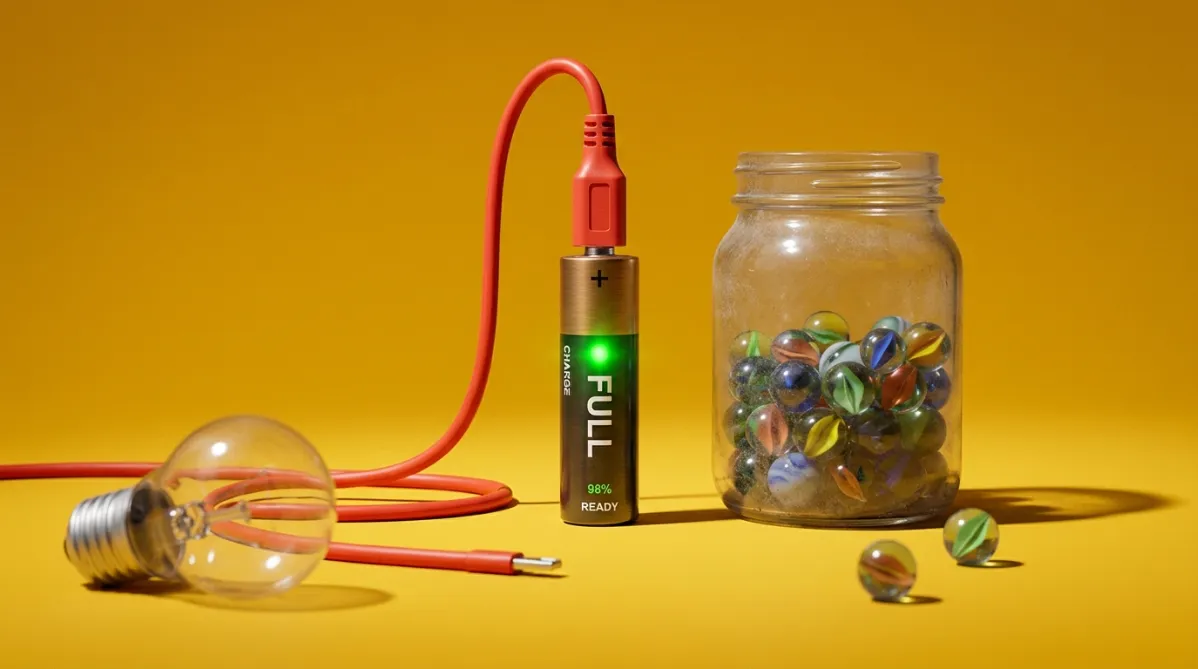
A single AA-style cylindrical battery stands upright, fully charged, on a seamless saturated mustard-yellow backdrop. Beside it sits a matching, untouched, slightly dusty glass jar of marbles, so the charge shows no visible link to any result. More precisely, a bright tomato-red extension cord plugs into the battery's top. Its other end curls away unconnected, lying on the floor beside an unlit incandescent bulb. A small electric green LED glows on the battery's side as the only green accent. Camera: low three-quarter angle, 50mm lens, shallow depth of field, with the bulb softly blurred in the foreground. Lighting: hard, clean studio key light from the upper left, with crisp shadows falling to the right on the yellow surface. Mood: puzzled, wry, a full power source that fails to light anything.
supplements

Nicotinamide Riboside Doubled NAD+ but Failed to Boost Memory

BY NOVA CHEN ·

A supplement doubled a key molecule in the blood, and memory didn't budge. In a 12-week randomized trial of older adults with amnestic mild cognitive impairment, nicotinamide riboside raised NAD+ twofold but did not improve cognition, total brain blood flow, or blood pressure. There was one tantalizing exploratory hint of increased hippocampal blood flow, but it's far from proof. Here's what the study really shows, where its limits are, and what it means if you're thinking about buying an NAD+ booster.

This page is available in