A powder you stir into a drink every day, 12 ingredients, and a cardiology journal reporting better artery function after six months. That is the headline version of a new randomized trial of NOVOS Core. The full picture is more interesting, and more cautious, than the marketing-friendly version.
The study, published in European Heart Journal Open, is a double-blind randomized controlled trial from the University of Surrey and affiliated NHS teams. Here is what it found, what it did not find, and who should care.
The Headline Numbers
The trial (registered as NCT06145087) tested a multi-ingredient powder containing vitamins and minerals, amino acids, and plant-derived bioactives against a control. Participants were apparently healthy adults. All figures below are differences in change between the supplement and control groups after 6 months.
- Endothelial function: flow-mediated dilation (FMD), the primary outcome, improved by 2.9 percentage points (95% CI 2.1 to 3.8).
- Arterial stiffness: pulse wave velocity (PWV) fell by 1.18 m/s (95% CI -2.00 to -0.36).
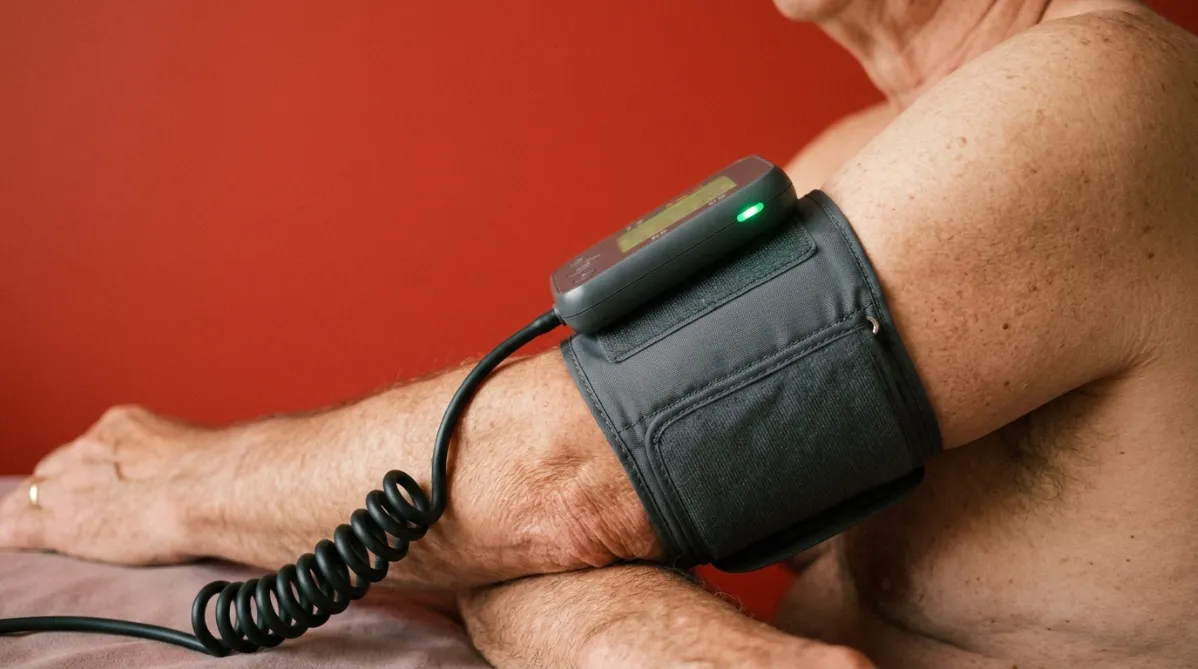
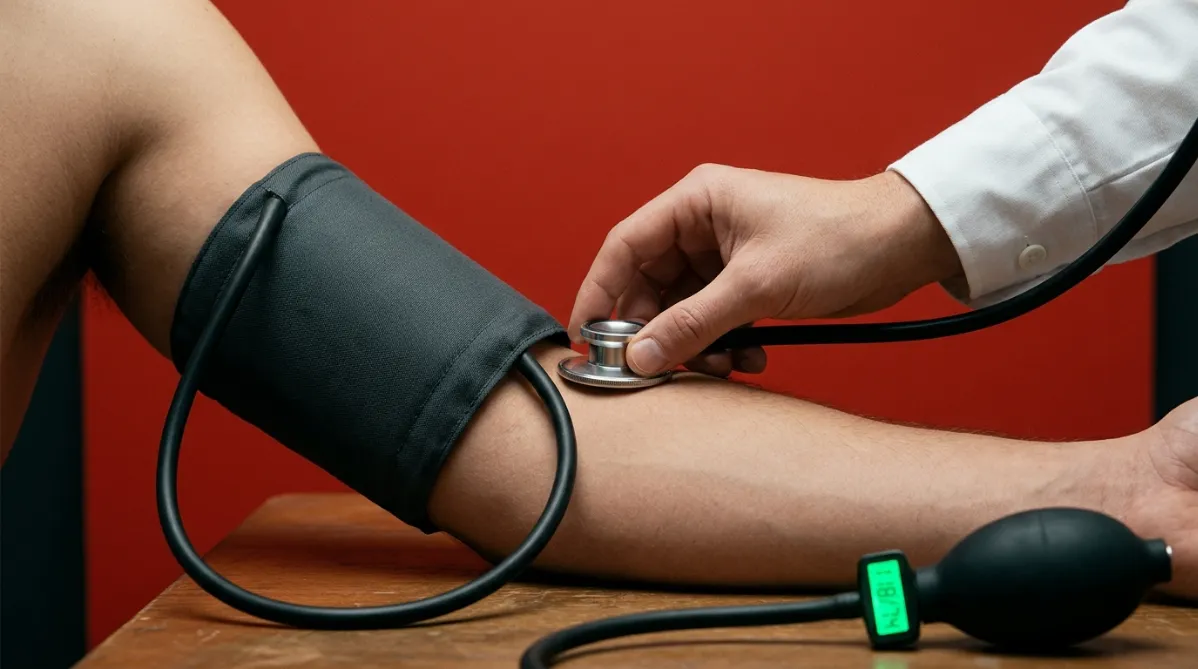
- Systolic blood pressure: peripheral SBP dropped by 6.1 mmHg (95% CI -10.9 to -1.3).
- Estimated 10-year cardiovascular risk: SCORE2/SCORE2-OP fell by 0.45 percentage points (95% CI -0.86 to -0.03).
- Lipids: unchanged.
FMD measures how well the inner lining of an artery relaxes in response to increased blood flow, and it is a widely used readout of endothelial health. PWV measures how fast the pulse wave travels along the arteries, and a higher speed means stiffer vessels. Both are surrogate markers, not heart attacks or strokes.
The Twist: It Wasn't Cholesterol
Many supplements get credit for "heart health" through lipid changes. This one did not move them. The authors attribute the small drop in estimated cardiovascular risk mainly to the lower systolic blood pressure, because SCORE2 calculations rely heavily on SBP, age, sex, smoking, and cholesterol. If lipids stayed flat, blood pressure is the main input that could have shifted the score.
The risk reduction is also modest in absolute terms. Participants started at a low baseline of 3.6 ± 2.9%, so a 0.45-point drop is a small change from an already low starting point. It is an estimate from a calculator, not an observed reduction in events.
How Solid Is the Evidence?
This is a randomized, double-blind human trial, which is a stronger design than animal work or observational data. Several limitations temper the result.
It is small. Sixty-one people were randomized (33 to the supplement, 28 to control), and only 43 completed both study visits (24 vs. 19). That is roughly 30% of participants lost, which can distort results if the people who dropped out differ from those who stayed.
The sponsor is involved. According to the conflict-of-interest statement, one author is an employee of NOVOS Labs, and senior author Christian Heiss has received research funding from NOVOS Labs. Industry involvement does not invalidate a trial, but it is a reason to want independent replication.
The population was healthy and low-risk. Findings in apparently healthy adults may not carry over to people with hypertension, diabetes, or established cardiovascular disease.
The outcomes are surrogates. Better FMD and PWV are encouraging signs, but the trial was not designed or powered to show fewer cardiovascular events.
The result is for the whole blend. With 12 ingredients combined, the study cannot say which component, if any single one, drove the effects.
What This Is Not
Despite the "longevity powder" label, this is not a biological-aging or lifespan result. The paper measures vascular function and blood pressure. It does not report epigenetic clocks, mortality, or lifespan. The authors describe the formulation as targeting pathways relevant to vascular ageing, and that framing is a hypothesis about mechanism, not proof of slowed aging.
The abstract also mentions an acute post-dose vascular assessment, but the headline results it reports are the 6-month effects.
Practical Takeaways
Dose and timing: The abstract describes daily intake over 6 months but does not give the specific serving size or time of day. Use the product's label directions and consult the full text (PMC13730552) for the protocol. Do not assume that more is better.
Who might find this relevant: Generally healthy adults who are already doing the basics (exercise, diet, sleep, not smoking) and are curious about adjunct strategies for vascular health. Even for them, the evidence is one small, sponsor-linked trial.
Who should be cautious or skip it:
- People taking blood pressure medication, since an additive blood-pressure-lowering effect is possible. This is a general precaution, not something the paper tested.
- Anyone on prescription drugs, pregnant or breastfeeding, or with a medical condition, who should check the ingredient list with a clinician first.
- Anyone hoping a supplement can replace a statin, antihypertensive, or lifestyle change. This trial does not support that, and lipids did not change.
- Anyone expecting proven anti-aging effects. This trial did not test that.
The Bottom Line
The trial gives a reasonably encouraging signal: a multi-ingredient powder was associated with better endothelial function, lower arterial stiffness, and lower systolic blood pressure over six months in healthy adults, with no change in cholesterol. But the sample was small, many participants dropped out, the manufacturer supplied support, and the outcomes are surrogate markers. The next step is larger, independent, longer trials that include higher-risk populations and ideally dissect which ingredients matter.
Sources: PubMed 42979377 | DOI: 10.1093/ehjopen/oeag157 | Trial registration NCT06145087
This article is for information only and is not medical advice.