For years, researchers who looked at the mitochondria inside aging eggs found something puzzling: not much. Measured as a whole, the energy-producing organelles in an older mouse oocyte looked surprisingly similar to those in a young one. A new study suggests that apparent calm was an illusion created by averaging, and that NMN, a popular NAD+ precursor supplement, reshaped the picture in ways that were far from uniform.
The Problem With Averages
Mitochondrial dysfunction is widely considered a leading contributor to the decline in egg quality that comes with maternal age. Eggs are packed with mitochondria, and they depend on them for the energy needed to mature, be fertilized and support early embryo development.
Most earlier work measured mitochondrial DNA (mtDNA) copy number or membrane potential across the whole mitochondrial pool and reported a single number. That approach treats mitochondria as interchangeable. The new paper in the Journal of Ovarian Research, from Northeastern University's Piasecki, Sheehan, Hopgood, Tilly and Woods, argues that this can hide meaningful differences between subtypes of mitochondria.
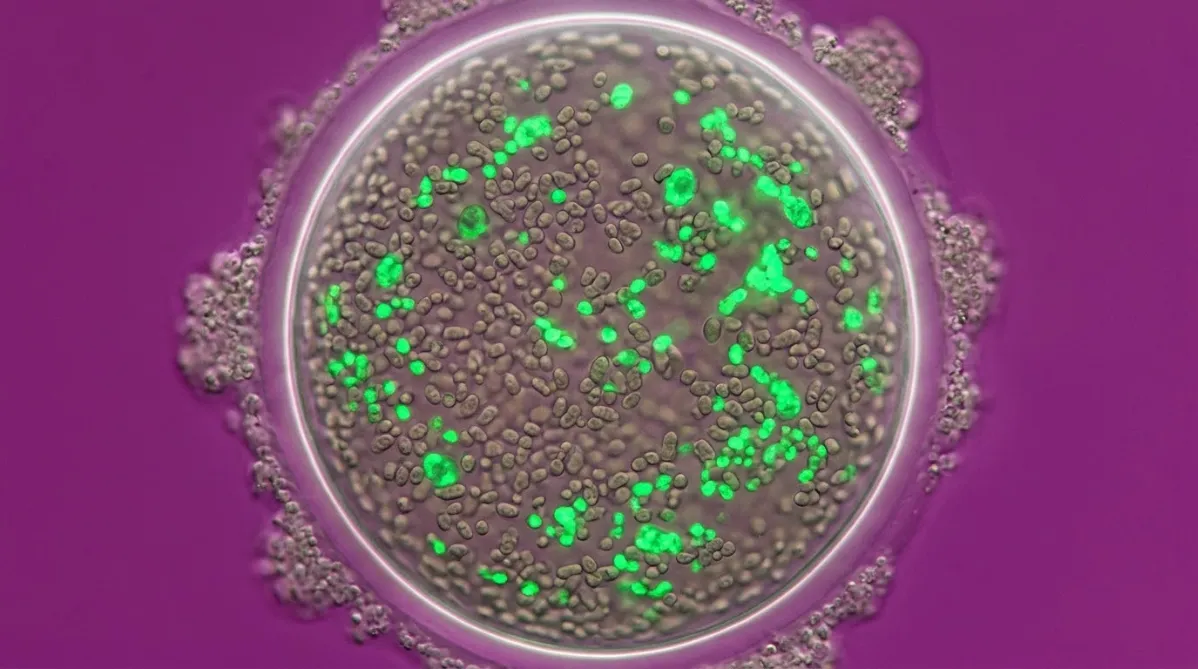
To test the idea, the team used fluorescence-activated mitochondria sorting (FAMS), which lets researchers sort and analyze individual organelles based on properties such as membrane potential and size, rather than grinding everything into one average.
What the Aggregate Data Showed
When the team looked at the whole mitochondrial population in mouse oocytes, they found no significant age-related difference in mtDNA copy number or membrane potential. Under the old approach, that would have suggested minimal mitochondrial change with age.
The authors say that conclusion was incomplete.
The Hidden Subpopulations
Once the organelles were sorted, aged oocytes showed significantly elevated mtDNA copy number in two specific groups: mitochondria with high membrane potential and small mitochondria. The low membrane potential and large subpopulations showed no significant age-related differences.
The effect was masked in the bulk measurement. A change confined to certain subtypes can be diluted when the rest of the pool stays the same.
NMN's Uneven Effects in Eggs
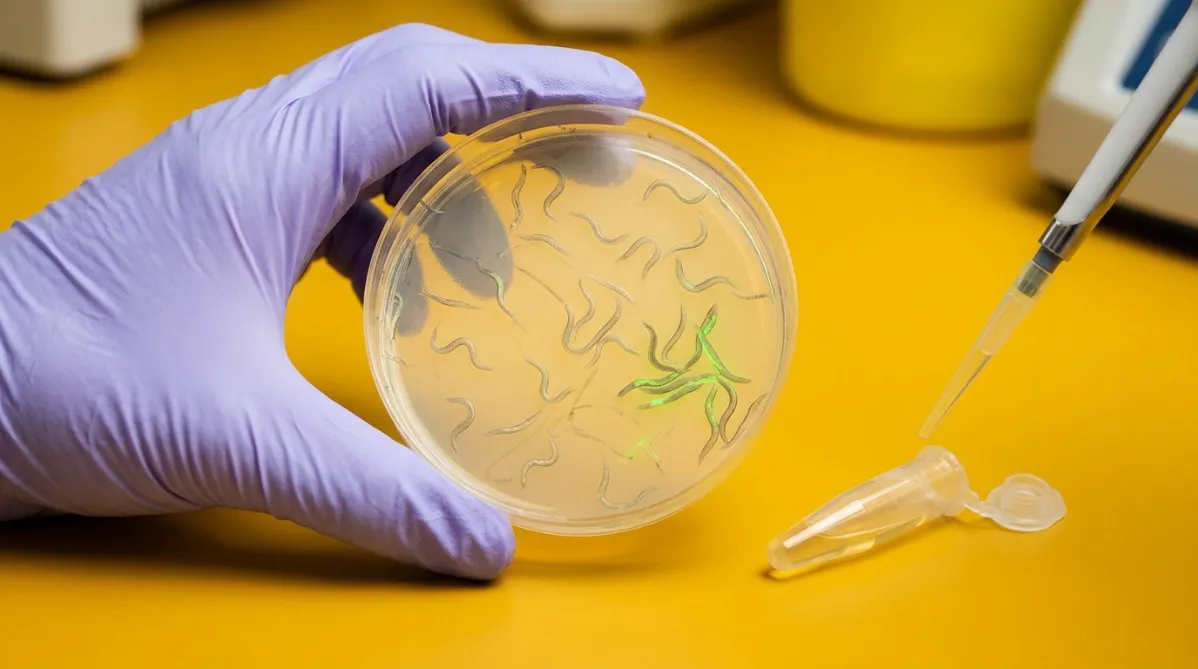
The researchers then examined mice given NMN supplementation. In the high membrane potential and small mitochondrial subpopulations, NMN moved mtDNA copy number back toward young levels. In large mitochondria, it had the opposite effect.
The authors describe this as subpopulation-specific rather than uniform rejuvenation. NMN did not simply turn back the clock on every mitochondrion. It appeared to push different subtypes in different directions.
The Cumulus Cell Story
The study also looked at cumulus cells, the granulosa cells surrounding the egg, which support it metabolically and communicate with it. Here, age-related changes did show up in aggregate: mtDNA copy number fell and membrane potential rose. Subpopulation analysis showed that the drop in mtDNA copy number was driven mainly by the high membrane potential group.
NMN's effects were again divided. In small cumulus cell mitochondria, it raised mtDNA copy number above both young and aged levels. In large mitochondria, it lowered copy number below aged levels. So this was not a restoration to a youthful baseline. In some subpopulations NMN overshot the young state, and in others it moved further from it.
What This Does Not Show
This result is easy to over-read, so some limits matter.
- Mice only. The work was done in mouse oocytes and cumulus cells, and human egg biology may differ.
- No fertility outcomes. The study did not report pregnancy rates, live births, embryo quality or egg competence. It describes organelle-level changes, not reproductive success.
- Direction is unclear. Moving mtDNA copy number toward young levels in one subtype is not proof of better function. Overshooting young levels, or lowering copy number in large mitochondria, may be neutral, helpful or harmful. The study does not say.
- A mapping study. The authors frame the findings as identifying more precise targets for future mechanistic work, not as evidence of therapeutic benefit.
Conflicts of Interest
The disclosures are relevant. Two authors, Woods and Tilly, declare an interest in intellectual property described in several U.S. patents. Hannah Sheehan is CEO and CSO of SauveBio, Inc. The other authors declare no competing interests. Disclosure does not invalidate the findings, but it is a reason to wait for independent replication, especially in a field where supplement marketing often outruns evidence.
Practical Takeaways for Women Considering NMN
For women interested in fertility and longevity, this study is intriguing but not actionable as a recommendation.
- It is not evidence that NMN improves egg quality in people. Nothing here measures conception or pregnancy, and the work is in mice.
- "Rejuvenation" is more complicated than the marketing suggests. NMN's effects varied by mitochondrial subtype, and in some cases went in opposite directions.
- Talk to a fertility specialist first. Supplements can interact with medications and treatment plans, and timing matters in fertility care. A reproductive endocrinologist can weigh your age, ovarian reserve and history.
- Be wary of oversimplified claims. A product promising to "restore egg mitochondria" is going beyond what this data support.
Open Questions
Several questions follow from this work:
- Do human oocytes show the same hidden subpopulation changes with age?
- Which mitochondrial subtypes matter most for egg developmental competence?
- Are NMN's opposing effects on large mitochondria beneficial, harmful or irrelevant?
- Does the overshoot of small cumulus cell mtDNA copy number have functional consequences?
- Do these organelle-level shifts translate into better fertilization, embryo development or live birth in animal models?
The Bottom Line
The study's main contribution is methodological. Looking at mitochondria one organelle at a time reveals age-related changes that averages hide, and shows that a widely used supplement acts selectively on them. That could sharpen future research on age-related infertility. Whether any of it helps a woman trying to conceive remains untested.