Biocracked
Approach 3, the human outcome, in palette D, a bold color field.

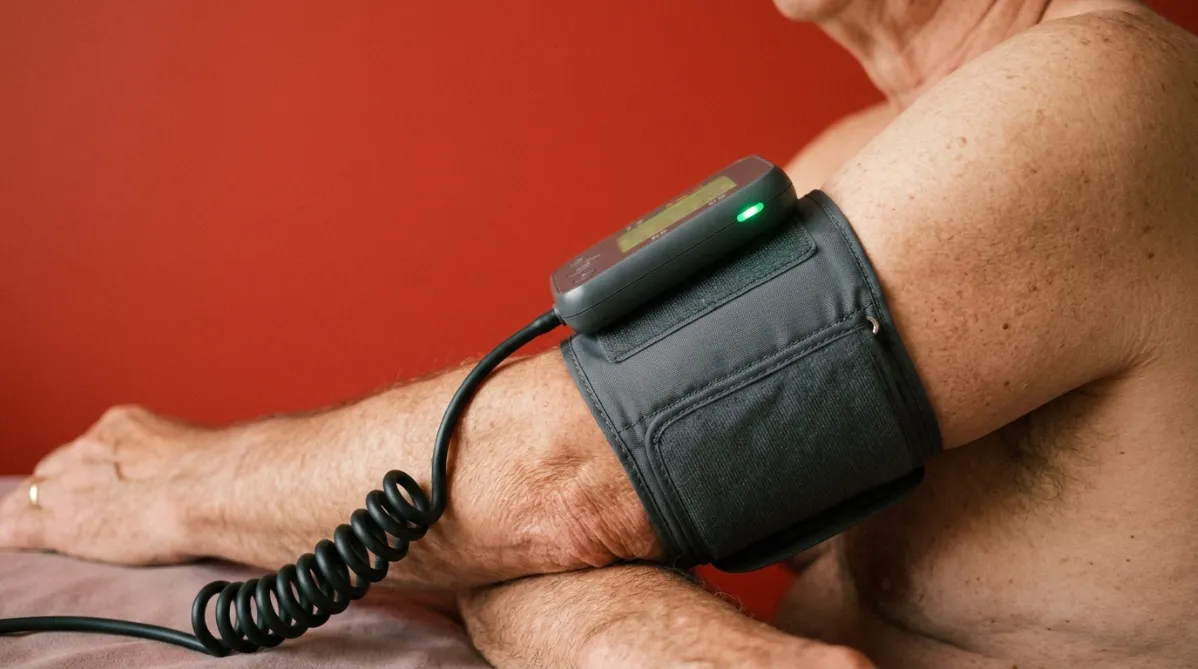
Close-up of an older adult's bare upper arm, seen from a slightly high three-quarter angle, with a blood pressure cuff wrapped snugly above the elbow. The cuff is matte graphite grey with a coiled rubber tube trailing out of frame. The arm shows real skin texture, freckles and fine creases, and the face is out of frame. The backdrop is a saturated, flat tomato-red wall. A small electric green LED glows on the cuff's digital monitor at the edge of the frame, with its display blurred and unreadable. Soft, even studio light comes from the left, with gentle shadows and no blue cast. Shallow depth of field keeps the cuff edge and skin pores sharp. The mood is calm, clinical and quietly hopeful.
Supplements

NMN and Blood Pressure: 10 Trials Pooled, Over-60s Dropped Most

Nova Chen · · 4 min read

Nicotinamide mononucleotide (NMN) has become one of the most talked-about longevity supplements, usually in the context of NAD+ levels, energy and healthy aging. A new systematic review and meta-analysis in Nutrients (Zhang et al., 2026) asks a more practical question: does it move blood pressure in people whose readings are already elevated? The answer is a cautious maybe, with the biggest signal showing up in adults aged 60 and older.

What the Researchers Did

The team searched PubMed/MEDLINE, Scopus, Web of Science and EBSCO from their inception through 13 December 2025 for randomized controlled trials of NMN supplementation that reported resting blood pressure. They pooled the data from 10 RCTs, covering 11 intervention arms and 349 participants, and compared NMN with placebo.

They combined results using a common-effects model in R. They then ran subgroup analyses by age, baseline body mass index, geographic location, intervention duration, NMN dosage and baseline blood pressure.

The Headline Numbers

  • Diastolic blood pressure (DBP): NMN was associated with a statistically significant but modest reduction of -2.15 mmHg (95% CI: -3.68 to -0.61) versus placebo.
  • Systolic blood pressure (SBP): The overall reduction was not statistically significant.
  • Adults 60 and older: In the age subgroup analysis, SBP fell by -3.94 mmHg (95% CI: -7.06 to -0.82).

The over-60 finding is the most eye-catching result, but it deserves careful reading. The confidence interval is wide, running from a drop of about 7 mmHg to less than 1 mmHg. That range spans everything from a clinically interesting effect to a negligible one.

Putting a 2 to 4 mmHg Drop in Context

A reduction of roughly 2 mmHg in diastolic pressure is real in a statistical sense, but small in everyday terms. For comparison, standard antihypertensive medications typically lower systolic pressure by considerably more, and lifestyle changes such as cutting sodium, losing weight and exercising regularly can produce comparable or larger shifts. Population-level models do suggest that even small average reductions can matter across large groups of people over many years, but that is not the same as showing that one person taking NMN will see a meaningful health benefit.

The authors themselves describe their findings as "preliminary and suggestive." NMN is not shown here to be a substitute for blood pressure medication, and nothing in this analysis supports stopping or reducing prescribed treatment.

Why the Over-60 Signal Is Interesting but Fragile

There is a plausible biological story. NAD+ levels tend to decline with age, and NAD+ is involved in vascular function, mitochondrial health and cellular stress responses. If NMN raises NAD+ availability, older adults, who may start from a lower baseline and often have stiffer arteries, might be more responsive. That is a reasonable hypothesis, but this analysis cannot confirm the mechanism.

Several cautions apply:

  • Small total sample. With 349 participants spread across 10 trials, each subgroup is smaller still. Subgroup findings are more prone to chance results.
  • Subgroup analysis. The overall SBP effect was not significant. Finding a significant result in one slice of the data is a hypothesis to test, not a conclusion.
  • Common-effects model. This approach assumes that all trials are estimating one single true effect. If the studies differ in dose, duration, population and formulation, as they often do, a random-effects model would typically give wider intervals and more conservative results. Readers should treat the precision as potentially optimistic.
  • Heterogeneous interventions. The trials used various NMN regimens, so a single pooled number blurs differences between them.

Doses and Duration

The abstract states that subgroup analyses were carried out by NMN dosage and intervention duration, but it does not report the specific doses or treatment lengths used. Based on the source material, the safest statement is that doses and durations varied across trials. Anyone interested in specifics should consult the full paper rather than extrapolating a dose from this summary.

Who Might Care About This

The analysis focused on adults with elevated blood pressure, so the findings are most relevant to:

  • Older adults, particularly those 60+, who are already exploring NMN for healthy aging
  • People with mildly raised readings who are looking for adjuncts to lifestyle changes, under medical guidance
  • Researchers designing larger trials of NAD+ precursors

It is less relevant to people with normal blood pressure, and it is not evidence for treating hypertension with NMN alone.

What We Still Don't Know

The authors call for long-term, large-scale, high-quality RCTs. Open questions include whether the effect persists beyond the short durations typical of supplement trials, whether it translates into fewer cardiovascular events, how NMN compares with other NAD+ precursors such as nicotinamide riboside, and which patients are most likely to respond. Home or 24-hour ambulatory blood pressure measurements in future trials would also help separate real effects from clinic-visit noise.

Practical Takeaways

  • The effect is modest. About -2.15 mmHg for diastolic pressure is statistically significant but small.
  • Overall systolic pressure did not change significantly. The -3.94 mmHg systolic drop appeared only in the 60+ subgroup.
  • Evidence is early. Ten trials and 349 people is a limited foundation, and the authors label the results preliminary.
  • NMN is not a blood pressure drug. Do not replace or reduce prescribed medication on the basis of this analysis.
  • Talk to your doctor first. This matters especially if you take antihypertensives, have kidney or heart conditions, or are pregnant or breastfeeding. Monitor your blood pressure at home if you start any new supplement.
  • Fundamentals still win. Diet, activity, sleep, weight management and sodium reduction have stronger evidence for lowering blood pressure.

Bottom Line

This meta-analysis adds a useful, if tentative, data point to the NMN conversation. It suggests a small diastolic benefit and a possible systolic benefit in older adults, but the sample is small, the model is optimistic and the key finding comes from a subgroup. For now, NMN looks like an interesting candidate worth testing properly, not an established tool for managing blood pressure.

Original study

Read the original research on pubmed.ncbi.nlm.nih.gov →

This article summarizes published research for general information. It is not medical advice.

NC

Written by

Nova Chen

Nova Chen writes for Biocracked: biohacking science, longevity & human performance.

Related Articles

Approach 4, conceptual metaphor, in palette D, bold color field.

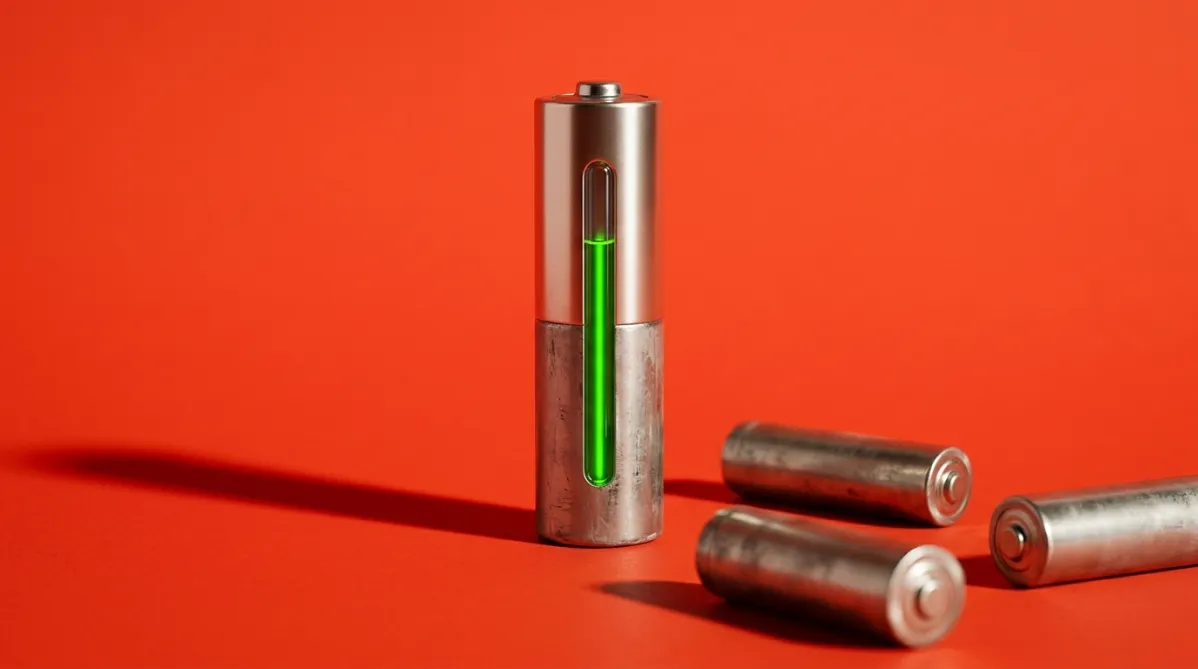
A single AA-style cylindrical battery, shown as a real physical object with a matte metal casing, stands upright at the center of a saturated tomato-red seamless paper backdrop. Its top half is bright and glossy, while the lower half is scuffed and dull. A thin, crisp line of electric green liquid light fills the clear gauge window along its side, stopping about three-quarters of the way up. Three smaller, identical dead batteries lie tipped over in the foreground, slightly out of focus, to suggest the rival compounds. The camera sits at a low three-quarter angle with a shallow depth of field. A hard, warm key light from the upper left casts a sharp, long shadow across the red surface. The mood is punchy and skeptical: one cell charged, the others spent.
supplements

NMN vs NR vs NADH: One Lifted Endurance, None Fixed Fatigue

BY NOVA CHEN ·

A new network meta-analysis of 27 studies and 1,599 adults compared NMN, NR, NADH and nicotinamide, and the results are not what supplement marketing promises. NMN showed a dose-dependent boost in endurance, with a standardized mean difference of 1.02 at the high dose. NADH led for cognition, but mostly in cognitively impaired groups and with a result sensitive to influential studies. The surprise is that no precursor significantly improved perceived fatigue or sleep. Here is how the ranking breaks down, what the limits are, and who should or shouldn't bother.

**Approach:** Macro science. **Palette:** D, bold color field.

Extreme close-up of a small mound of white taurine crystals, needle-like and prismatic, shot at a 35-degree angle with a macro lens and shallow depth of field. The front crystals are razor sharp, with faceted edges that catch light and show tiny internal fractures. The mound sits on a glossy, saturated tomato-red acrylic surface that reflects a soft, blurred mirror image of the crystals. A large softbox from the upper left gives crisp highlights and warm red bounce in the shadows. A single crystal near the focal point carries a faint electric green (#00e676) refraction glint. The background melts into an out-of-focus gradient of deep red and orange. The mood is precise, energetic and confident, with a clean scientific feel. No text, no labels, no containers.
supplements

Taurine's 1.5–3 g Sweet Spot: What 34 Trials Found on Sugar and BP

BY NOVA CHEN ·

Taurine is best known for its anti-aging buzz, but a new meta-analysis of 34 randomized trials looked at everyday health markers instead. Supplementation was linked to lower fasting glucose, HbA1c, triglycerides, cholesterol, blood pressure and inflammation. The benefits clustered at 1.5–3 g per day, and the duration findings were surprising: glucose and lipids improved most after 8 or more weeks, while blood pressure and inflammation looked better in shorter trials. The effects are modest and the trials were varied, so here is what the paper does and doesn't show, and who might want to be cautious.

**Approach: Human outcome. Palette: warm (B).**

Extreme close-up, slightly high angle, of a woman's scalp parting in her 40s. Dense, glossy chestnut-brown hair is split by a fine comb. Short new hairs rise from the visible scalp skin, and a few strands catch the light. Faces and identity are out of frame. Low golden-hour window light enters from camera left and rim-lights the strands in honey and copper. Shadows stay warm brown, with no blue cast. The shallow depth of field blurs the background hair into soft amber bokeh. A thin steel trichoscopy probe tip sits at the edge of the frame, and a tiny electric green LED glints on its housing as the only accent. The mood is hopeful but scrutinizing, like a clinical check-up with a cautious eye.
supplements

NMN Boosted Hair Density 57% in a Human Trial—With a Big Catch

BY NOVA CHEN ·

NMN, the NAD+ booster beloved by longevity fans, has now been tested on hair in people for the first time. In a 12-week pilot of 15 women aged 40-50, growth-phase hair density climbed from 55.9 to 87.7 hairs/cm², and hair diameter rose from 75.3 to 78.8 µm. Participants also reported better gloss, elasticity and volume. But there was no placebo group, the sample was tiny and the authors are linked to an NMN supplier. Here is what the numbers show, what they cannot show, and who should wait.

Approach: conceptual metaphor. Palette: bold color field.

A single oversized brass balance scale sits on a saturated tomato-red seamless backdrop, photographed at a low three-quarter angle. One pan holds a small, glowing ember-orange coal that is cooling and dimming to grey ash at its edges, standing for inflammation. The other pan holds a tightly coiled, freshly cut green plant sprout with a tiny electric green (#00e676) tip, standing for repair and growth. The scale tips slightly toward the ember, leaving the viewer unsure which side is better. Hard but clean studio key light from upper left casts a crisp, graphic shadow across the red surface. Brass shows real fingerprints and fine scratches, and the ash has a visible powdery texture. The mood is tense, thoughtful and questioning, with the whole image shot at shallow depth of field and the fulcrum in sharp focus. No text, no markings on the scale.
supplements

NMN Calms Muscle Inflammation After Training—But at What Cost?

BY NOVA CHEN ·

NMN is sold as a cellular-energy booster, but a new muscle-biopsy study found a surprising tradeoff. After a damaging blood flow restriction workout, 1,200 mg/day of NMN suppressed inflammatory signals like TNF-α and IL-10. It also delayed a repair-related marker and erased the 171% mitochondrial increase seen with placebo. The study is tiny (11 untrained young men), so it can't settle anything. It does challenge the assumption that less post-workout inflammation is always better.

This page is available in