Biocracked
Approach: Macro science, with a Bold color field palette.

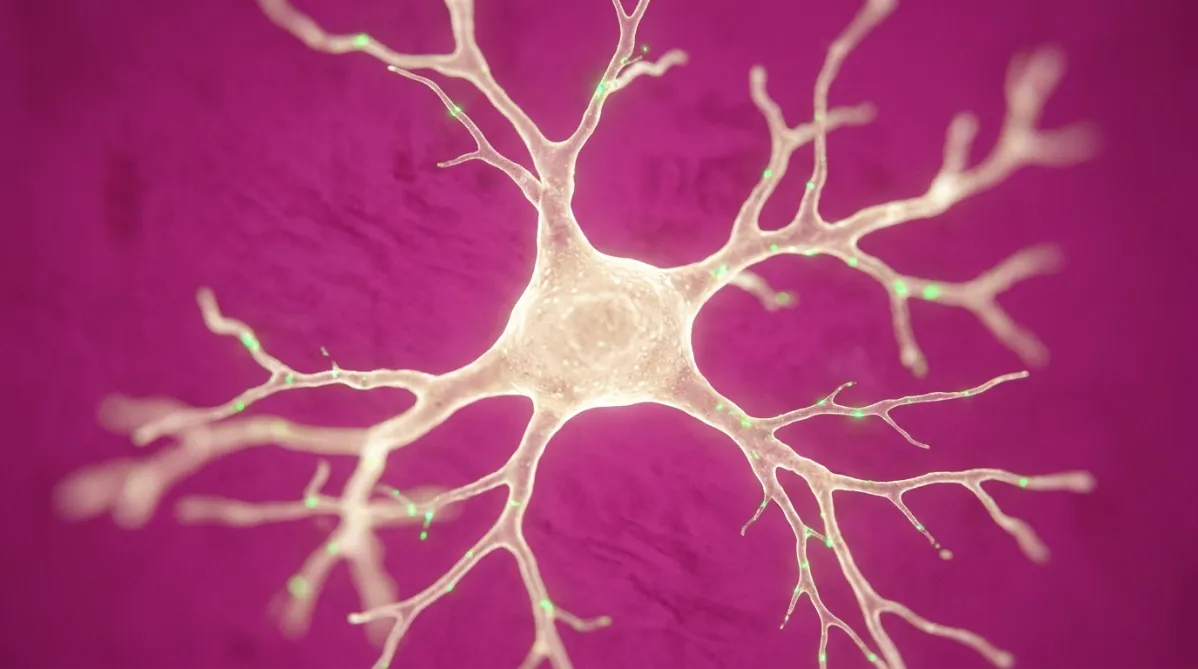
Extreme close-up microscopy-style image of a single microglial cell with fine, branching processes, rendered with the real texture of fluorescence-stained tissue: translucent, slightly granular cell body, delicate ramified arms reaching across the frame. Shot from straight overhead through a microscope objective with shallow depth of field, so the outer branches soften into blur. The cell is a luminous, warm ivory-white with a few small electric green (#00e676) points of light along its branches. Behind it is a saturated, even magenta backdrop with subtle tissue grain. Lighting is crisp and backlit, with gentle glow around the edges and no harsh shadows. The mood is curious and precise, with a quiet sense of renewal. No text or labels.
Longevity

Mouse Study: NR Shifted Aged Brain Cells Toward a Younger State

Nova Chen · · 4 min read

Important up front: this was a mouse study. Nothing in it shows that nicotinamide riboside (NR) improves memory, slows brain aging, or reduces neuroinflammation in people. But in 22-month-old mice, eight weeks of NR changed both behavior and brain-cell gene activity in ways that looked strikingly youthful.

The paper, from Thiyagarajan and colleagues at the University of Kansas Medical Center and the VA Kansas City Healthcare System, appeared in GeroScience. Here is what they found and what it does and does not mean.

NR is a form of vitamin B3 that the body converts into NAD+, a molecule central to cellular energy and repair. NAD+ levels decline with age, which is why NR is one of the most popular longevity supplements.

Earlier work had shown that NR can restore NAD+ in aged mice. What remained unclear was how it affects microglia, the brain's resident immune cells, and cognition during normal aging rather than in a disease model.

The researchers compared three groups of mice:

  • Young: 6 months old
  • Aged: 22 months old
  • Aged + NR: 22 months old, given NR at 400 mg/kg body weight for 8 weeks

The study used male mice only. The abstract does not report group sizes, so check the full paper for those numbers before drawing conclusions about statistical strength.

The Headline Finding: Behavior Improved

Aged mice did worse on cognitive tests and showed more neuroinflammation-related gene expression. NR "improved or prevented the decline" in three behavioral measures:

  • Nest building, a proxy for instrumental activities of daily living
  • Y-maze spontaneous alternation, a test of spatial working memory
  • Novel object recognition, a test of recognition memory

The wording matters. The authors say NR improved or prevented the decline in these measures. That is not the same as a blanket claim that old mice became young again, and the abstract gives no effect sizes.

Under the Hood: Calmer Microglia and Astrocytes

The brain tissue results are where the paper gets interesting.

  • IBA1 (a microglial activation marker) and GFAP (an astrocyte activation marker) were reduced with NR, "resembling the young phenotype."
  • Gene expression profiling showed less microglial activation, fewer inflammatory pathways, and lower chemokine production in the Aged + NR group.
  • Genes tied to learning, memory, and gliogenesis were upregulated.
  • NR lowered transcriptional signatures of age-dependent (ADEM) and disease-associated (DAM) microglia, and strengthened homeostatic (healthy baseline) profiles.

DAM microglia are a state linked to neurodegeneration research, so seeing that signature fall is notable. The result is a shift in gene expression patterns, though, not proof that disease risk dropped.

The Metabolic Twist: Fat Metabolism in Microglia

Metabolic pathway analysis suggested that aging increased fatty acid metabolism in microglia, and NR suppressed that increase. Immunostaining supported this: lipoprotein lipase (LPL), a DAM marker, was reduced in the cortex and hippocampus of NR-treated mice.

The authors conclude that NR "appeared to mitigate" age-related cognitive decline by moving microglial gene expression and metabolism toward a younger profile. That is a hypothesis-generating framing, not a proven mechanism.

Limitations: Read Before You Get Excited

  • Mice, not humans. Rodent brain aging does not map cleanly onto human cognitive decline.
  • A very high dose. 400 mg/kg is far above what people take. This article does not offer a human-equivalent dose, and you should not try to calculate one from this study.
  • Males only. Results may differ in females.
  • Short duration. Eight weeks says nothing about long-term effects or safety.
  • Correlation within a mechanism story. Gene expression and marker changes alongside better behavior suggest a link, but the abstract does not show that microglial changes caused the cognitive gains.
  • Normal aging, not disease. The study does not address Alzheimer's or other dementias.

On the positive side, the authors declare no competing interests.

Practical Takeaways

Dose: There is no human dose to take from this study. For context, human NR trials typically use about 300 to 1,000 mg per day, but those trials have not established that NR prevents or reverses cognitive decline. The mouse dose should not be used to guide supplementation.

Timing: The study tested an eight-week course in mice. It offers no evidence on time of day, cycling, or optimal duration in humans.

Who might be interested: Healthy adults curious about NAD+ biology, and researchers and clinicians following geroscience. If you take NR already, this paper is a reason for cautious interest, not a reason to raise your dose.

Who should skip or check with a doctor first (general caution, not from the paper): People who are pregnant or breastfeeding, those on prescription medications, anyone with a cancer history or a serious medical condition, and anyone considering NR as a substitute for evaluation of memory problems. If you or a relative has noticeable cognitive decline, see a clinician rather than relying on a supplement.

The Bottom Line

In aged male mice, NR was associated with better nest building, working memory, and recognition memory, along with calmer, younger-looking microglia and less of the fat-metabolism signature linked to disease-associated states. It is an encouraging, mechanistically detailed preclinical result. Whether it translates into meaningful brain benefits in people is a question only well-designed human trials can answer.

Original study

Read the original research on pubmed.ncbi.nlm.nih.gov →

This article summarizes published research for general information. It is not medical advice.

NC

Written by

Nova Chen

Nova Chen writes for Biocracked: biohacking science, longevity & human performance.

Related Articles

Approach: conceptual metaphor. Palette: bold color field.

Subject: two identical brushed-steel analog pressure gauges side by side on a saturated mustard-yellow seamless backdrop, shot straight-on at eye level with a 85mm lens. The left gauge's needle swings down toward the low end, the right gauge's needle swings up into the high end, so they point in opposite directions. The dials are blank, with only unlabeled tick marks. A tiny electric green glass indicator lamp glows on the left gauge's rim. Lighting is a large softbox from the upper left, giving crisp highlights on the chrome bezels and short, clean shadows on the yellow surface. Shallow depth of field softens the background edges. Mood: playful, precise and tense, a visual argument between two opposing results.
longevity

NR Lowered Muscle Epigenetic Age. HIIT Pushed the Other Way

BY HELIX WARD ·

NR and HIIT are both billed as ways to keep muscle young, but a new Aging Cell paper found they can pull epigenetic clocks in opposite directions. Five months of nicotinamide riboside was associated with reduced muscle epigenetic age acceleration, especially on the PCHannum, MEAT, and DunedinPACE clocks. HIIT moved some clocks the other way, raising the pace of aging on DunedinPACE. The link between the two may be mitochondria, since changes in muscle mitochondrial content correlated with changes in MEAT-based age acceleration. Here is what the study actually shows, what it doesn't, and how to read it without overreacting.

Approach 4, conceptual metaphor, in palette D, bold color field.

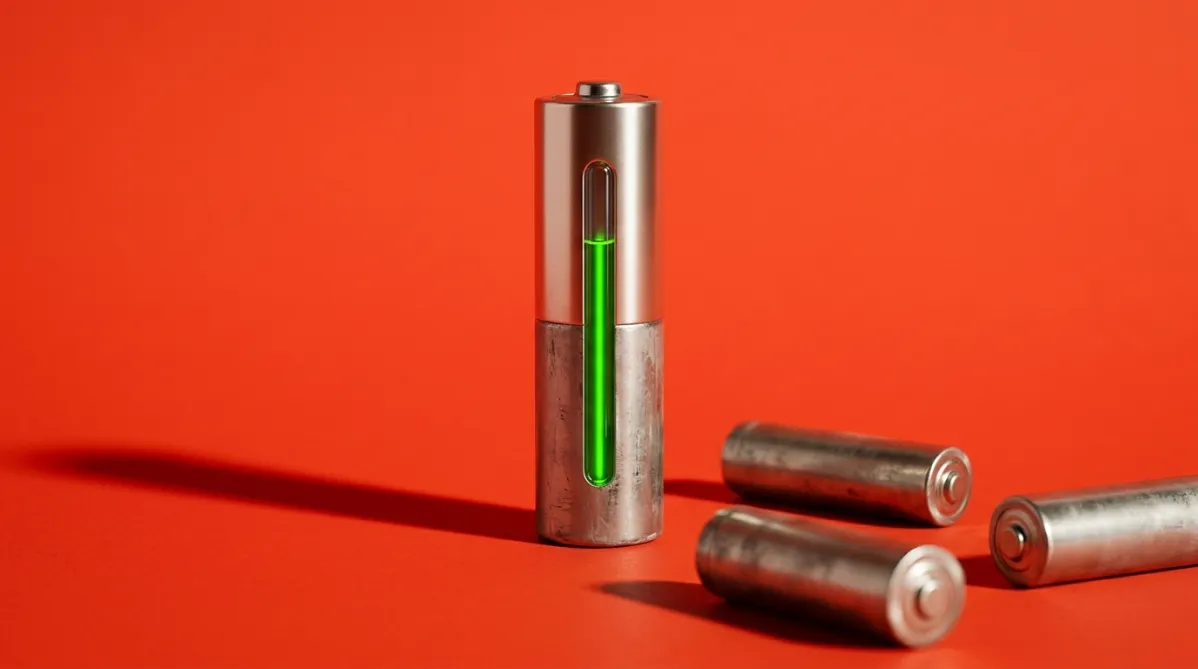
A single AA-style cylindrical battery, shown as a real physical object with a matte metal casing, stands upright at the center of a saturated tomato-red seamless paper backdrop. Its top half is bright and glossy, while the lower half is scuffed and dull. A thin, crisp line of electric green liquid light fills the clear gauge window along its side, stopping about three-quarters of the way up. Three smaller, identical dead batteries lie tipped over in the foreground, slightly out of focus, to suggest the rival compounds. The camera sits at a low three-quarter angle with a shallow depth of field. A hard, warm key light from the upper left casts a sharp, long shadow across the red surface. The mood is punchy and skeptical: one cell charged, the others spent.
supplements

NMN vs NR vs NADH: One Lifted Endurance, None Fixed Fatigue

BY NOVA CHEN ·

A new network meta-analysis of 27 studies and 1,599 adults compared NMN, NR, NADH and nicotinamide, and the results are not what supplement marketing promises. NMN showed a dose-dependent boost in endurance, with a standardized mean difference of 1.02 at the high dose. NADH led for cognition, but mostly in cognitively impaired groups and with a result sensitive to influential studies. The surprise is that no precursor significantly improved perceived fatigue or sleep. Here is how the ranking breaks down, what the limits are, and who should or shouldn't bother.

Approach: conceptual metaphor. Palette: D, bold color field.

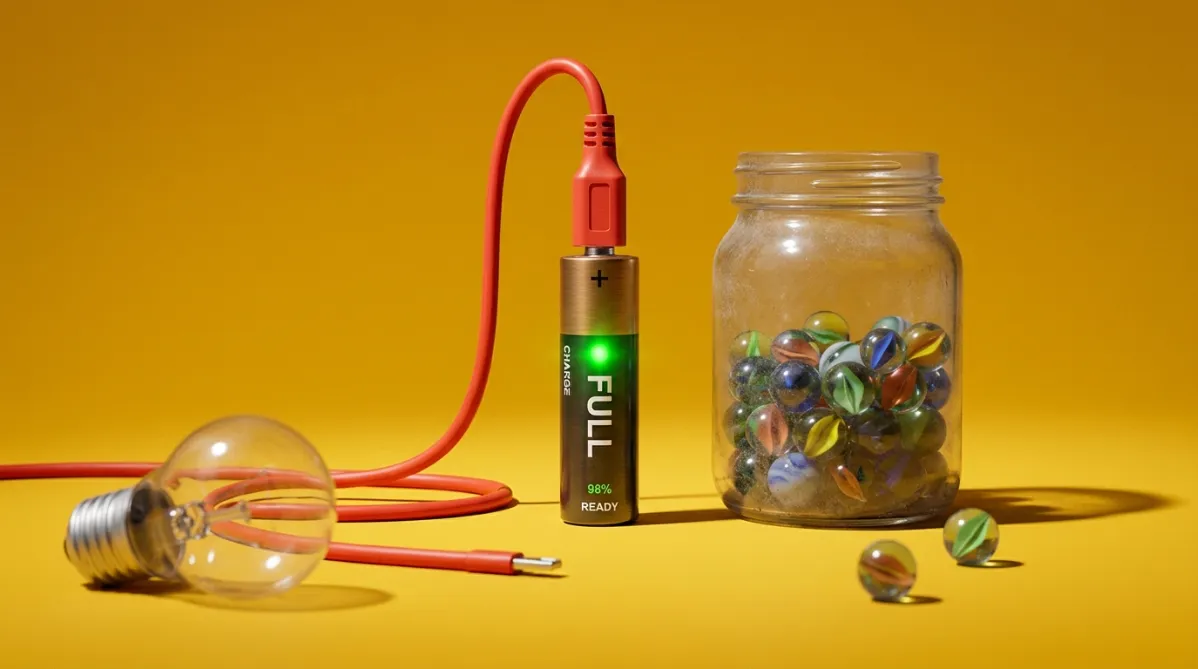
A single AA-style cylindrical battery stands upright, fully charged, on a seamless saturated mustard-yellow backdrop. Beside it sits a matching, untouched, slightly dusty glass jar of marbles, so the charge shows no visible link to any result. More precisely, a bright tomato-red extension cord plugs into the battery's top. Its other end curls away unconnected, lying on the floor beside an unlit incandescent bulb. A small electric green LED glows on the battery's side as the only green accent. Camera: low three-quarter angle, 50mm lens, shallow depth of field, with the bulb softly blurred in the foreground. Lighting: hard, clean studio key light from the upper left, with crisp shadows falling to the right on the yellow surface. Mood: puzzled, wry, a full power source that fails to light anything.
supplements

Nicotinamide Riboside Doubled NAD+ but Failed to Boost Memory

BY NOVA CHEN ·

A supplement doubled a key molecule in the blood, and memory didn't budge. In a 12-week randomized trial of older adults with amnestic mild cognitive impairment, nicotinamide riboside raised NAD+ twofold but did not improve cognition, total brain blood flow, or blood pressure. There was one tantalizing exploratory hint of increased hippocampal blood flow, but it's far from proof. Here's what the study really shows, where its limits are, and what it means if you're thinking about buying an NAD+ booster.

Approach: the human outcome. Palette: natural.

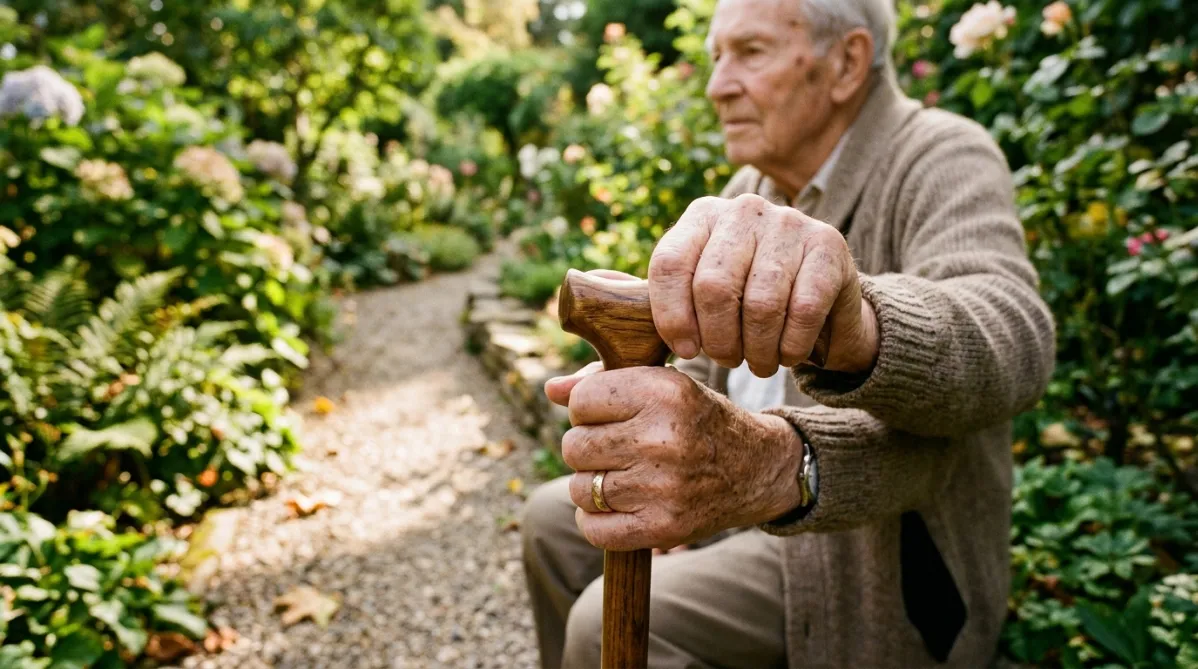
A tight, low-angle shot of an elderly person's hands gripping a smooth wooden cane at the top of a sunlit garden path. The hands are weathered and slightly tremulous, with visible veins and thin, spotted skin. Behind them, the blurred figure of a seated older man in a cardigan is just recognizable, with his face out of frame. Warm late-morning daylight comes from the side and picks out the grain of the wood and the texture of the skin. The background is soft green foliage and a gravel path in shallow depth of field. The tones are plant greens, honeyed wood and natural skin. A single fresh leaf in vivid electric green sits in the lower foreground. The mood is quiet, honest and reflective, and it suggests fragility without drama.
longevity

Frail Seniors Had Lower Blood NAD+. What That Means for NMN/NR

BY HELIX WARD ·

A new GeroScience study of 529 older Japanese adults found that those with frailty had slightly lower NAD+ in their blood, with about 13% lower odds of frailty per 1 µmol/L increase. But the study was cross-sectional, included only 32 frail participants, and the difference in medians was just 24 versus 25 µmol/L. The link also weakened after adjusting for hematocrit, suggesting blood cell composition may explain part of it. Here is what the findings really say, why they don't show that NMN or NR prevent frailty, and what to consider if you're thinking about NAD precursors.

This page is available in