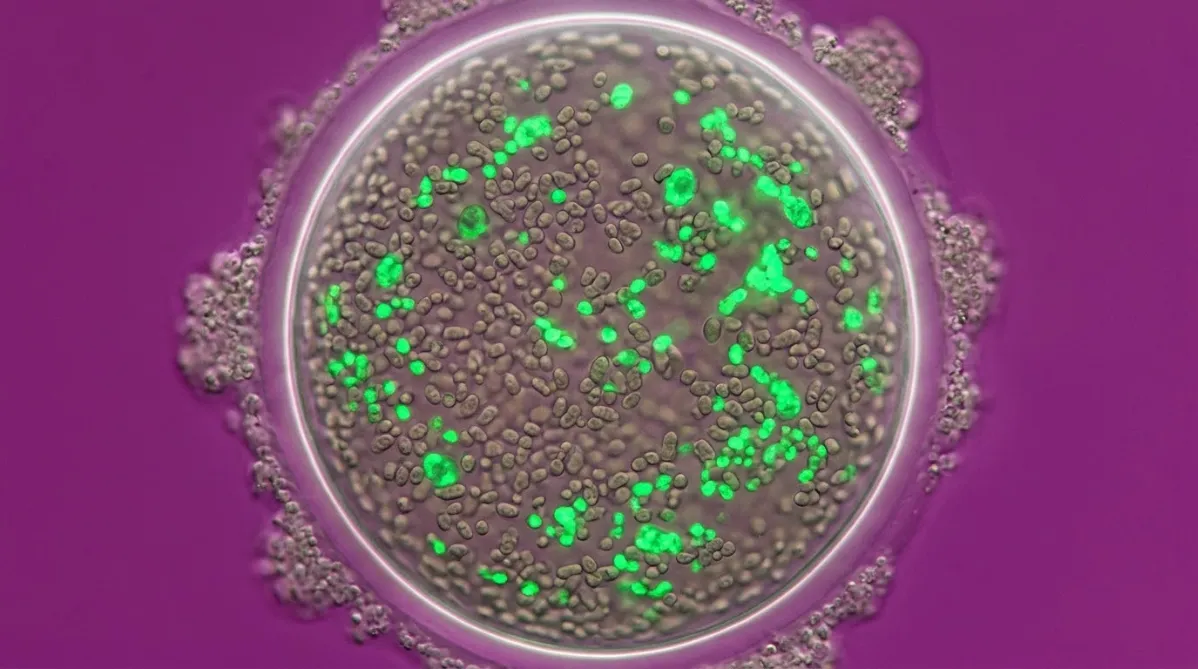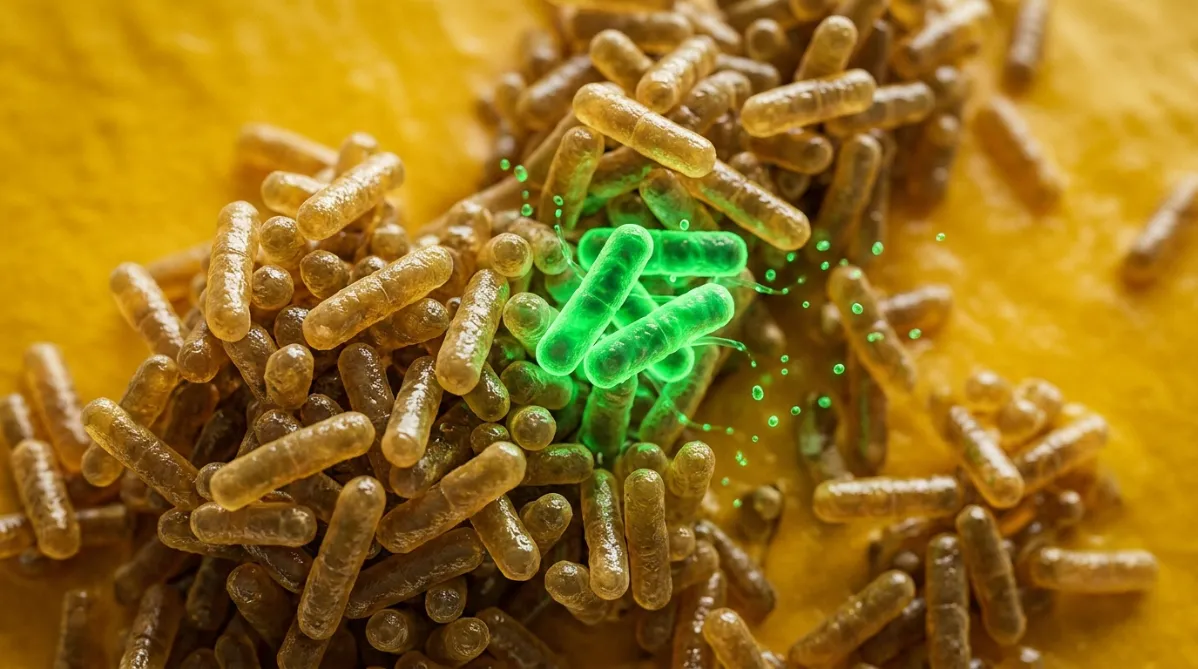
You can buy NMN and NR at almost any supplement counter. But your gut microbes may already be making a different NAD+ precursor, one that feeds the same cellular fuel through another door and seems to wake up the stem cells that rebuild your intestinal lining.
The molecule is (amide-)N-methylnicotinamide, or N-MNA. A new Science Advances paper from a Rutgers-led team reports that certain gut bacteria, including some probiotic species, produce it. It is a lab and animal story, not a supplement story, and we'll say so up front.
Reality check first: This research used fruit flies, mice and human cells, plus stool samples from patients. There is no human supplementation trial, and N-MNA is not a product you can buy as such. Nothing here supports taking anything.
What is N-MNA, and why does it matter?
NAD+ is a core cellular coenzyme. Its decline is associated with chronic and inflammatory diseases, and restoring it is a major goal of longevity research. Most attention goes to NAD+ precursors such as NR and NMN.
N-MNA is a different kind of precursor. The authors describe it as a structural isomer of methylnicotinamide, a breakdown product of nicotinamide. The two share a formula but differ in where the methyl group sits. This one is made by microbes, not discarded by your own metabolism.
The authors also point out that, compared with known NAD precursors, N-MNA brings a methyl group into host cells. They propose it represents a new class of microbe-derived precursor that stimulates tissue regeneration. That framing is theirs, and the downstream consequences of the methyl group still need testing.
The most striking findings
1. Gut microbes, including some probiotic species, make it
The team reports that certain commensal bacteria, including specific probiotic species, produce N-MNA. The abstract doesn't list the species, so check the full paper before assuming that any given probiotic product does this.
2. People with gut trouble had less of it
Patients with gut dysbiosis and inflammation showed reduced N-MNA in stool. This is an association. It doesn't show that low N-MNA causes inflammation, or that restoring it would help patients.
3. Gut cells take it up and turn it into NAD+
Using stable isotope tracing, which follows labeled molecules through metabolism, the researchers found that N-MNA is rapidly taken up and incorporated into NAD redox reactions. This happened in intestinal epithelial cells and in non-epithelial cells from fruit fly, mouse and human.
4. It uses the Preiss-Handler pathway, not salvage
Genetic and pharmacological experiments suggest N-MNA becomes NAD+ through the Preiss-Handler pathway, independent of the salvage pathway. Salvage is the route associated with NR and NMN. The authors' wording is that the data "suggest" this, so it is strong evidence in these models, not a closed case.
5. It boosted gut stem cell regeneration
The team manipulated SIRT1, an NAD-consuming enzyme, in specific cell types in Drosophila. They also ran intestinal stem cell lineage tracing in mice. Together, these experiments indicate that systemic N-MNA supplementation promotes intestinal stem cell regeneration and epithelial repair. In other words, it helped the gut lining renew itself in these animal models.
Why the pathway difference is interesting
If N-MNA enters NAD+ synthesis by a separate route, it could in principle add to what NR and NMN do instead of duplicating it. That is a hypothesis, not a result. The paper does not compare N-MNA head-to-head with NR or NMN in people, and the abstract gives no claim that it is better.
The gut link also matters. The intestinal lining is among the fastest-renewing tissues in the body, so it is a plausible place for an NAD+ boost to show effects. It also connects to the microbiome, where dysbiosis and inflammation could reduce the supply of a helpful metabolite.
Practical takeaways
Dose: None established. The abstract gives no human dose, and nothing here translates mouse or fly amounts into a human supplement.
Timing: Unknown. No human protocols exist.
Who it's for: No one yet, as a supplement. It is a research finding about a microbial metabolite.
Who should skip it: Everyone, in the sense that there is nothing to take. Be especially wary of any product claiming to deliver "gut-made NAD+" based on this paper. People with inflammatory bowel disease or other gut conditions should not self-treat on the strength of an animal and cell study, and should talk to their clinician about proven options.
What you can do: Nothing specific follows from this paper. General gut-health habits, such as a varied diet, are reasonable on their own merits, but this study did not test them and cannot say they raise N-MNA.
Caveats to keep in mind
- Animal and cell models: The regeneration findings come from flies and mice. Human data are limited to cell uptake and stool measurements.
- Observational human data: Lower stool N-MNA in dysbiosis and inflammation is a correlation.
- Unknowns: Long-term safety, effective human dosing, how much gut bacteria contribute to N-MNA levels in people, and whether the extra methyl group has side effects were not addressed in the abstract.
- Probiotics: That some probiotic species produce N-MNA doesn't mean taking probiotics will raise your levels or improve gut repair.
The bottom line
This study adds a new character to the NAD+ story: a microbe-derived precursor that gut cells convert to NAD+ by a distinct pathway and that appears to spur stem-cell-driven repair in animal models. The next step would be testing in people, starting with whether it can be delivered safely and whether it helps patients with damaged gut linings. Until then, it is a promising lead and not a supplement.
Sources: Han J, et al. Sci Adv. 2026;12(45):eaef2882. PubMed 42993840 | DOI: 10.1126/sciadv.aef2882