Biocracked
Approach 1, macro science, with Palette B, warm.

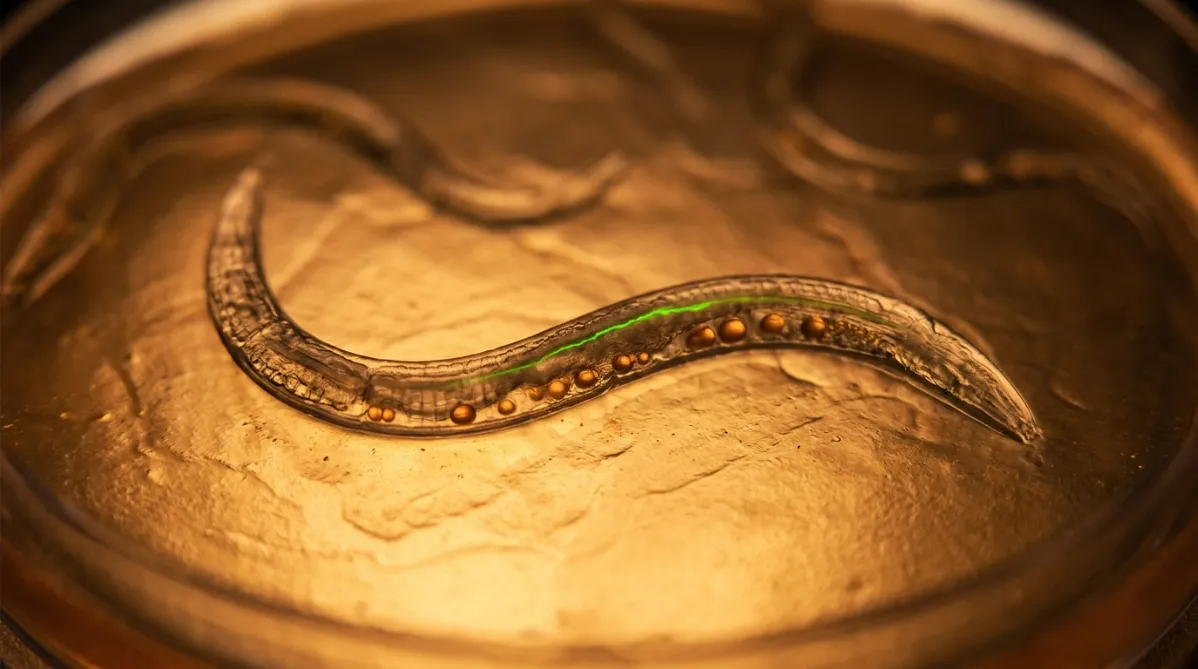
Extreme close-up of a single C. elegans roundworm, photographed through a microscope, lying curved on a bed of agar in a petri dish. Its translucent body shows fine internal structure, and a few tiny orange-amber fucoxanthin droplets glow along its gut. A few more worms blur softly in the background. Shot from slightly above at a low angle with shallow depth of field. Warm golden backlighting passes through the agar, turning it honey and copper, with soft amber highlights and warm brown shadows. One thin electric green fluorescent streak runs along the worm's body, suggesting a lit-up longevity gene. The mood is quiet, curious and cautiously optimistic. It looks like real microscopy, not an illustration, and contains no text or labels.
Longevity

Fucoxanthin Stretched Worm Lifespan 12.1%, But Don't Buy It Yet

Nova Chen · · 4 min read

The Fat-Loss Seaweed Pigment With a Surprising Side Hustle

Fucoxanthin is best known as the orange-brown pigment in brown seaweed, and it's sold in supplement aisles as a fat-loss aid. A new study suggests it may have another trick. In the roundworm Caenorhabditis elegans, it extended mean lifespan by 12.1% and protected against models of Alzheimer's and Parkinson's disease.

Before anyone adds seaweed extract to a cart, the key fact is this: this is a worm study. It offers no evidence that fucoxanthin extends human life or protects human brains. What it does offer is a clean, mechanistic story about how the compound might work. That story is worth understanding.

The work, by Kim and Park at Soonchunhyang University in South Korea, was published in Rejuvenation Research (2026;29(6):315-324).

What the Researchers Found

The team supplemented wild-type C. elegans with fucoxanthin and measured several things beyond raw lifespan.

  • Longer mean lifespan: a 12.1% increase in wild-type nematodes.
  • Better healthspan: age-related decline in motility was delayed, and the worms resisted oxidative stress better.
  • No reproductive trade-off: the lifespan gain came without compromising reproductive fitness. In aging research, many longevity interventions in worms cost the animal fertility, so this is a notable point.

The healthspan results matter as much as the lifespan number. A compound that only extends the frail end of life is far less interesting than one that keeps animals moving and stress-resistant for longer.

The Mechanism: DAF-16 and Autophagy

The most useful part of the paper is the genetic dissection. The benefits were not a vague antioxidant effect. They depended on specific biology:

  • DAF-16, the worm version of the FOXO transcription factor, a well-known regulator of stress resistance and longevity, was required for fucoxanthin's effects.
  • bec-1, a gene essential for autophagy (the cell's recycling and cleanup system), was also required.
  • Fucoxanthin increased autophagic flux, meaning the cleanup process was running more actively.
  • It also upregulated SKN-1/Nrf2-dependent detoxification genes, specifically hsp-16.2 and gst-4.

In plain terms, fucoxanthin seems to nudge the worm's built-in maintenance programs: stress defense, detoxification and cellular housekeeping. If you knock out DAF-16 or the autophagy gene, the benefit goes away, which is strong evidence that those pathways are doing the work. The authors call fucoxanthin a "multitarget geroprotector" that coordinates DAF-16 and autophagy activation.

The Brain Angle: Alzheimer's and Parkinson's Worm Models

The researchers also tested fucoxanthin in nematode models of neurodegeneration:

  • Alzheimer's-type model: fucoxanthin significantly ameliorated paralysis induced by amyloid-beta (Aβ).
  • Parkinson's-type model: it protected dopaminergic neurons from degeneration and reduced α-synuclein accumulation.
  • In these models, the protection was DAF-16-dependent.

These models are useful for screening compounds, but they are simplified. A paralysis assay in a worm that expresses human Aβ is a long way from a person with Alzheimer's disease. Many compounds that look excellent in worms never survive the jump to mammals, let alone to human trials.

Why You Shouldn't Rush to Buy It

The honest reading of this paper is "promising lead," not "proven supplement."

  1. It's an invertebrate. C. elegans is a powerhouse for aging research because its lifespan is short and its genetics are easy to manipulate. But it's a tiny worm with about 1,000 somatic cells.
  2. No human or mammal data here. The abstract describes no mouse or human experiments.
  3. Bioavailability is an open question. Whether fucoxanthin or its metabolites reach tissues in humans at levels that engage FOXO or autophagy is not addressed by this study.
  4. The effect size is modest. A 12.1% mean lifespan gain in worms is encouraging, but it's not a dramatic result by the standards of the field.
  5. Single-lab findings need replication.

Practical Takeaways: Dose, Timing, and Who It's For

Here is where the clickbait instinct has to give way to accuracy. The abstract gives no human-relevant dose, and worm concentrations in culture medium can't be translated into a milligram dose for a person. So:

  • Dose: There is no evidence-based longevity dose from this study. Don't extrapolate one. Any fucoxanthin supplement label is aimed at weight management, not lifespan.
  • Timing: The paper offers no guidance on when to take it. Fucoxanthin is fat-soluble, so supplement makers often suggest taking it with a meal containing fat. That is general practice, not a finding of this study.
  • Who it's for: Right now, researchers and the curious. This is not a basis for anyone, especially people who are pregnant, on medication, or managing a neurological condition, to self-treat.
  • What to do instead: If you like brown seaweed in your diet, there's no harm in that for most people, but don't expect it to replicate what happened in a petri dish. Talk to a clinician before starting any new supplement.

The Bottom Line

Fucoxanthin joins a long list of natural compounds that extend worm lifespan. What sets this study apart is the mechanistic clarity: DAF-16 and autophagy are both required, and it appears to engage the SKN-1/Nrf2 stress-response system too, all without a reproductive penalty. That makes it a credible candidate for follow-up in mammals.

The next questions are the ones the field always asks. Does it work in mice? At what achievable dose? Does it modulate FOXO and autophagy in mammalian tissues? Until those are answered, treat fucoxanthin's longevity reputation as a hypothesis, not a fact.

This article summarizes a preclinical study in C. elegans and is not medical advice.
Original study

Read the original research on pubmed.ncbi.nlm.nih.gov →

This article summarizes published research for general information. It is not medical advice.

NC

Written by

Nova Chen

Nova Chen writes for Biocracked: biohacking science, longevity & human performance.

Related Articles

Approach 2, lab in action, with palette D, bold color field.

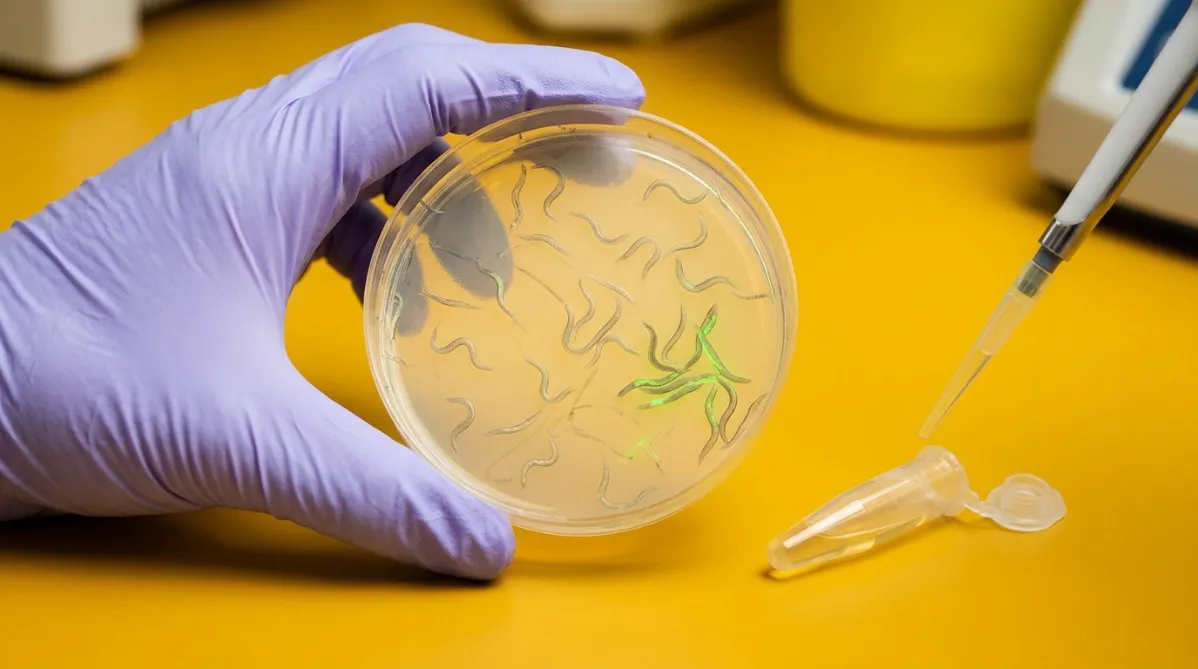
Overhead-angled close shot of a gloved hand in a pale purple nitrile glove holding an open agar petri dish above a saturated mustard-yellow lab bench. Inside the dish, dozens of tiny translucent C. elegans worms trace sinuous curved tracks across a faintly glowing bacterial lawn. A small cluster of the worms shows a subtle electric green fluorescence along their bodies, suggesting neurons. Beside the dish, a microcentrifuge tube holds a pale golden-yellow DHM solution, with a pipette tip hovering nearby. Lighting is bright, crisp, directional studio-style lab light with soft short shadows. The shallow depth of field blurs the background to a smooth yellow. The mood is curious, precise and optimistic, with a slightly playful contrast between the vivid backdrop and the delicate, nearly invisible animals.
longevity

Hangover Supplement DHM Stretched Worm Lifespan by Up to 15%

BY NOVA CHEN ·

The same compound sold in hangover capsules just stretched worm lifespan by up to 15%. In a new C. elegans study, dihydromyricetin (DHM) also protected touch-receptor neurons, kept the worms moving longer, and lowered intestinal fat. The lifespan effect did not depend on the classic longevity gene daf-16, and standard antioxidant reporters were not induced, which hints at a more unusual mechanism. But this is worms only, the micromolar doses do not translate to capsule doses, and there is no human longevity data.

Approach: conceptual metaphor, in palette D (bold color field).

A saturated mustard-yellow backdrop holds seven identical wooden-handled stopwatches in a staggered row, shot from a slightly raised three-quarter angle. Five stopwatches have run on and show tarnished, cloudy glass faces. The two in front have clean, glossy glass, and each carries a small electric green (#00e676) ribbon tied to its crown. The faces carry no numerals or readable marks. Soft, even studio light from a large overhead softbox gives gentle, short shadows. Shallow depth of field blurs the back of the row. The mood is playful but analytical, with crisp contrast between the dull watches and the bright pair. The image suggests that extra time and good time are not the same thing.
longevity

All 7 Longevity Compounds Extended Lifespan. Only 2 Kept Worms Functional

BY DR. SYNAPSE ·

Seven well-known longevity compounds all extended the lifespan of male roundworms in a new GeroScience study, but only two kept the animals functional late in life. Sulforaphane and metformin were the only treatments that improved late-life mating success, a proxy for reproductive healthspan. The other five added days without preserving that function, showing that lifespan and healthspan can be decoupled. This is strictly worm-only research from C. elegans, not evidence for humans. Still, it argues for screening longevity compounds on function, not survival alone.

Approach: conceptual metaphor. Palette: D, bold color field.

Subject: a single old-fashioned mechanical light switch, photographed straight on, with its toggle stuck halfway between on and off. It is mounted on a saturated mustard-yellow painted wall. A thin electric green (#00e676) glow leaks from the gap behind the toggle and casts a small green rim onto the plate. Beside it, a row of six small matte black tally marks is scratched into the paint, with the third and fifth marks fainter and partly worn, hinting at inconsistent results across days.

Camera: slightly low, eye-level angle with a 50mm lens, shallow depth of field, and the switch placed on the right third of the frame.

Lighting: hard directional side light from the left casts crisp, warm-neutral shadows with no blue cast. The wall texture and brushstrokes are visible.

Mood: curious, skeptical, and measured. The scene suggests a mechanism that is partly engaged.
longevity

Fasting-Mimicking Diet Nudged Human Autophagy—But Not Every Time

BY HELIX WARD ·

Does the fasting-mimicking diet really switch on autophagy in people, or only in mice? A new pilot randomized trial in 30 healthy adults tested ProLon and a second FMD formulation against control. By the end of the roughly 6-day diet, the groups differed in autophagic flux, weight, glucose, ketones, and insulin resistance. But those differences did not hold at every time point, and the trial was small and sponsored by ProLon's maker. Here is the protocol, what it showed, and who should think twice.

Approach 2, lab in action, with palette D, a bold color field.

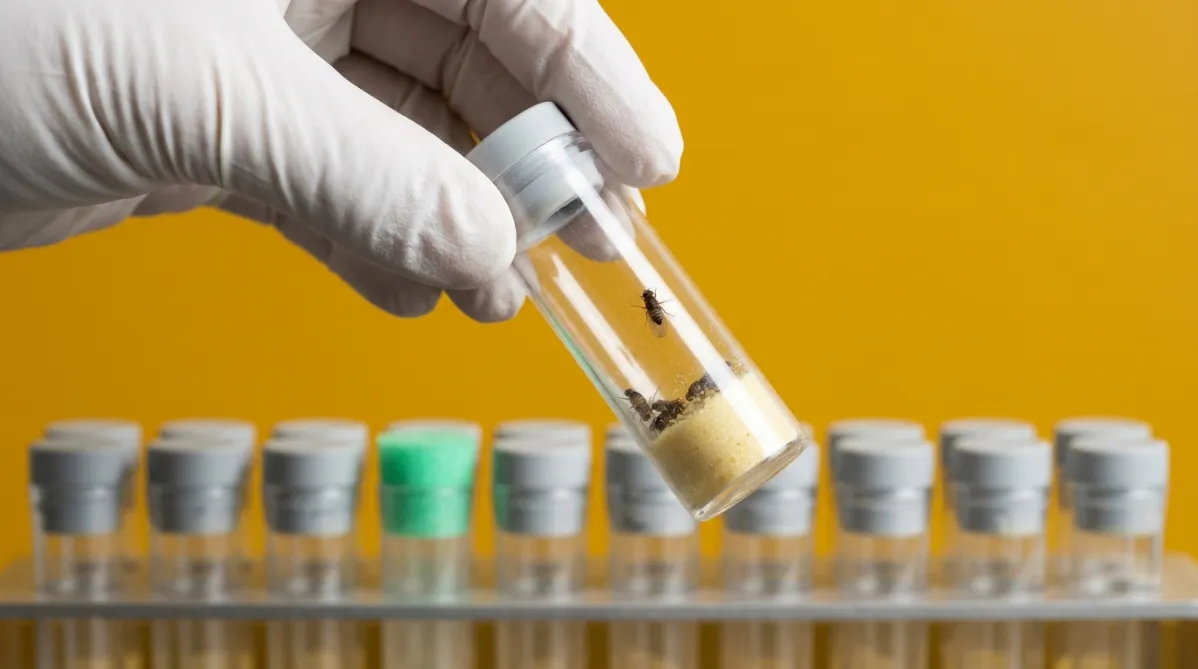
Top-down 3/4 angle, close shot of a gloved hand holding a clear plastic fly vial against a saturated mustard-yellow backdrop. Inside the vial, a few male fruit flies rest on pale cornmeal-colored food, and one small fly is in sharp focus on the glass wall. In the soft-focus foreground, a rack of identical vials stands in a neat row, with a few lined up against the mustard field. A single vial in the rack has a faint electric green (#00e676) foam stopper, the only green in the frame. Lighting is bright, even studio-style lab light with gentle highlights on the glass and crisp shadows in warm grey. The nitrile glove is white. The mood is precise, curious and skeptical, like a careful experiment getting a surprising result. No text or labels.
longevity

The Lithium Longevity Hack Failed a Replication—Mating Mattered

BY DR. SYNAPSE ·

Lithium has been pitched as a cheap, old-school anti-aging molecule, with fruit fly and worm studies fueling the hype. A new Liverpool replication in male Drosophila found no lifespan benefit. Both 10 mM and 25 mM LiCl reduced survival, and the damage came entirely from unmated males, while frequently mated males were protected. Lithium also left late-life mating latency, sterility, and paternity share unchanged, but increased female remating. The takeaway for supplement shoppers is that geroprotector effects depend on context, there is no human lifespan data, and lithium's narrow therapeutic window makes self-dosing a bad bet.

This page is available in