CBL-514 fat removal injections: What does the science say?
There is now a placebo-controlled Phase 2 randomized trial of CBL-514 in Aesthetic Surgery Journal, and the authors report that it met its primary and secondary endpoints. That is a real step up from earlier work. But the design has a long list of caveats that a careful reader should not skip. This article appraises the research design and asks what questions the trial can and cannot answer. The full results table is covered separately.
This is a research-methods appraisal, not medical advice. CBL-514 is an investigational injectable, not an approved product, and not a supplement or oral pill.
What CBL-514 is (and is not)
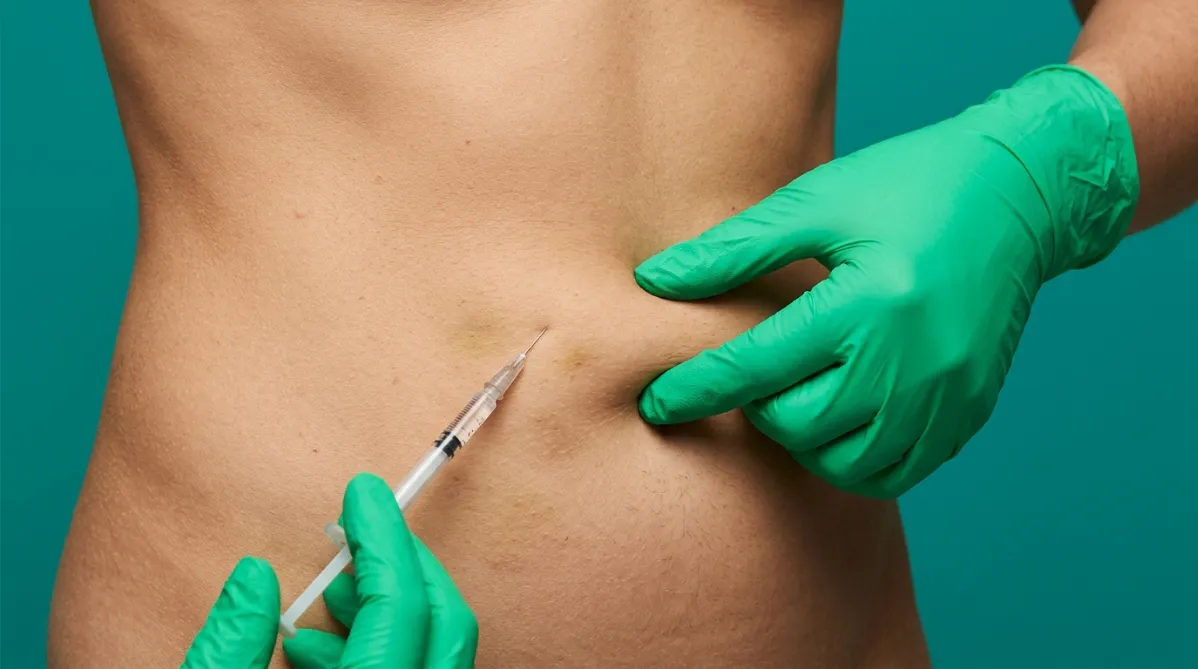
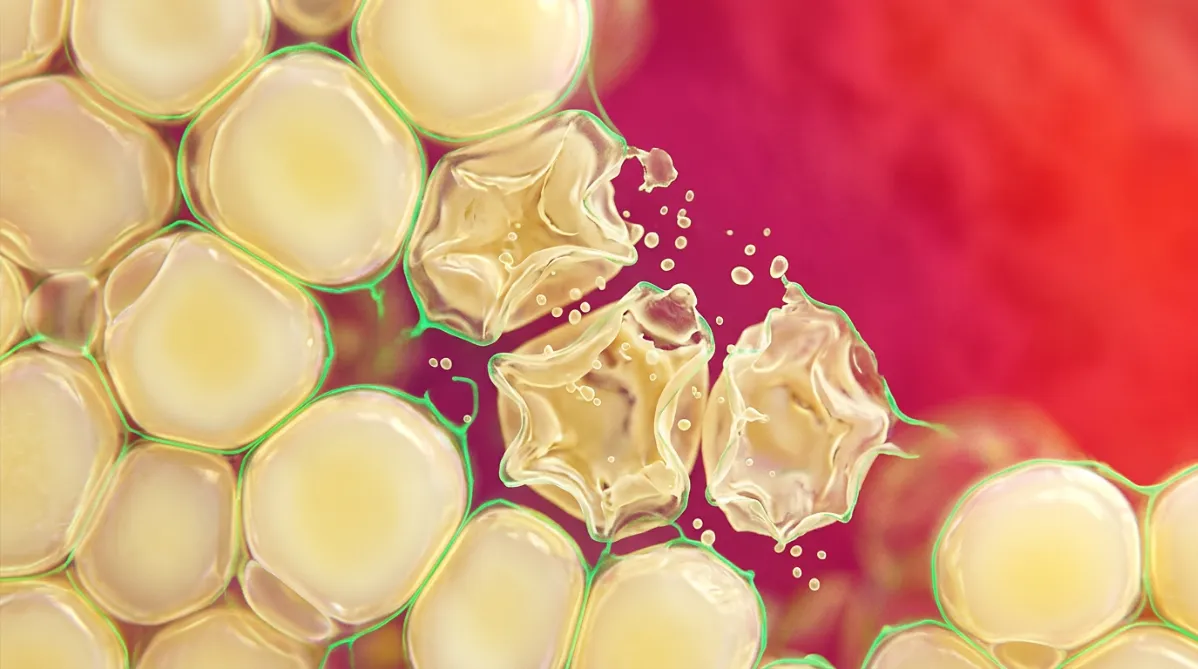
CBL-514 is an investigational small-molecule injection lipolysis agent from Caliway Biopharmaceuticals (New Taipei City, Taiwan). The trial authors describe it as promoting adipocyte apoptosis and targeted subcutaneous fat reduction in nonclinical studies. In the trial it was injected subcutaneously into the abdomen by investigators.
Three points of context matter:
- The mechanism is local. The proposed action is targeted fat-cell apoptosis, not raised metabolic rate, calorie burning or whole-body weight loss.
- The mechanistic evidence is thin on the public record. The earlier Phase 2a paper reports that nonclinical work showed inhibition of the survival kinase DYRK1b and upregulation of caspase 3 and Bax/Bcl-2. These claims are cited to unpublished, confidential Caliway reports.
- The chemical identity is not disclosed in these papers.
The only FDA-approved injectable for fat reduction mentioned in the paper is ATX-101 (deoxycholic acid, Kybella), and only for submental fat. CBL-514 is not FDA-approved.
The evidence map
Step one: the 2022 Phase 2a. Goodman et al. (Aesthet Surg J 2022; PMC9384315; NCT04698642) was an open-label, dose-finding study with 43 participants and no placebo arm. It is useful for dose selection and early signal-finding, but open-label designs cannot separate a drug effect from expectation or measurement drift.
Step two: the 2025 Phase 2. Gold et al. (Aesthet Surg J 2025;45(6):611-620; PMC12080885; PubMed; DOI; NCT04897412) added randomization, a saline placebo and multiple sites. It was run from February 2022 to March 2023 at five centers in the United States and Australia, with 2:1 central randomization to CBL-514 or placebo. The journal labels it level of evidence 2. It is the first placebo-controlled test in this cluster, but it is still a Phase 2 exploratory study.
How the Phase 2 trial worked
Eligibility. Participants were adults aged 18-64 with a BMI above 18.5 and below 35 kg/m², body weight of at least 50 kg and abdominal skinfold thickness of 3-8 cm. They also needed good skin condition in the treatment area, normal liver, renal, cardiovascular and immune function, and no known infectious disease or cancer.
Protocol. Participants received up to four treatments at 4-week intervals, with follow-up visits 4 and 8 weeks after the final treatment. Each session involved 25 to 50 injections at the investigator's discretion. Each injection delivered 2.4 mL, either CBL-514 at 2 mg/cm² (up to 600 mg per treatment) or an equivalent volume of normal saline. Participants had to keep a stable weight, and a deviation of 3 kg or more led to discontinuation.
Primary endpoint. The primary endpoint was the proportion of participants losing at least 150 mL of subcutaneous fat at both follow-up visits.
Measurement. Volume came from ultrasound at four scan spots, 4 and 10 cm to the right and left of a reference point. Three scans per point were averaged by trained sonographers. Volume was then calculated as a cuboid: a fixed 300 cm² treatment area multiplied by the average thickness at those four points.
That is a practical approach, but it is a model rather than a direct volumetric measurement. It assumes the four-point thickness is representative of the whole 300 cm² region. 3D photography (QuantifiCare LifeViz, eight angles) was also collected.
The enrollment funnel
The flow of participants is where the design gets uncomfortable:
- 130 screened, 81 enrolled, 76 randomized (50 CBL-514, 26 placebo).
- Five withdrew before randomization and one after randomization but before treatment, leaving 75 treated (49 CBL-514, 26 placebo).
- Only 38 of 75 completed the study. That is a 49.3% non-completion rate.
- The 37 non-completers: 6 lost to follow-up, 7 participant withdrawals, 7 weight instability, 6 unable to meet the schedule, and 4 adverse events.
The analysis populations are also far apart. The intention-to-treat (ITT) set was 76 people, while the per-protocol (PP) set was only 30. The follow-up denominators shrink within the ITT analysis too. For the CBL-514 group, 36 participants were evaluable at 4 weeks and 23 at 8 weeks. For placebo the figures were 23 and 16. Any 8-week comparison is therefore built on far fewer people than were randomized.
Internal validity: the problems stated plainly
- Single-blind, not double-blind. Participants were blinded using visual barriers, but investigators, site staff and the sponsor (including the medical monitor) were unblinded. The brief does not say whether the sonographers who produced the primary outcome were blinded. With an ultrasound-derived endpoint and unblinded site staff, that is a legitimate question.
- Sponsor involvement. Caliway was involved in design, data collection, analysis and interpretation, manuscript writing and the decision to submit for publication. That does not invalidate the findings, but it calls for extra caution.
- No multiplicity adjustment. Several endpoints, two time points and two populations were tested at a two-sided 5% level with no correction. The authors still report the primary and secondary endpoints as met.
- Exploratory sample size. The target of about 75 was referenced to the Phase 2a study rather than derived from a formal power calculation on large prior data.
- Attrition. Roughly half of treated participants did not complete, and the PP analysis (n=30) rests on a heavily selected subset. PP estimates tend to look better because they keep the people who stayed and complied.
- Limited generalizability. The CBL-514 group was 94.0% female and 86.0% White, and the placebo group was 80.8% female and 73.1% White. The sample is also a narrow BMI band with stable weight.
- Short horizon. Follow-up ended 8 weeks after the final treatment. The trial cannot speak to durability, long-term safety or what happens to fat volume over many months.
What the trial can and cannot answer
It can reasonably address: whether, in a selected and stable-weight population, ultrasound-estimated abdominal fat volume fell more with CBL-514 than with saline over about two months, and whether this occurred without meaningful body-weight change. Mean weight changes were small in both arms, so this does not look like generalized weight loss.
It cannot answer:
- Whether benefits persist beyond 8 weeks post-treatment.
- Whether results hold in more diverse populations.
- Whether the effect is robust once dropout, unblinded staff and multiple unadjusted tests are accounted for.
- How CBL-514 compares with cryolipolysis or liposuction. The authors compare it with cryolipolysis studies that used different measurement methods, say the trend "appears to be larger," and describe results as "comparable to that achieved with liposuction." Those are the authors' interpretations, not head-to-head trial findings.
- Skin quality outcomes. The authors saw little or no skin laxity in posttreatment images, but this was a visual impression, not a formal endpoint.
It is also worth noting that some placebo participants reached the 150 mL threshold at 4 weeks. That is a reminder that ultrasound-derived volume estimates carry noise, and it is one reason a tightly blinded design would have been more convincing.
Bottom line
The 2025 paper is a meaningful advance: randomized, placebo-controlled, multicenter and open access. It is still a sponsor-involved, single-blind, exploratory Phase 2 trial with a high dropout rate and short follow-up. It supports further study. It does not establish that CBL-514 is a proven or approved fat-reduction treatment.
Sources
- Gold M, et al. Aesthet Surg J 2025;45(6):611-620. Full text (PMC12080885) | PubMed 40037659 | DOI
- Goodman GJ, et al. Aesthet Surg J 2022;42:NP662-NP674. Full text (PMC9384315) | doi: 10.1093/asj/sjac162
More from this CBL-514 series
This article is part of our CBL-514 series. For the full Phase 2 trial overview, start here: CBL-514 Injection Lipolysis: A Phase 2 Map of the Evidence.