Biocracked
Approach 1, macro science, with palette D, a bold color field.

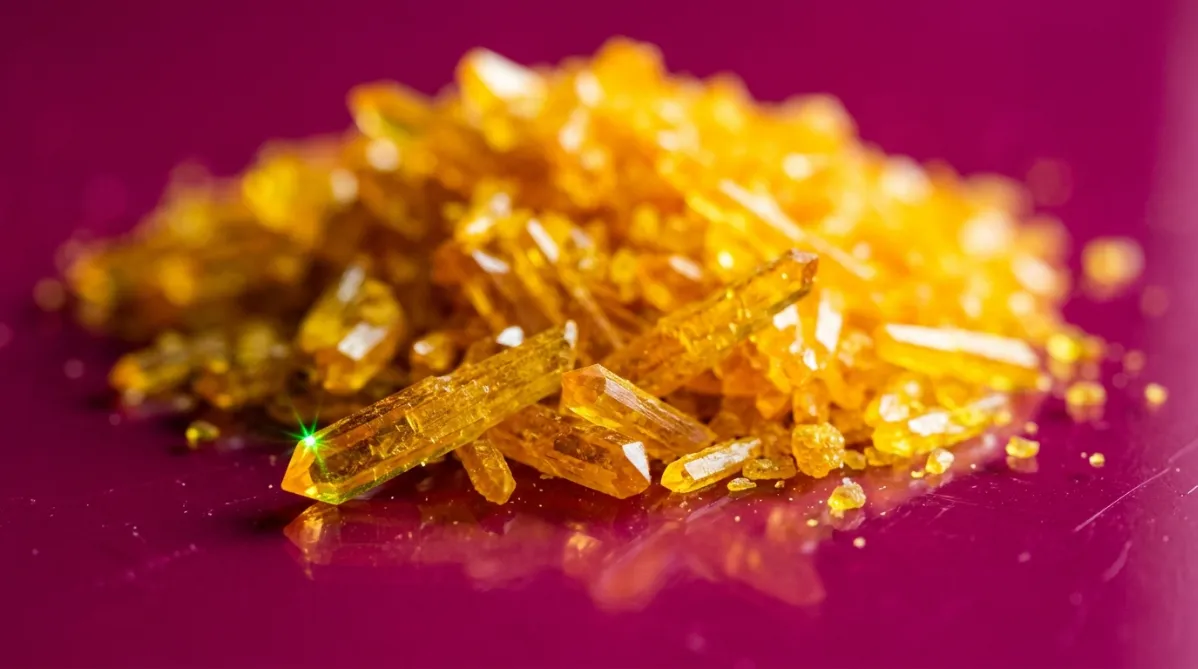
Extreme close-up photograph of raw berberine crystals, a vivid saturated yellow-orange powder of needle-like crystalline shards, heaped in a small mound on a glossy deep magenta acrylic surface. A few individual crystals are in sharp focus in the foreground, showing their faceted, translucent edges, with the rest of the pile softly blurred behind. Camera is low, about 20 degrees above the surface, with a shallow macro depth of field. Lighting is a single soft studio key from the upper left, with a crisp highlight along the crystal edges and a gentle magenta reflection beneath the mound. One tiny electric green glint of reflected light sits on a crystal tip. The mood is vivid, precise and slightly provocative, with a clear contrast between the yellow subject and the magenta field. There is no text anywhere in the frame.
Supplements

'Nature's Ozempic'? Berberine Won 6 of 6 Lipid Tests—With a Catch

Nova Chen · · 4 min read

Berberine has been called "nature's Ozempic" all over social media. A 2025 overview of 54 systematic reviews now gives the most complete look yet at what the evidence says. Berberine looks promising for blood sugar and cholesterol. The "Ozempic" comparison, though, is where the data are weakest.

The Headline Numbers

Researchers at the China Academy of Chinese Medical Sciences searched eight databases, including Cochrane, PubMed, EMBASE, and several Chinese-language sources, through April 2024. They found 54 systematic reviews of berberine. Together these linked the compound to 70 health outcomes across 9 conditions.

Share of outcomes that improved with berberine:

  • Dyslipidemia: 100% (6 of 6)
  • Gastrointestinal disorders: 94.7% (18 of 19)
  • Type 2 diabetes: 92.6% (25 of 27)
  • Schizophrenia: 92.3% (12 of 13)
  • Metabolic syndrome: 90.9% (10 of 11)
  • NAFLD: 86.7% (13 of 15)
  • Cardiovascular disease: 78% (25 of 32)
  • PCOS: 72.2% (13 of 18)
  • Obesity: 57.1% (4 of 7)

The authors concluded that berberine significantly improves outcomes in type 2 diabetes, gastrointestinal disorders, schizophrenia, metabolic syndrome, and dyslipidemia.

The "Ozempic" Problem

Obesity was the weakest category, with only 4 of 7 outcomes improved. That is the lowest rate in the whole analysis, and weight loss is the reason Ozempic became famous.

The nickname is marketing, not science. This overview did not compare berberine with semaglutide or any other prescription drug. It also does not suggest berberine produces comparable weight loss. The data support berberine as a metabolic-health supplement candidate, mainly for glucose and lipids. They do not support it as a weight-loss replacement.

The Catch: Quality Is Poor

The overview's own quality ratings are sobering.

  • Using the AMSTAR-2 tool, only 1 of 54 reviews was high quality.
  • 8 were low quality and 45 were very low quality.
  • Under GRADE, 8 outcomes were rated high-quality evidence, 22 moderate, and 110 low.
  • In the reviews on PCOS, NAFLD, obesity, and schizophrenia, the same primary studies were often counted repeatedly. This overlap can make the evidence look stronger than it is.
  • Several reporting items were poorly documented in the included reviews.

The authors say caution is needed because of these shortcomings. A pile of positive reviews built on overlapping, small, or weakly conducted trials is not the same as a pile of strong evidence.

What About Animal and Lab Research?

This overview covers systematic reviews, which largely synthesize human clinical trials. It is not a lab or animal study. Many of the exciting mechanism claims you see online, such as berberine activating the cellular energy sensor AMPK or reshaping gut bacteria, come mostly from cell and animal work. That work is not part of this paper's findings. Treat those mechanisms as plausible hypotheses, not proof that berberine will do the same in your body.

Practical Takeaways

The abstract does not specify doses, timing, or safety data. The points below are general context from the wider berberine literature, not findings of this paper. Check them with a clinician or pharmacist.

Typical dosing in studies: Trials commonly use about 900 to 1,500 mg per day, often split into 500 mg two or three times daily.

Timing: Doses are usually taken with or shortly before meals. Berberine is poorly absorbed, and food may help limit stomach upset.

Duration: Most trials run for weeks to a few months. Long-term safety data are thinner.

Who might consider it (with medical guidance):

  • Adults with type 2 diabetes, metabolic syndrome, or high cholesterol who want to discuss an add-on option
  • People with fatty liver or digestive complaints, where early data look positive but evidence quality is limited

Who should skip it or ask a doctor first:

  • Anyone who is pregnant, trying to conceive, or breastfeeding. Berberine is generally advised against in these situations.
  • People taking diabetes medications, because combining them may raise the risk of low blood sugar
  • People on drugs processed by liver enzymes, including some immunosuppressants such as cyclosporine, because berberine may interact with them
  • Anyone taking antipsychotics or other psychiatric medication. Do not self-treat. The schizophrenia findings come from low-quality reviews and do not justify using berberine in place of treatment.
  • Anyone who wants a quick weight-loss fix

Common side effects reported in trials include constipation, diarrhea, nausea, and abdominal discomfort. Supplement quality varies widely, so look for third-party tested products.

The Bottom Line

Berberine has the broadest and most consistently positive review literature among many popular metabolic supplements. It is strongest for blood sugar and cholesterol. For weight, it is not a proven "natural Ozempic." The enthusiasm should be matched by caution, because 45 of 54 reviews were rated very low quality. Better-designed, larger, long-term trials are still needed. Until then, berberine belongs in a conversation with your doctor, not in place of medication or lifestyle changes.
Original study

Read the original research on pubmed.ncbi.nlm.nih.gov →

This article summarizes published research for general information. It is not medical advice.

NC

Written by

Nova Chen

Nova Chen writes for Biocracked: biohacking science, longevity & human performance.

Related Articles

Approach: Macro science. Palette: B, warm.

Extreme macro photograph of raw berberine: a small heap of vivid yellow-orange crystalline powder with needle-like crystal clusters, shot at a low 30-degree angle with a shallow depth of field. Beside it, a dry sliver of Berberis root bark shows its bright yellow inner wood and fibrous grain. The surface is a smooth dark walnut board. Low golden-hour side light from the left makes the crystals glint like amber glass and throws long warm copper shadows across the wood. One tiny electric green highlight reflects off a glass spatula edge in the soft background blur. The mood is quiet and investigative, with rich saturated honey and burnt-orange tones and no blue cast. Photorealistic, microscopy-like texture, no text or labels.
metabolism

Berberine vs. Metformin: The Pilot Trial Behind HbA1c 9.5% to 7.5%

BY HELIX WARD ·

A small 2008 pilot trial put berberine head-to-head with metformin in newly diagnosed type 2 diabetes, and the glucose-lowering effect looked similar. In the berberine group, HbA1c fell from 9.5% to 7.5% in three months. A second trial in 48 people already on treatment saw HbA1c drop from 8.1% to 7.3% and HOMA-IR fall 44.7%. But these were small studies in people with diabetes, and about a third of participants had GI side effects. Here is what the data show, what they don't, and what to know before you think about berberine.

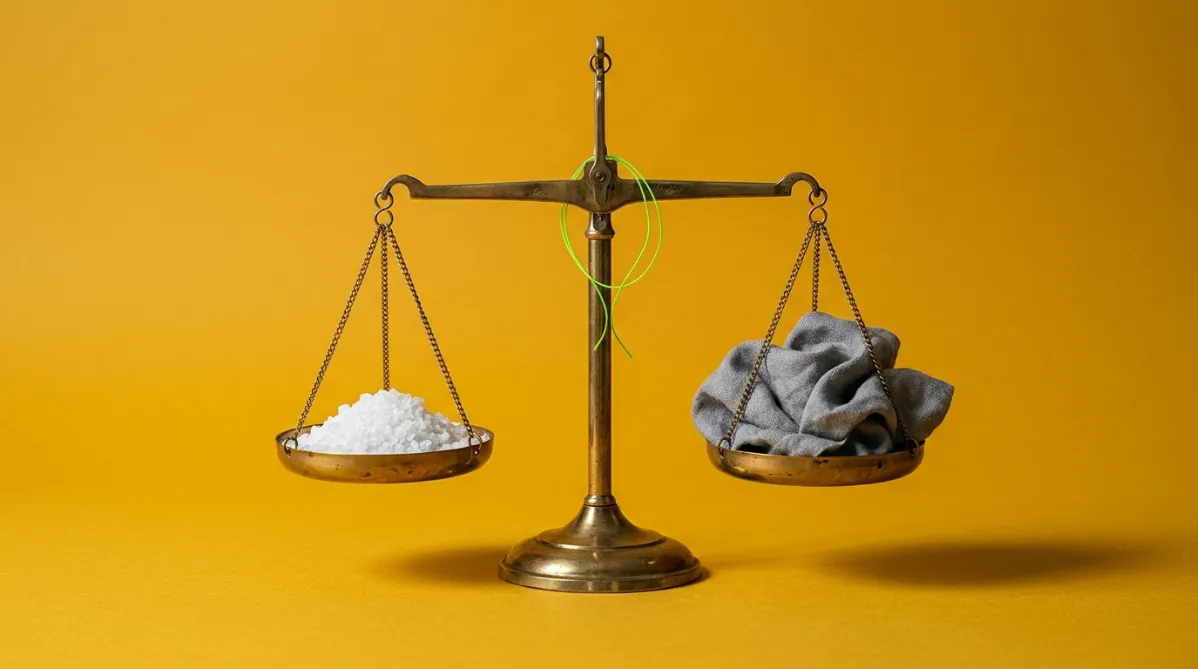
Conceptual metaphor in a bold color field palette: a single brass balance scale sits dead center on a saturated mustard-yellow seamless backdrop, photographed at eye level with a 85mm lens and shallow depth of field. One pan holds a small mound of coarse white magnesium salt crystals, the other pan holds a rumpled, empty pillow-soft wad of grey linen, and the beam hangs almost level but wavering, suggesting uncertainty. A thin electric green thread loops from the beam's pivot as a subtle accent. Soft, large-source studio light from camera left casts a gentle, defined shadow to the right across the yellow surface. Crisp metal reflections, visible salt crystal facets. Mood: skeptical, calm, quietly questioning, clean and editorial.
supplements

Magnesium for Sleep? 12 Trials Say the Hype Outruns the Evidence

BY NOVA CHEN ·

Magnesium is marketed as a natural sleep aid, but a new systematic review of 12 randomized controlled trials in adults says the evidence doesn't support it as a routine insomnia treatment. Results were inconsistent across questionnaires, EEG, actigraphy and wearables, and certainty was low to very low. The review used narrative synthesis rather than a meta-analysis because the trials differed so much in forms, doses and populations. Some adults may still see modest subjective benefits, particularly those with low intake. Here's what the paper found, what it didn't, and how to approach a magnesium trial sensibly.

**Approach:** Macro science. **Palette:** D, bold color field.

Extreme close-up of a small mound of white taurine crystals, needle-like and prismatic, shot at a 35-degree angle with a macro lens and shallow depth of field. The front crystals are razor sharp, with faceted edges that catch light and show tiny internal fractures. The mound sits on a glossy, saturated tomato-red acrylic surface that reflects a soft, blurred mirror image of the crystals. A large softbox from the upper left gives crisp highlights and warm red bounce in the shadows. A single crystal near the focal point carries a faint electric green (#00e676) refraction glint. The background melts into an out-of-focus gradient of deep red and orange. The mood is precise, energetic and confident, with a clean scientific feel. No text, no labels, no containers.
supplements

Taurine's 1.5–3 g Sweet Spot: What 34 Trials Found on Sugar and BP

BY NOVA CHEN ·

Taurine is best known for its anti-aging buzz, but a new meta-analysis of 34 randomized trials looked at everyday health markers instead. Supplementation was linked to lower fasting glucose, HbA1c, triglycerides, cholesterol, blood pressure and inflammation. The benefits clustered at 1.5–3 g per day, and the duration findings were surprising: glucose and lipids improved most after 8 or more weeks, while blood pressure and inflammation looked better in shorter trials. The effects are modest and the trials were varied, so here is what the paper does and doesn't show, and who might want to be cautious.

Approach: Macro science. Palette: D, bold color field.

Extreme close-up microscopy-style image of a dense cluster of oval, rod-shaped bacteria with a slightly mucous, glossy membrane texture, shot from a shallow top-down angle with a razor-thin focal plane. Most of the colony sits in the sharp center, softening into creamy blur at the edges. The cells are warm ivory with subtle translucent depth, resting on a saturated tomato-red backdrop. A scattering of sparser, isolated cells on one side suggests "low baseline" and hints at the subgroup story. One or two cells carry a faint electric green (#00e676) fluorescent rim glow. Lighting is soft, directional studio light with gentle specular highlights on the cell walls and clean shadows in warm red tones. Mood: curious, precise, quietly skeptical, with a vivid but grounded look. No text and no blue cast.
supplements

Akkermansia Missed Its Main Goal—Except in People Who Lacked It

BY NOVA CHEN ·

A pasteurized gut bacterium often pitched as a "natural GLP-1 booster" just faced a 142-person, double-blind trial, and it missed its primary insulin-sensitivity endpoint. But exploratory analyses showed a post-glucose GLP-1 rise, and people with low baseline Akkermansia saw better insulin sensitivity and less trunk fat. Those subgroup results are hypothesis-generating, sit close to the significance threshold, and come from a study with heavy industry involvement. Here is what the data show, what they don't, and who might care.

This page is available in