Biocracked
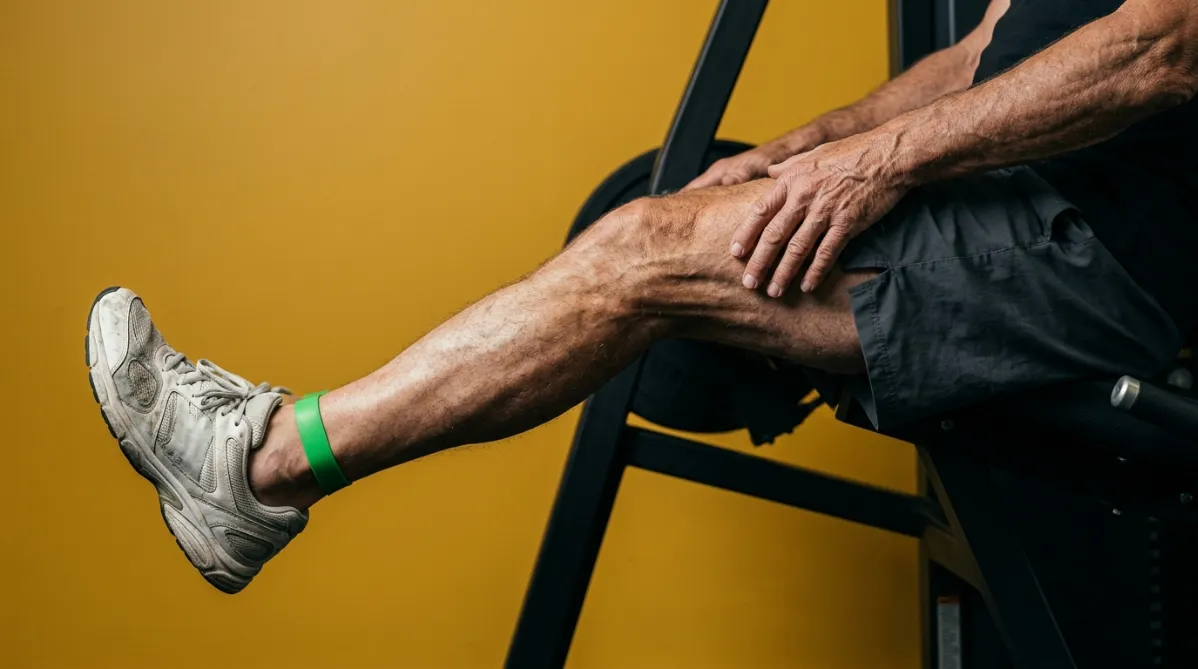
Approach: the human outcome. Palette: bold color field, mustard yellow.

A tight, low-angle side view of an older man's muscular calf and thigh mid-leg-press or seated leg extension, shot from knee level. His weathered, sinewy skin shows fine hair and visible tendon definition, and his hands rest on the knee. He wears a plain charcoal athletic short and a worn white sneaker. The backdrop is a seamless saturated mustard-yellow wall, with a matte black gym machine frame cutting diagonally through the frame. Soft, directional studio light from camera left creates gentle highlights on the quadriceps and a warm shadow. A small electric green resistance band is looped around his ankle as the only green accent. The face stays out of frame. The mood is determined, strong and quietly hopeful, with a shallow depth of field and a crisp editorial feel.
Peptides

15 g of Collagen Peptides: Twice the Leg Strength Gains in Older Men

Helix Ward · · 4 min read

"Collagen is useless for muscle." You've seen the meme. It's built on a real point: collagen is an incomplete protein, short on the amino acids that switch on muscle building. But a randomized, double-blind trial in older men with sarcopenia complicates the story. Men who lifted weights and took 15 g of collagen peptides a day gained about 45% more fat-free mass than the placebo group, and their leg strength gains were more than double.

Before anyone buys a tub, the details matter, and some of them cut both ways.

The Trial: Who, What, and How Long

The study, published in the British Journal of Nutrition in 2015 by Zdzieblik and colleagues, enrolled 53 men with a mean age of 72.2 years. All had class I or II sarcopenia, the age-related loss of muscle mass and function.

Everyone did the same thing for 12 weeks: guided resistance training, three sessions per week. The only difference was what they took after each workout:

  • Treatment group: 15 g/day of collagen peptides
  • Placebo group: silica, an inert powder

Researchers measured fat-free mass, fat mass, and bone mass with DXA scans. They also tested isokinetic quadriceps strength and sensory-motor control with a one-leg stabilization test.

The Results: Everyone Improved, Collagen Improved More

The training worked on its own. Both groups significantly improved fat-free mass, bone mass, leg strength, and sensory-motor control, and both lost fat mass. The collagen group pulled ahead on three measures (all P<0.05):

Outcome Collagen Placebo
Fat-free mass +4.2 kg +2.9 kg
Quadriceps strength +16.5 Nm +7.3 Nm
Fat mass −5.4 kg −3.5 kg

The math behind the headline: 4.2 divided by 2.9 is roughly 1.45, or about 45% more lean tissue gained. Quadriceps strength gains were about 2.3 times larger. Fat loss was also greater with collagen.

Why Might Collagen Peptides Help?

The mechanism is not settled, and the trial wasn't designed to prove one. Several hypotheses are plausible:

  • Amino acid supply. Collagen is rich in glycine and proline, and it provides arginine. These have roles in connective tissue, creatine synthesis, and nitric oxide pathways. Whether they meaningfully aid muscle adaptation in older adults is still being tested.
  • Bioactive peptides. Hydrolyzed collagen produces small peptides, such as hydroxyproline-containing fragments, that survive digestion and enter circulation. They may signal to muscle and connective tissue cells, though the evidence is preliminary.
  • Stronger connective tissue. Muscle force travels through tendon and the extracellular matrix. Better support there could help people train harder or transmit force more efficiently. This is speculative.
  • Simply more protein. Many older adults under-eat protein. Adding 15 g may have helped regardless of the source (more on this below).

Treat these as hypotheses, not conclusions.

The Fine Print

This is where "clickbait but accurate" matters most.

1. The placebo wasn't protein-matched. Silica contains no amino acids. The control group got no extra protein, so the trial can't separate "collagen is special" from "extra protein helps older lifters." A comparison with whey or an equal-nitrogen protein would answer that question, and this study doesn't.

2. There's an industry connection. One author is affiliated with the Collagen Research Institute, and the product used is linked to a commercial collagen supplier. That doesn't invalidate the data, but it's a reason to want independent replication.

3. The population is narrow. The participants were older, sarcopenic men, and only men. The results don't automatically apply to women, younger adults, or healthy older people with normal muscle mass.

4. Collagen is incomplete protein. It's low in leucine, the amino acid most associated with triggering muscle protein synthesis, and it lacks tryptophan. That's the basis for the "useless for muscle" meme, and it's why this result is surprising.

5. The effect sizes are large. Gains of several kilograms of fat-free mass in 12 weeks, plus sizable fat loss in the placebo group, are bigger than many would expect. The group was small, and DXA measures can shift with hydration and other factors. The journal also published an erratum in 2025 and a commentary in 2016, so read the paper and its corrections rather than relying on the headline numbers alone.

Practical Takeaways

If you're considering collagen peptides for muscle, here's what the evidence supports and what it doesn't:

  • The dose studied: 15 g/day, taken after resistance training.
  • Training is the engine. The placebo group still gained muscle and strength. Collagen was an add-on to lifting, not a replacement for it.
  • Don't swap it for complete protein. Make sure your diet already includes enough high-quality, leucine-rich protein from meat, dairy, eggs, or whey. Collagen may be a complement, not a substitute.
  • Who it's for: adults 60 and over who do progressive resistance training, especially those at risk of sarcopenia or struggling to meet protein targets.
  • Who shouldn't expect miracles: people who don't train. Nothing in this trial suggests collagen alone builds muscle.
  • Check with a clinician if you have kidney disease, allergies (collagen is often from bovine, porcine, or marine sources), or are on a medically supervised diet.

The Bottom Line

The "collagen is useless for muscle" meme is too simple. In this trial, older men with sarcopenia who lifted weights and took 15 g of collagen peptides gained more lean mass and leg strength than those who lifted and took silica. But the design leaves open whether collagen has special properties or just added protein to under-fed diets. Until independent trials compare collagen directly with matched protein sources, it's a promising add-on for older lifters, not a proven muscle builder. Lift first and get your complete protein. Collagen peptides are a reasonable extra, not the foundation.

Original study

Read the original research on pubmed.ncbi.nlm.nih.gov →

This article summarizes published research for general information. It is not medical advice.

HW

Written by

Helix Ward

Helix Ward writes for Biocracked: biohacking science, longevity & human performance.

Related Articles

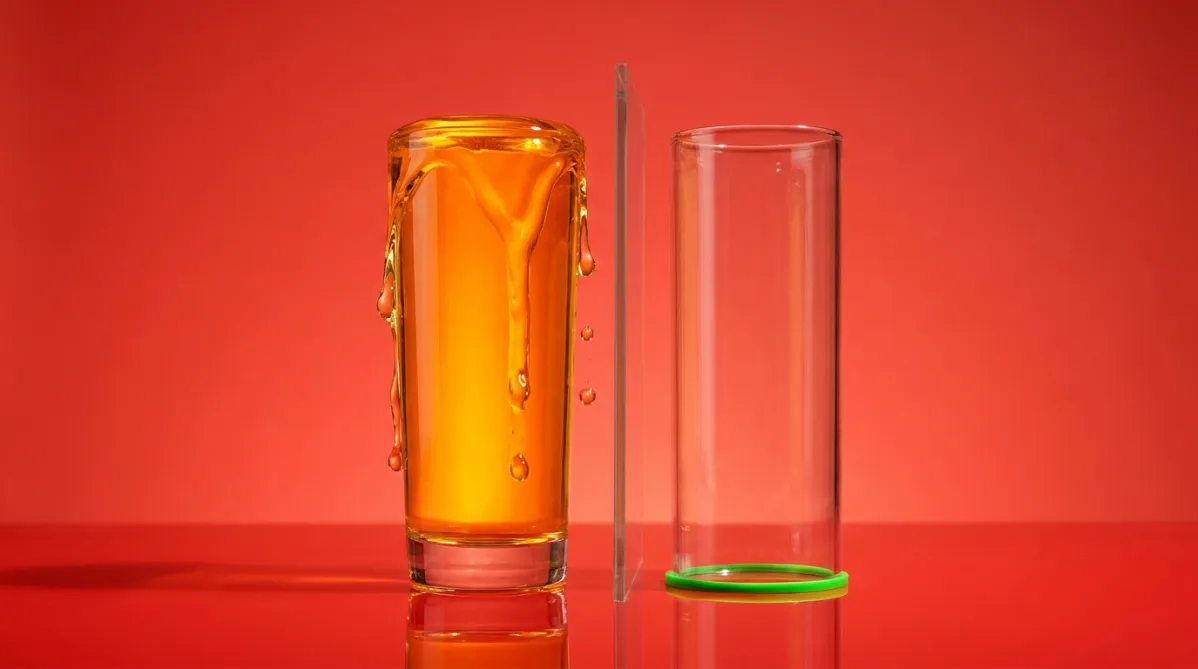
Approach: conceptual metaphor. Palette: D, bold color field.

A tall glass of bright orange-gold liquid sits in the center of the frame, filled to the brim and overflowing down its sides, shot at a slight low angle. Beside it, a sealed, empty glass cylinder with a thin glass wall stays bone dry. A clear glass barrier stands between them, so the flow clearly never crosses. The backdrop is a saturated tomato-red seamless paper, with a glossy red surface reflecting both vessels. Hard, directional studio light from the upper left throws crisp, warm-neutral shadows and bright highlights along the glass rims and liquid droplets. One small electric green ring sits at the base of the empty cylinder as a subtle accent. Mood: tense, ironic, clean and editorial. Photorealistic, shallow depth of field, no text or labels.
supplements

Your CoQ10 Reaches Your Blood, But Not Your Mitochondria

BY NOVA CHEN ·

A new human trial put a hugely popular longevity supplement to the test with muscle biopsies, and the results are awkward for the marketing. In 40 healthy adults averaging 74 years, 400 mg/day of CoQ10 for 12 weeks raised blood levels but left muscle and mitochondrial CoQ10 unchanged. Mitochondrial function, VO2max, glucose control and body composition did not move either. The study is small, short and limited to robust older adults, and the senior author consults for Pharma Nord. Here is what it shows, what it cannot say, and who might still want to ask a doctor about CoQ10.

Approach: macro science, palette: warm.

Extreme close-up macro of a single dried chamomile flower head floating on the surface of freshly steeped tea, shot from a low three-quarter angle just above the waterline. The white petals droop and curl, the golden domed center is packed with tiny pollen-dusted florets, and fine petal veins show in sharp detail. The tea beneath is a clear honey-amber, with soft ripples and a few tiny bubbles clinging to the petals. Low golden-hour sidelight from the left glows through the translucent petals and casts warm copper reflections across the liquid. Shallow depth of field melts the background into creamy amber bokeh, with one faint electric green sprig blurred at the far edge. Calm, quiet, slightly medicinal mood. Photorealistic, no text.
supplements

400 mg of Chamomile Extract Improved Sleep in 4 Weeks, and the Effect Lasted

BY REX MERIDIAN ·

Chamomile tea is the classic wind-down drink. Apigenin, one of chamomile's best-known compounds, has become a staple of "sleep stacks" in biohacking circles. A 2017 randomized trial in Complementary Therapies in Medicine tested a more concentrated version of the idea. It gave older adults 400 mg of chamomile extract a day for four weeks and tracked their sleep quality afterward.

Approach: the human outcome. Palette: natural.

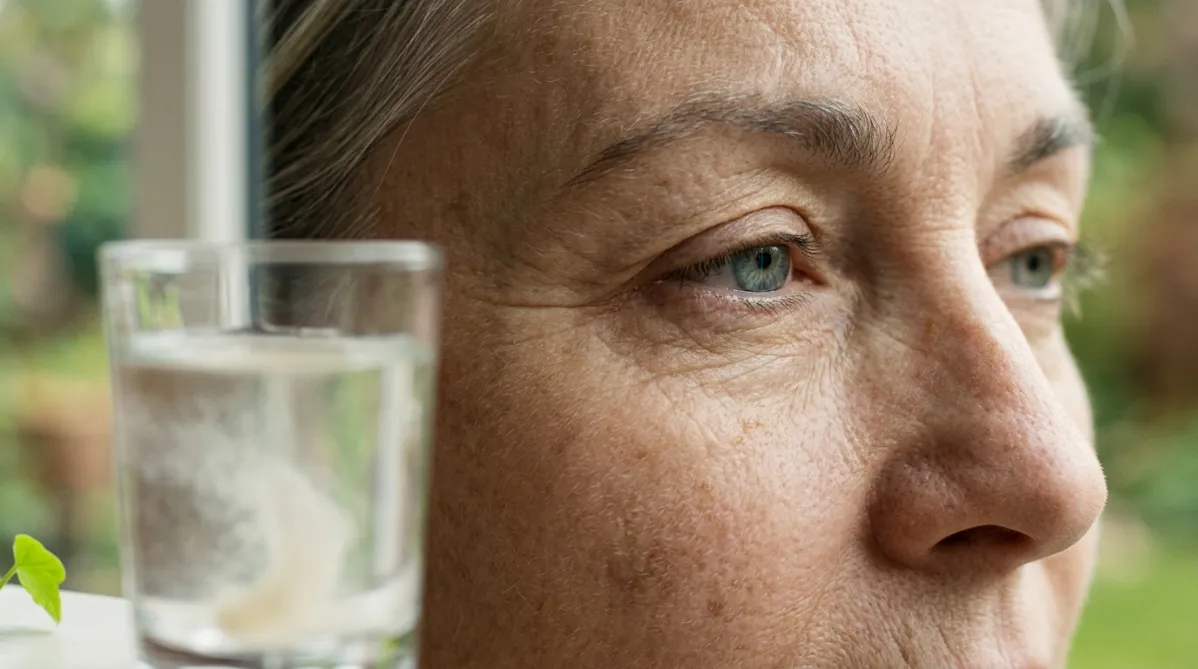
Extreme close-up of a woman's eye and the delicate skin around it, shot from a slight three-quarter angle with a 100mm macro lens and a shallow depth of field. Her skin is a mature 50s complexion with fine crow's feet that are sharp and tactile, with visible pores and soft vellus hairs. Her gaze is relaxed and not at the camera, and the face is cropped so identity isn't the focus. Soft, directional window daylight rakes across the skin from the left to bring out the wrinkle texture, with gentle warm skin tones and a blurred leafy green background outdoors. A single glass of water with a faint dissolving powder swirl sits out of focus in the foreground, with a tiny electric green leaf highlight at the edge. The mood is calm, honest and quietly scientific.
peptides

2.5 g of Collagen Peptides Cut Eye Wrinkles 20% in 8 Weeks

BY NOVA CHEN ·

Collagen is one of the most searched beauty and longevity supplements, but few products have placebo-controlled human data. In this trial of 114 women aged 45-65, 2.5 g a day of the specific bioactive peptide Verisol cut eye wrinkle volume by 20% versus placebo after 8 weeks. Biopsies showed 65% more procollagen type I and 18% more elastin, while a 6% fibrillin bump wasn't significant. The effect was still detectable 4 weeks after the last dose. But the results apply to one branded peptide in one population, not every collagen powder, so here's what the paper does and doesn't prove.

A wide, minimalist editorial still life on a soft, warm-gray linen surface lit by gentle diffused morning window light. At center sit two identical small amber glass supplement bottles, one slightly in front of the other, with plain matte cream labels and no readable text. In front of them, two matching shallow ceramic dishes in muted sage green hold identical small ivory capsules. The capsules are nearly indistinguishable, which quietly suggests placebo versus active. Beside the dishes, a few wheat germ grains, a small cluster of aged cheddar-toned cheese shards, and a halved ripe mushroom hint at natural spermidine food sources. They are arranged with careful negative space.

On the left, a delicate balance scale in brushed brass sits perfectly level, its two small pans empty and even, as a subtle visual metaphor for "no difference." On the right, a neat open notebook with soft blurred pencil lines and a single sprig of dried eucalyptus lies beside a pair of thin round tortoiseshell reading glasses, suggesting older adults and memory without showing any people.

The background is a softly blurred pale oat-colored wall with a long gentle shadow cast diagonally across the scene from a window. The color palette is muted and modern: warm cream, sage green, amber, soft brass, and dusty terracotta accents. Shallow depth of field keeps the bottles and scale crisp while the edges melt into a creamy blur. The mood is calm, thoughtful, and quietly skeptical, like a trendy health and science journal feature. Fine film grain, a subtle matte finish, and a balanced asymmetrical composition leave open space in the upper right for headline overlay. Photographed from a slightly elevated three-quarter angle, high-end editorial photography style.
supplements

Spermidine for Memory? A 12-Month Trial in 100 Older Adults Found No Edge Over Placebo

BY DR. SYNAPSE ·

Spermidine has been hyped as a brain-protecting supplement on the strength of autophagy research and animal studies. The SmartAge trial put it to a rigorous test in 100 older adults with subjective cognitive decline, giving about 0.9 mg per day for 12 months. The primary memory outcome did not beat placebo (difference -0.03; P = .47), and secondary outcomes were also null. Exploratory hints on inflammation and verbal memory remain unconfirmed. Here is what the result means for anyone considering a spermidine supplement, and where the study's limits lie.

This page is available in