Biocracked
←

#thymosin-beta-4

1 article
Approach 4, conceptual metaphor, in palette D, bold color field.

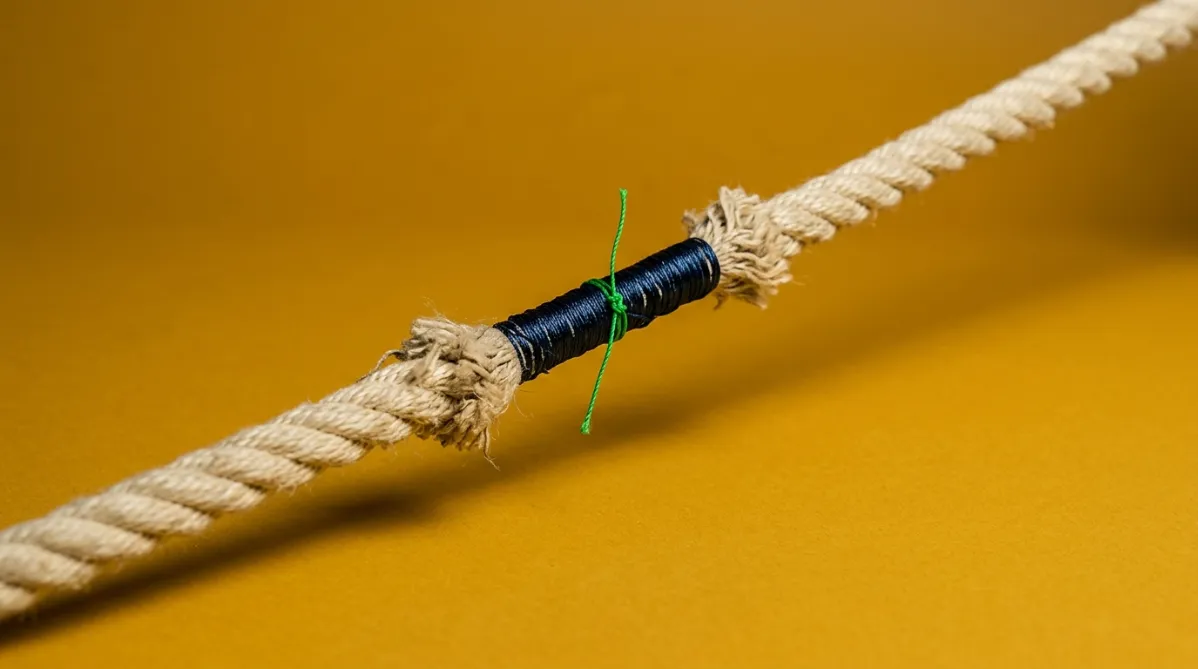
A single frayed tendon-like rope of braided cream fibers stretches taut across the frame, photographed at a low three-quarter angle. It is partly mended with a short, glossy section of tightly wrapped surgical suture thread. The mended section is visibly thinner and unconvincing against the thick, worn rope. The rope sits on a seamless saturated mustard-yellow backdrop, lit by one large softbox from camera left. This gives crisp, soft-edged shadows and clearly visible fiber texture. A thin electric green thread is knotted around the repair, the only green in the scene. The background is shallow and slightly out of focus on the right, leaving open space. The mood is skeptical and sober, a questionable shortcut under scrutiny, with a clean editorial feel and no text anywhere.
peptides

BPC-157 and TB-500: What Orthopaedic Surgeons Now Say

BY HELIX WARD ·

Gym forums and wellness clinics promote BPC-157 and TB-500 as injury-healing shortcuts, but what do orthopaedic surgeons actually say? A new review in the Journal of the American Academy of Orthopaedic Surgeons found that human musculoskeletal evidence for BPC-157 amounts to a single small, uncontrolled case series. TB-500 turns out to be a seven amino-acid fragment that is often conflated with full-length thymosin beta-4. Product identity, purity, and sterility are open questions, no agent has an FDA-approved musculoskeletal indication, and athletes face antidoping restrictions. The authors' verdict is that routine clinical use cannot currently be recommended.

This page is available in