Biocracked
←

#liver-health

1 article
Visual approach: Macro science. Palette: Warm.

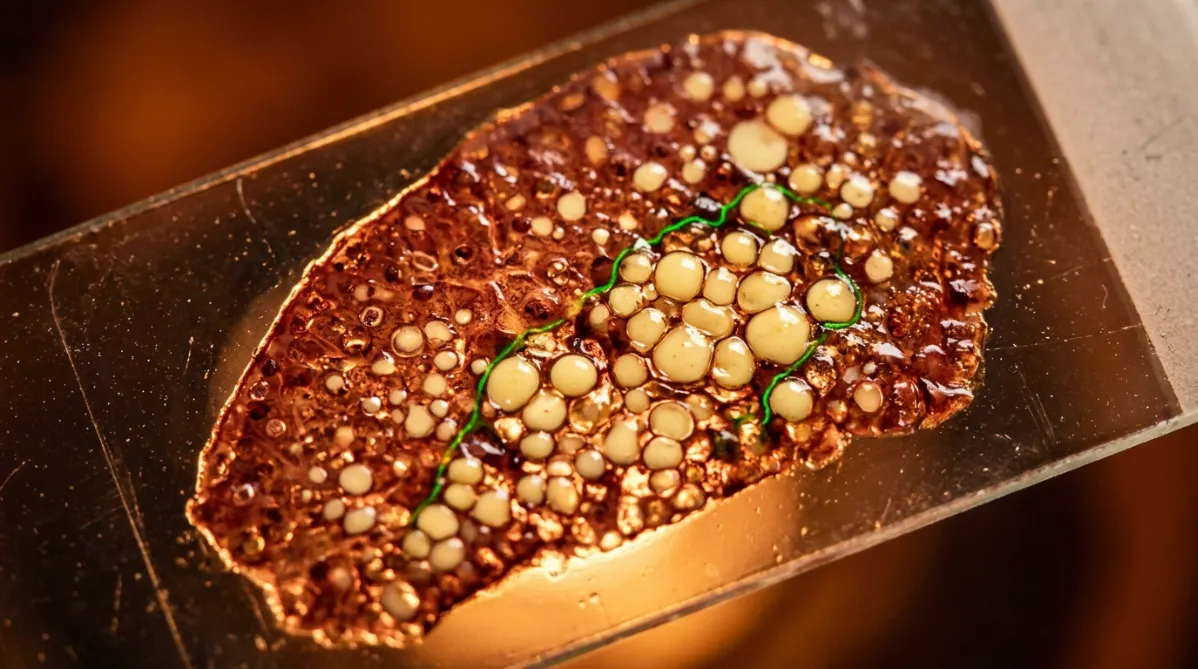
Extreme close-up of a sliced mouse liver tissue sample on a glass microscope slide, shot from a shallow overhead angle with a macro lens. The pale, creamy-yellow fat droplets mottle the deep reddish-brown tissue, so the fatty infiltration looks like glistening honey-colored bubbles of varying size. Warm amber backlight shines through the translucent edges, producing copper highlights and soft golden glows on the glass. The background falls into a blurred, burnt-orange haze. A thin, sharp line of electric green fluorescent stain traces one cluster of droplets as a subtle accent. The mood is tense and investigative, and the textures look wet, real and microscopic, with no text or labels.
longevity

Il Popolare Integratore di Longevità AKG Ha Causato Steatosi Epatica nei Topi

BY DR. SYNAPSE ·

L'alpha‑ketoglutarato (AKG) è uno degli integratori anti‑invecchiamento più diffusi, lodato per i suoi effetti sulla durata della salute nei topi anziani. Uno studio recente pubblicato su *Research* ha scoperto che un’assunzione prolungata di AKG, sia nel cibo che nell’acqua, aumenta i trigliceridi epatici e provoca steatosi nei topi sani. Il meccanismo coinvolge una catena di eventi molecolari: AKG riduce H3K4me3 al promotore di Pck1, incrementa il lattato e la lattilazione di Cidec, proteggendolo dalla degradazione tramite TRIM21 e inibendo l’enzima brucia‑grassi ATGL. Riducendo Cidec o Pck1 nel fegato si previene l’effetto. Sebbene i dati siano limitati ai roditori, la scoperta solleva dubbi per chi assume AKG in modo cronico.

This page is available in