Biocracked
←

#fucoxanthin

1 article
Approach 1, macro science, with Palette B, warm.

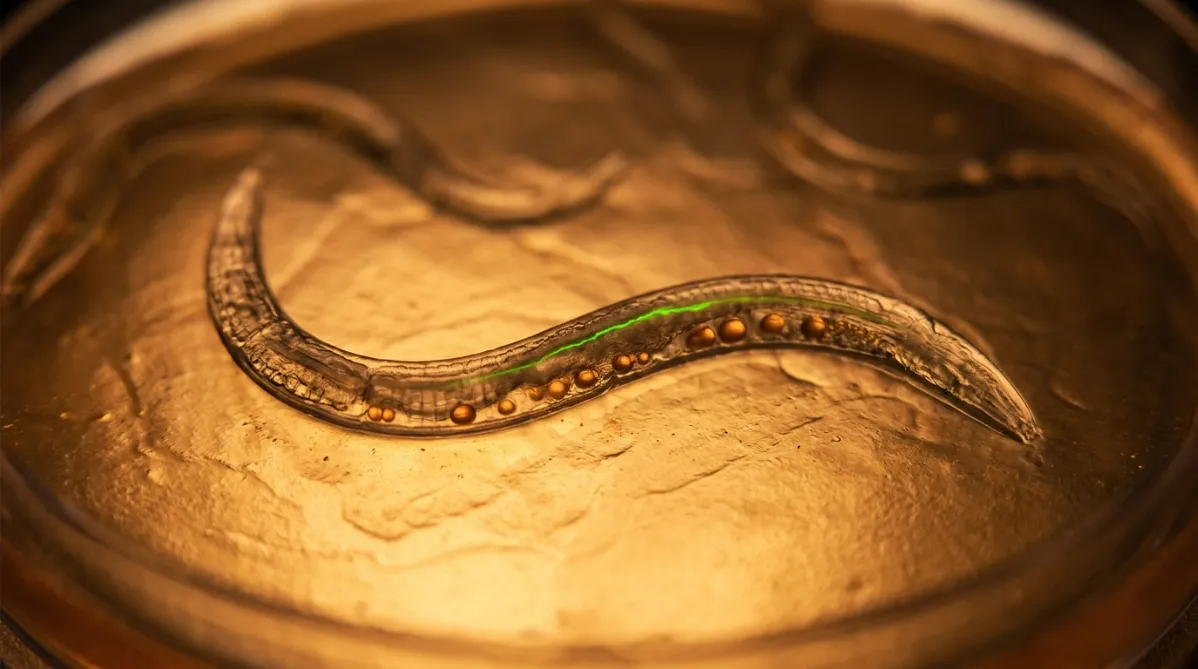
Extreme close-up of a single C. elegans roundworm, photographed through a microscope, lying curved on a bed of agar in a petri dish. Its translucent body shows fine internal structure, and a few tiny orange-amber fucoxanthin droplets glow along its gut. A few more worms blur softly in the background. Shot from slightly above at a low angle with shallow depth of field. Warm golden backlighting passes through the agar, turning it honey and copper, with soft amber highlights and warm brown shadows. One thin electric green fluorescent streak runs along the worm's body, suggesting a lit-up longevity gene. The mood is quiet, curious and cautiously optimistic. It looks like real microscopy, not an illustration, and contains no text or labels.
longevity

Fucoxanthine allonge la durée de vie du ver de 12,1 % : n’en achetez pas encore

BY NOVA CHEN ·

Le fucoxanthine, pigment du varech brun commercialisé comme complément pour la perte de graisse, a récemment allongé de 12,1 % la durée de vie moyenne des nématodes. Il a également retardé le déclin de la motilité, renforcé la résistance au stress oxydatif et protégé des modèles de vers de la maladie d’Alzheimer et de la maladie de Parkinson. Les effets dépendaient du facteur de longévité DAF‑16 (FOXO) et du gène d’autophagie bec‑1. Il s’agit toutefois d’une étude sur *C. elegans*, pas d’une preuve chez l’humain, et aucune dose humaine ne peut en être déduite. Voici ce que ces résultats montrent réellement et ce qu’ils ne prouvent pas.

This page is available in