Biocracked
←

#observational-study

1 article
Approach: conceptual metaphor. Palette: D, bold color field.

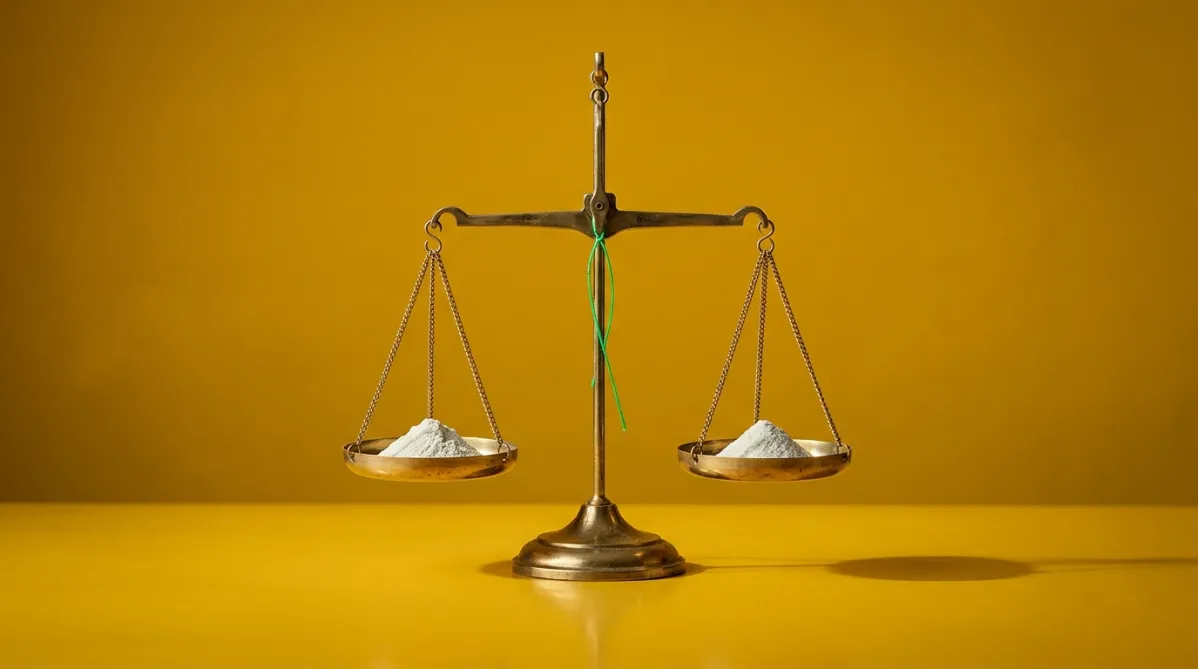
A single brass pocket-scale balance sits at the center of a saturated mustard-yellow seamless backdrop, shot straight-on from slightly below at eye level. Its two pans hang almost perfectly level. One pan holds a small pile of pale, matte white powder, and the other holds a similar pile, so the tiny, nearly equal difference reads at a glance. A thin electric green thread is tied around the balance's pointer, a subtle accent. Soft, large-window studio light comes from the left and casts a crisp, short shadow to the right on the glossy surface below. Shallow depth of field blurs the background edges. The mood is quiet, skeptical and unresolved, with a clean, editorial look. No text, numerals or markings are visible on the scale.
longevity

Rapamycin scheiterte bei einem riesigen Human‑Langlebigkeits‑Test. Hier ist der Haken

BY DR. SYNAPSE ·

Rapamycin gilt als Liebling der Langlebigkeits‑Community, doch sein bislang größter Real‑World‑Test beim Menschen fiel enttäuschend aus. Bei 4 885 Nierentransplantierten, die Rapamycin erhielten, und 6 589, die kein Rapamycin bekamen, lag das mediane Lebensalter bei 64,6 bzw. 64,3 Jahren – nach statistischer Anpassung praktisch identisch. In einer medianen Nachbeobachtungszeit von 11 Jahren und 6 443 Todesfällen zeigte die Studie keinen signifikanten Lebenszeitgewinn. Da es sich jedoch um Transplantationspatienten unter immunsuppressiver Therapie handelte und die Untersuchung Beobachtungscharakter hatte, lässt sie nicht entscheiden, ob niedrige, intermittierende Dosierungen bei gesunden Menschen wirken. Hier erfahren Sie, was die Studie sagt und was nicht.

This page is available in