Biocracked
←

#injection-lipolysis

5 articles
Approach 1, macro science, with Palette D, bold color field.

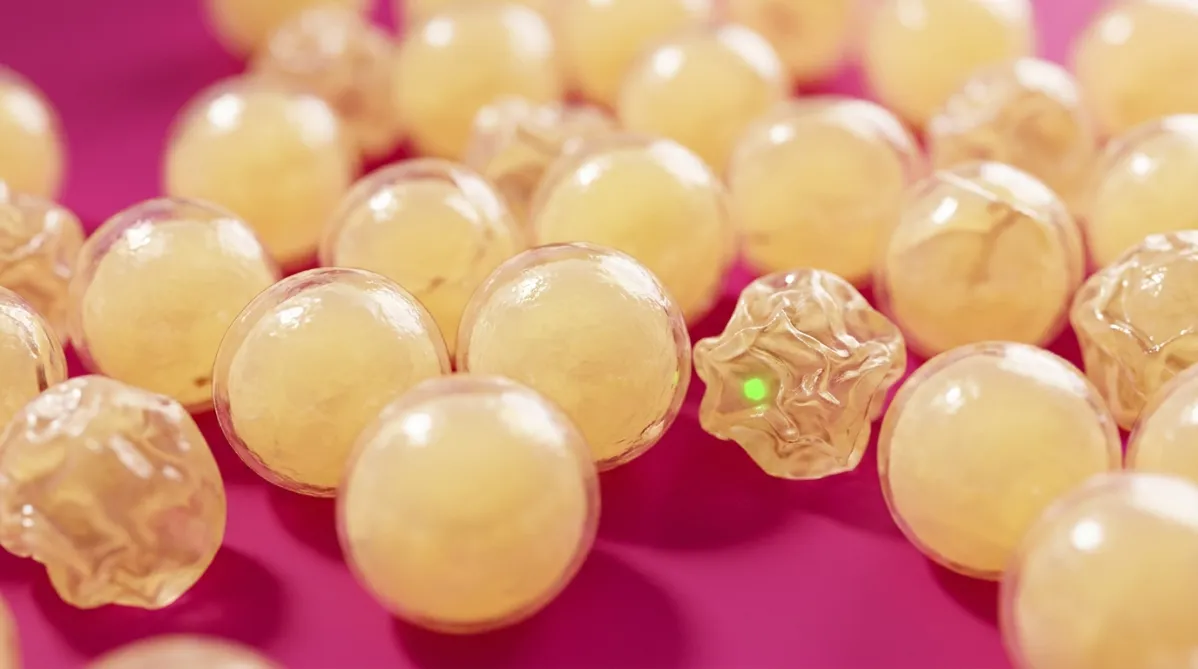
Extreme close-up microscopy-style photograph of a cluster of adipocytes (fat cells). Each is a translucent, pale yellow sphere with a thin membrane, and a few are shrunken and crinkled to suggest apoptosis. The cells sit against a saturated magenta backdrop. The camera is slightly above, at a shallow 30-degree angle, with a very shallow depth of field so the foreground cells are razor sharp and the rest melts into soft bokeh. Hard, clean side light from the left makes the membranes glisten and casts crisp magenta-tinted shadows. One tiny electric green fluorescent speck glows inside a single collapsing cell as a subtle accent. The mood is precise, clinical and curious, with a bold editorial feel. There is no text and no blue cast.
research

CBL‑514‑Injektion‑Liposuktion: Eine Phase‑II‑Übersicht zur Evidenz

BY DR. SYNAPSE ·

CBL‑514 ist ein experimentelles Small‑Molecule‑Produkt, das den programmierten Zelltod von Fettzellen im Bauchbereich auslösen soll. In einer ein‑blinden, placebokontrollierten Phase‑II‑Studie aus dem Jahr 2025 mit 76 randomisierten Teilnehmenden führte es zu deutlichen, per Ultraschall gemessenen Fettvolumen‑Reduktionen gegenüber einer Kochsalzlösung, während das Körpergewicht praktisch unverändert blieb. Der Beitrag fasst Studiendesign, Dosierung (2 mg/cm²), Wirksamkeitszahlen samt schrumpfenden Nennern und den firmeneigenen DYRK1b‑/Caspase‑Mechanismus zusammen und weist auf zentrale Limitationen wie das ein‑blinde Design, Sponsor‑Einbindung, eine hohe Abbruchrate und die kurze Nachbeobachtungszeit hin.
Approach 2, lab in action, with palette D, bold color field.

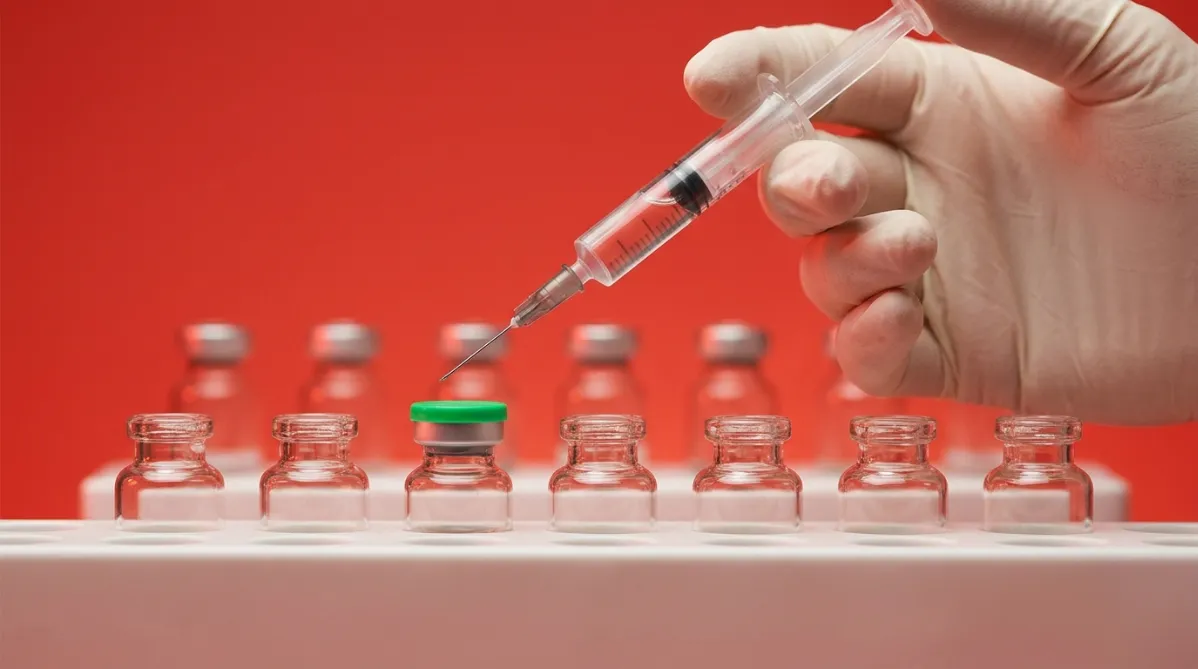
Straight-on, slightly elevated close shot of a gloved hand in a pale nitrile glove holding a glass syringe with a fine needle. The syringe is filled with clear liquid and sits over a row of small glass vials in a matte white rack. The whole scene sits against a saturated tomato-red seamless backdrop. Soft, even studio light gives crisp highlights along the syringe barrel and the vial glass, plus gentle warm-red reflections on the surfaces. A thin electric green (#00e676) cap on one vial is the only small accent. The dosing markings on the syringe are blurred and unreadable. Shallow depth of field blurs the back vials into soft shapes. The mood is precise, clinical and investigational, with high contrast and a measured, careful feel. No text, no labels, no logos.
research

CBL‑514 Dosierungen – was sagt die Wissenschaft?

BY DR. SYNAPSE ·

CBL‑514‑Studien sind experimentelle Injektionsprotokolle, und die Angabe „600 mg“ ist ein pro‑Behandlung festgelegtes Maximum – kein Nahrungsergänzungsmittel. Der Artikel führt durch die Phase‑2a‑Dosisfindungsstudie (1,2 – 2,0 mg/cm² bei 150 cm², n = 43, offen) und erklärt, wo die häufig zitierte Angabe von 24,96 % herkommt. Anschließend wird die placebokontrollierte Phase‑2 beschrieben, die die Dosis von 2,0 mg/cm² beibehielt, die behandelte Fläche auf 300 cm² verdoppelte und das Limit auf 600 mg anhob. Der Text zeigt, warum Milligrammsummen nicht über Studien hinweg vergleichbar sind, welche Sicherheitsdaten gemeldet wurden und warum das Produkt weder zugelassen noch als Empfehlung gilt.
Approach: the human outcome. Palette: bold color field.

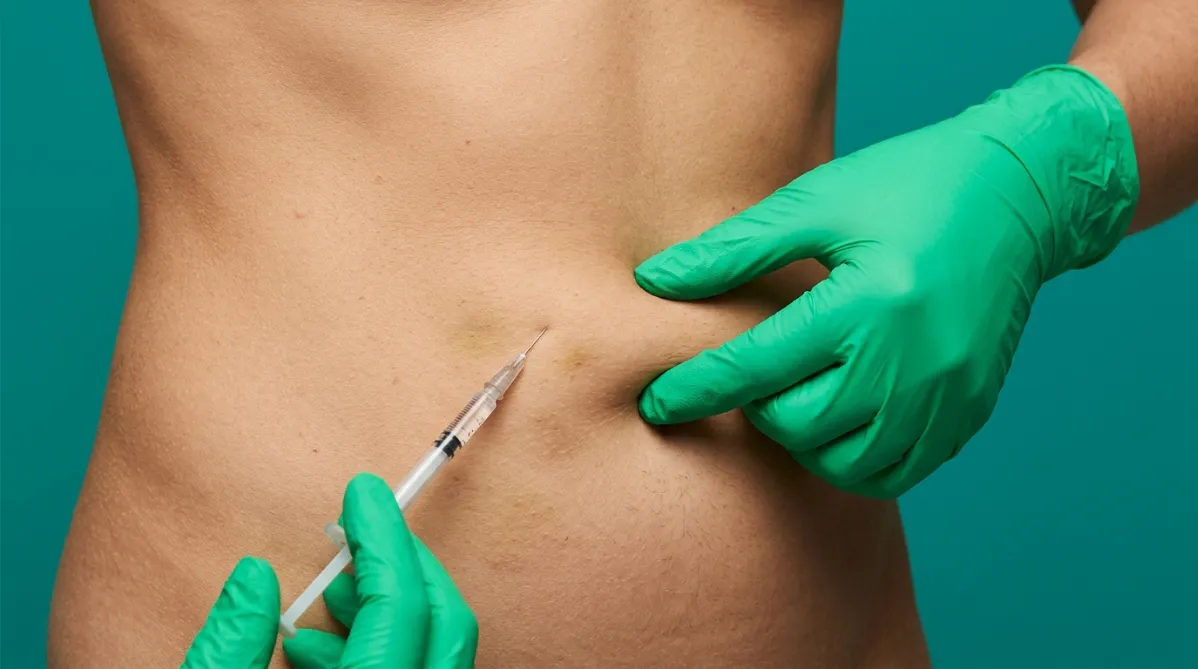
A close, slightly high three-quarter view of a bare abdomen, cropped at the ribs and hips with no face. A hand in an electric green (#00e676) nitrile glove pinches a fold of belly skin and holds a slim syringe with the needle just about to enter. Faint yellow-purple bruising near the injection site hints at the side effects. The torso fills the frame against a flat, saturated teal backdrop that contrasts with the warm skin tones. Soft, even studio light from the left gives gentle shadows and visible skin texture, with fine pores and small hairs. The syringe tip is in sharp focus and the background falls away. No text or markings anywhere. The mood is clinical, unsentimental and skeptical.
research

Verbrennt CBL‑514 wirklich Fett? Das wissen wir

BY HELIX WARD ·

Die Phase‑2‑Studie von 2025 zu CBL‑514 untersuchte nicht den Gewichtsverlust, sondern ob eine Injektion im Bauchbereich das subkutane Fettvolumen um mindestens 150 ml per Ultraschall reduzieren kann. Nach acht Wochen erreichten 69,6 % (16 von 23) der behandelten Teilnehmenden dieses Ziel, während in der Placebo‑Gruppe keiner von 16 erfolgreich war. Das durchschnittliche Körpergewicht blieb praktisch unverändert (+0,02 kg) und fast die Hälfte der behandelten Personen schloss die Studie nicht ab; die Per‑Protokoll‑Analyse berücksichtigte lediglich 30 Teilnehmende. Reaktionen an der Injektionsstelle waren häufig – 71,4 % litten unter Verfärbungen und 18,4 % unter starken Schmerzen. Im Folgenden erhalten Sie eine datenbasierte Aufschlüsselung dessen, was die Studie zeigt und was nicht.
**Approach 1 (macro science), Palette D (bold color field).**

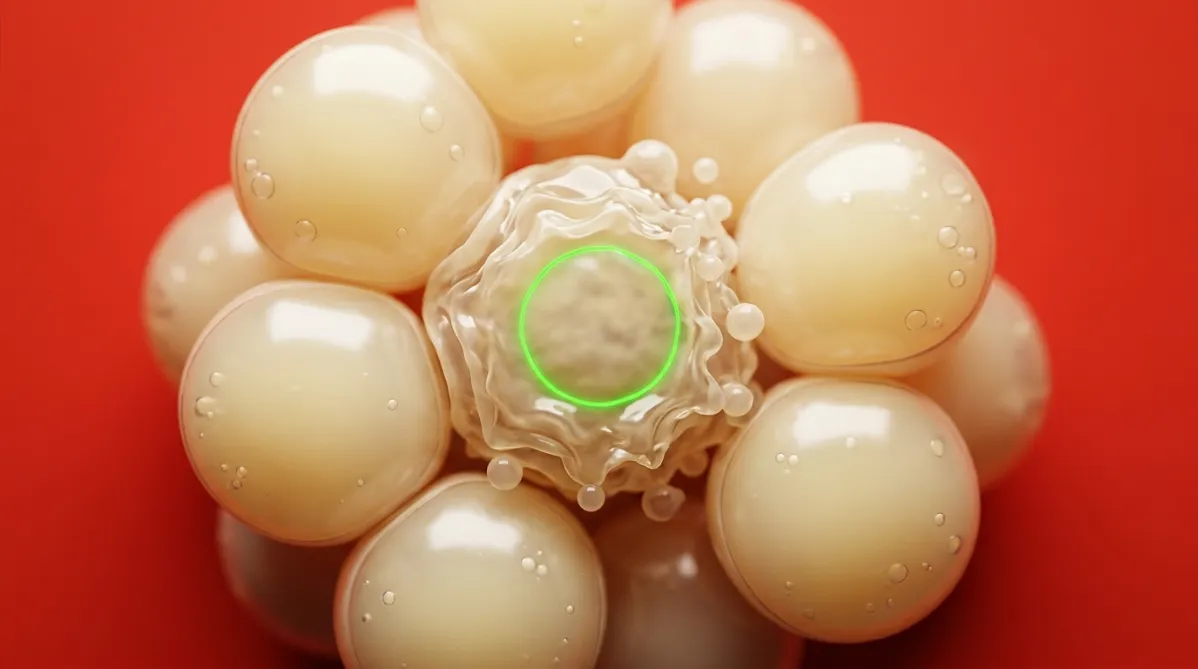
Extreme close-up microscopy-style photograph of a cluster of fat cells (adipocytes), rendered as translucent, pearly spheres with thin membranes and tiny lipid droplets inside. One cell in the center is visibly shrinking and blebbing, its membrane crinkled and fragmenting into small beads, the look of apoptosis. A few of the surrounding cells are intact and glossy. The cells sit against a saturated tomato-red backdrop, so the pale yellow-cream spheres stand out sharply. The camera looks straight down at shallow depth of field, with the focal plane on the dying cell and the edges softly blurred. Soft, diffuse top light gives gentle highlights and warm shadows, with no blue cast. One thin electric green fluorescent ring around the central cell's nucleus is the only green accent. The mood is analytical, precise and quietly skeptical.
research

Wie funktioniert CBL‑514? Die Wissenschaft

BY DR. SYNAPSE ·

CBL‑514 wird nicht als fett‑schmelzendes oder fett‑verbrennendes Medikament beworben. Stattdessen soll es die Überlebenskinase DYRK1b hemmen und Fettzellen über Caspase 3 sowie das Bax/Bcl‑2‑Verhältnis zur Apoptose führen. Diese Evidenz stammt aus unveröffentlichten Unternehmensberichten, die in den Phase‑IIa‑ und Phase‑II‑Studien zitiert werden; die chemische Struktur wurde nicht offengelegt. Die Phase‑II‑Studie von 2025 maß das Fettvolumen mittels Ultraschall, Fotos und Sicherheit, jedoch ohne menschliche Biopsie‑ oder Caspase‑Daten. Dieser Artikel trennt die molekulare Hypothese von den tatsächlich am Menschen gemessenen Daten, wobei er die hohe Abbruchrate und das einfach‑blinde Design berücksichtigt.
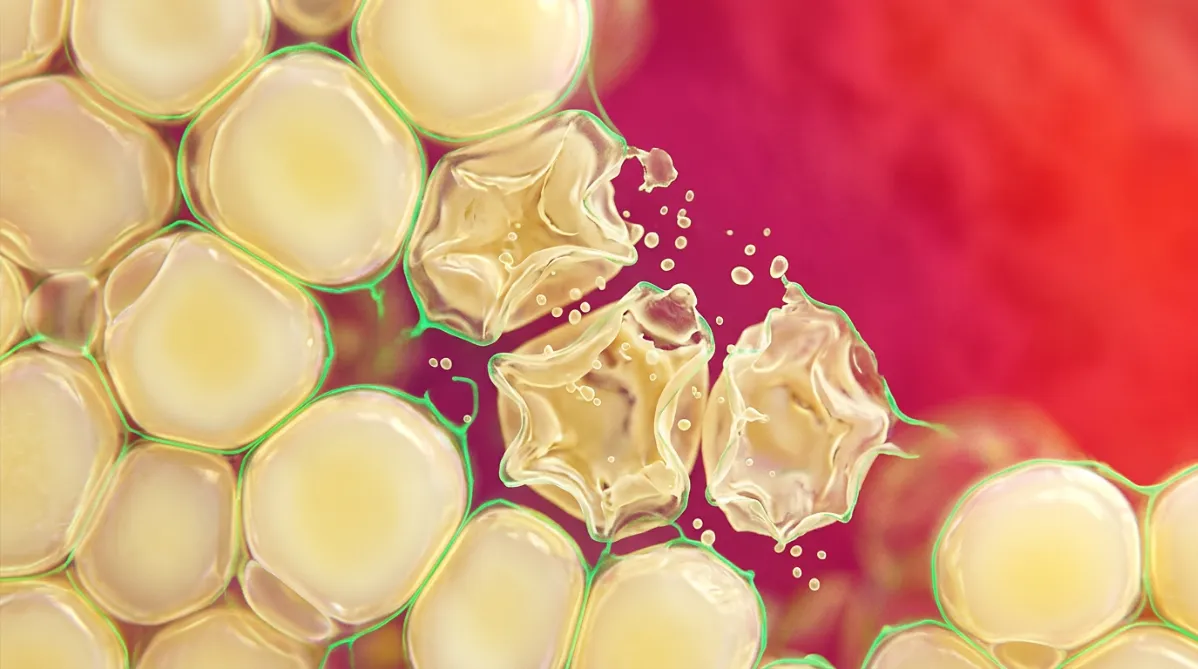
Approach 1, macro science, in palette D, bold color field.

Extreme close-up photograph of a cluster of fat cells (adipocytes) in tissue, shot like a stained microscopy image. Rounded, translucent, pearly-yellow lipid-filled cells press together in a honeycomb. Several in the center look collapsed and shriveled, with ruptured membranes and scattered droplets. A few fine threads of electric green (#00e676) fluorescent stain outline the cell walls. The camera is straight-on at shallow depth of field, with the background cells melting into soft blur. Bright, even transmitted light makes the membranes glow. The backdrop is a saturated magenta-to-tomato-red field that sets off the pale yellow cells. The mood is scrutinizing, skeptical and precise. No text, no labels.
research

CBL‑514‑Fettentfernungsinjektionen: Was sagt die Wissenschaft?

BY DR. SYNAPSE ·

CBL‑514 ist inzwischen in einer placebokontrollierten, randomisierten Phase‑2‑Studie im *Aesthetic Surgery Journal* untersucht worden. Die Autoren berichten, dass sowohl primäre als auch sekundäre Endpunkte erreicht wurden. Die Bewertung zeigt jedoch, warum das Studiendesign kritisch zu hinterfragen ist: Es war einfachblind, Prüfer und Sponsor waren nicht verblindet, und der Sponsor war an Design, Analyse und Manuskriptbeteiligung beteiligt. Von den 75 behandelten Teilnehmenden schlossen nur 38 die Studie ab; die Per‑Protocol‑Population bestand lediglich aus 30 Personen. Das Follow‑up endete 8 Wochen nach der letzten Behandlung, und die Stichprobe war überwiegend weiblich und weiß. Im Folgenden wird dargestellt, was die Studie unterstützen kann, was nicht und warum es sich nicht um medizinischen Rat oder einen Nachweis einer zugelassenen Therapie handelt.

This page is available in