Biocracked
←

#fatty liver

1 article
Approach: macro science (with a conceptual split). Palette: D, bold color field.

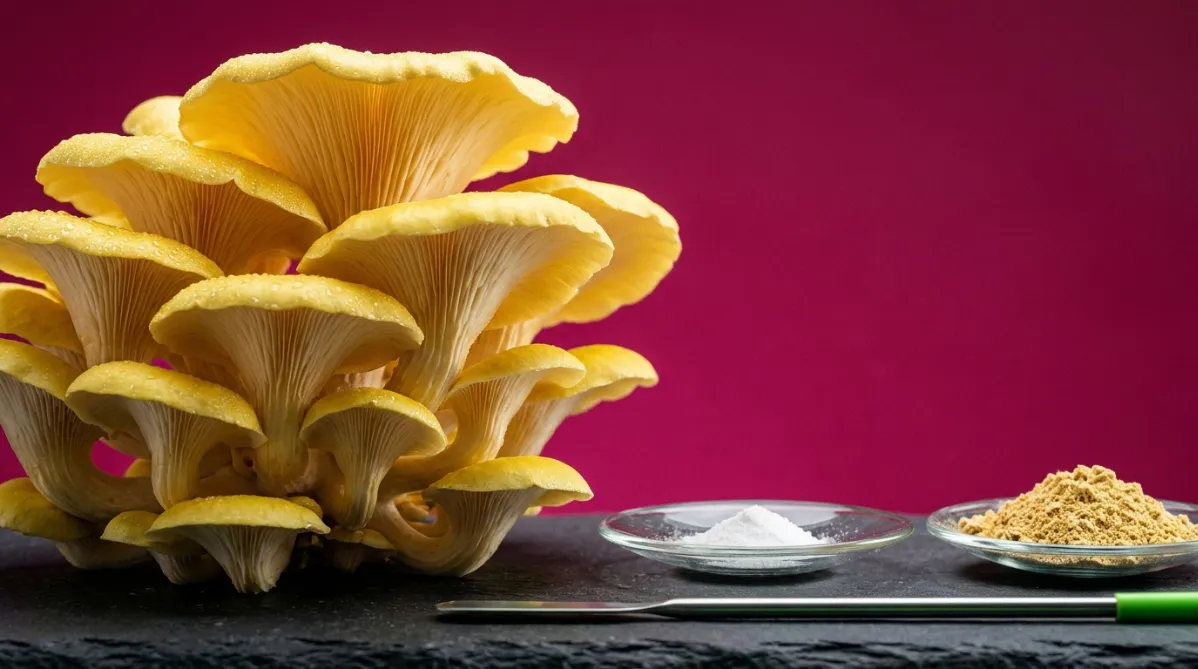
Extreme close-up photograph of a cluster of golden oyster mushrooms (Tamogitake), their ruffled, canary-yellow caps and fine gill structures sharply detailed, shot at a slight low three-quarter angle against a saturated magenta backdrop. In the foreground, a small glass watch dish holds a pinch of fine white crystalline powder, the isolated compound, sitting plain and inert beside a heap of fawn-yellow dried mushroom powder in a second dish. Soft directional studio light from the upper left gives the caps a translucent glow and creates crisp, short shadows. Tiny dew-like droplets cling to the gills. A single thin electric green stem of a lab spatula glints at the edge of the frame. Mood: curious, vivid, quietly skeptical, with the mushroom clearly outshining the isolate. No text or labels.
research

यह मशरूम चूहों में जिगर की चर्बी घटाता है—पर इसका मुख्य घटक नहीं

BY NOVA CHEN ·

एर्गोथियोनीन को अक्सर मशरूम के स्वास्थ्य‑लाभ का मुख्य कारण माना जाता है, लेकिन एक नया चूहा अध्ययन इस विचार को चुनौती देता है। गोल्डन ऑयस्टर मशरूम (Tamogitake) पाउडर खाने वाले चूहों में जिगर में कोलेस्ट्रॉल और ट्राइग्लिसराइड घटे, जबकि समान मात्रा में शुद्ध एर्गोथियोनीन देने पर ऐसा नहीं दिखा। मशरूम ने मल में कोलेस्ट्रॉल और फ्री फैटी एसिड की निकासी बढ़ाने की प्रवृत्ति भी दिखाई, जबकि एर्गोथियोनीन ने नहीं। लेखक निष्कर्ष निकालते हैं कि ये प्रभाव केवल एर्गोथियोनीन के कारण नहीं हैं। यह अध्ययन केवल चूहों पर किया गया है और मशरूम उनका आहार का 5 % था, इसलिए इस परिणाम को सीधे मानव स्वास्थ्य पर लागू न करें।

This page is available in